Dimensions: height 154 mm, width 102 mm
Copyright: Rijks Museum: Open Domain
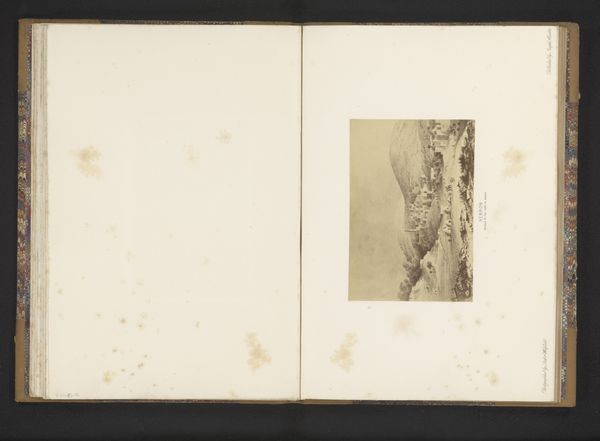
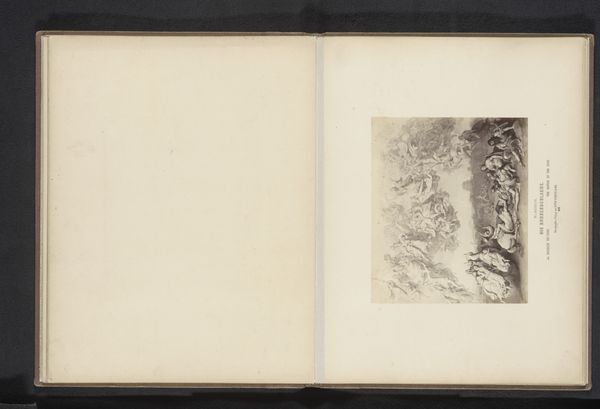
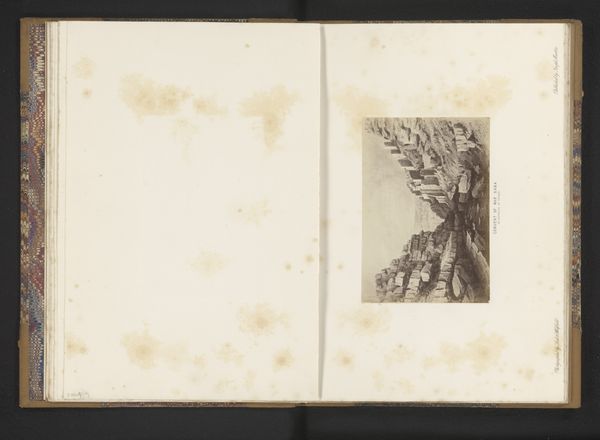
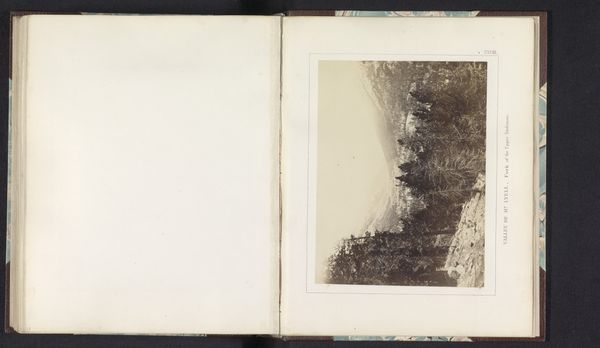
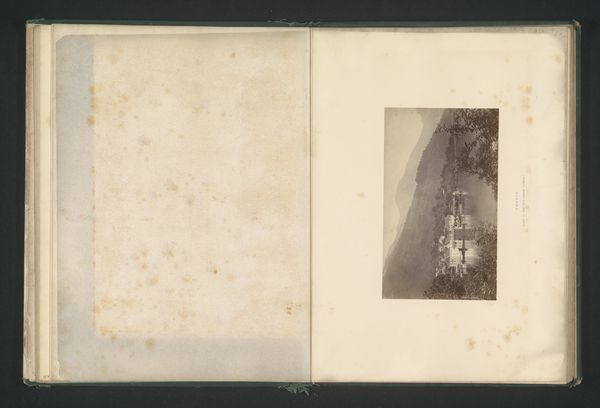
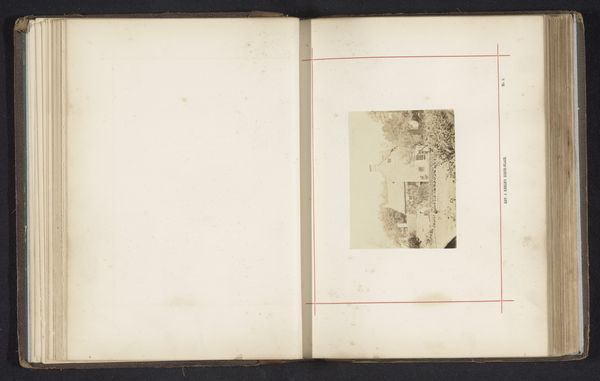
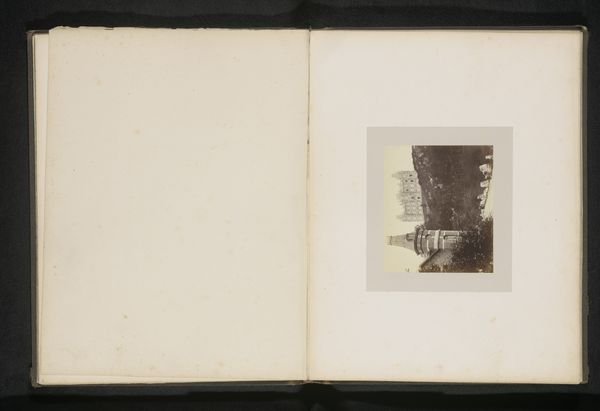
Editor: Here we have Archibald Burns' "View of Holyrood Palace and Arthur's Seat", an albumen print dating from around 1862 to 1867. It has an incredible atmospheric quality, almost like a dream. How do you see this photograph functioning within the historical context of image making? Curator: Well, we must consider the role photography played in shaping perceptions of place. By the mid-19th century, photography was booming and places like Holyrood Palace became subject to the tourist gaze. Think about who consumed these images. Editor: Tourists? And I guess those who couldn't travel? Curator: Exactly. And what social role did images of national monuments and picturesque scenery fulfill at the time? This image offers both: Holyrood Palace and Arthur’s Seat, both iconic landmarks of Scottish heritage and beauty. It also looks like it's affixed into some sort of bound portfolio? Editor: Yes, it appears that way. It seems odd now. Was the point of an image so radically different back then that images could be consumed only in special books? Curator: Partly that is the novelty, still fresh at this time, of photography. But this object, in album form, shows a transition: it’s becoming more reproducible, but also more controlled. It creates a narrative through image selection and placement, not unlike museums. This isn’t just about documenting reality, but constructing a story for the viewer. Are there more pictures in the volume that might give context? Editor: I hadn't thought of it that way, as actively shaping public understanding of a place! I see that in this context the way that photographs, especially of this iconic location, functioned culturally to reinforce shared national identity and historical memory. Thank you. Curator: Exactly, now consider how that role shifted in the coming decades with the rise of mass media. Always ask: who made it, who is the intended viewer and how did social forces affect the artistic choices?
Comments
No comments
Be the first to comment and join the conversation on the ultimate creative platform.
 Collect
 React
React Comment
More like this