drawing, ink
portrait
drawing
art-nouveau
caricature
flat colour
ink
genre-painting
cartoon style
Copyright: Public Domain: Artvee
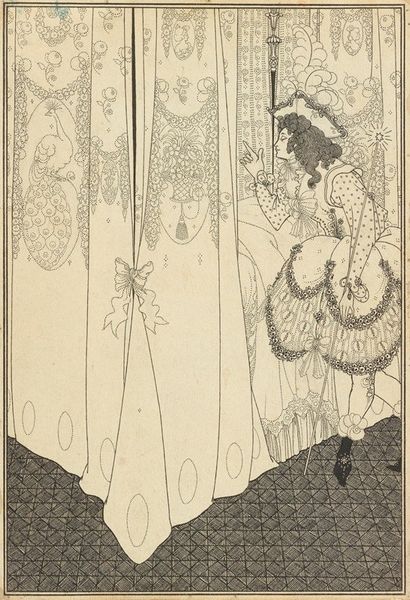
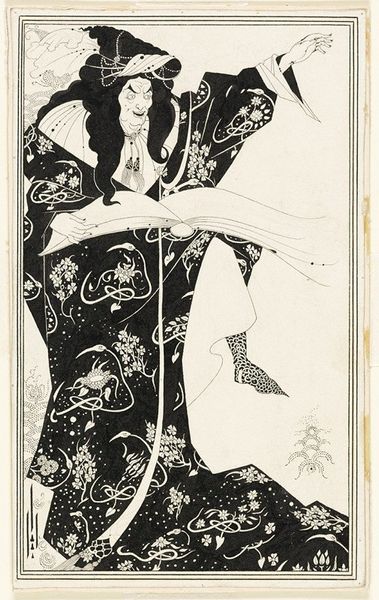
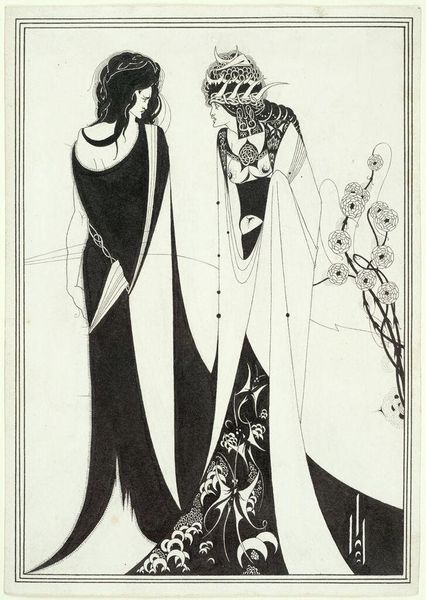
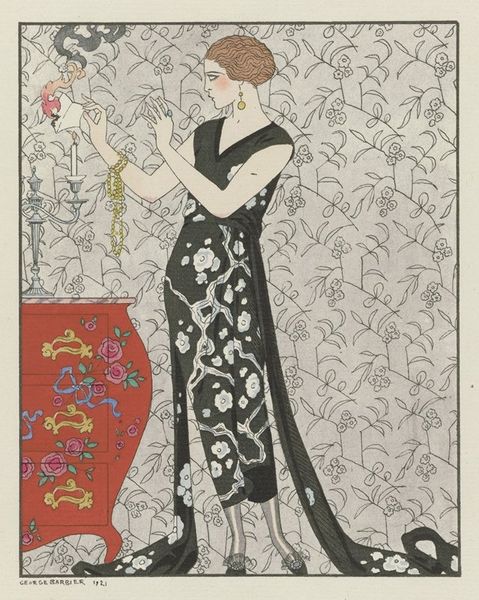
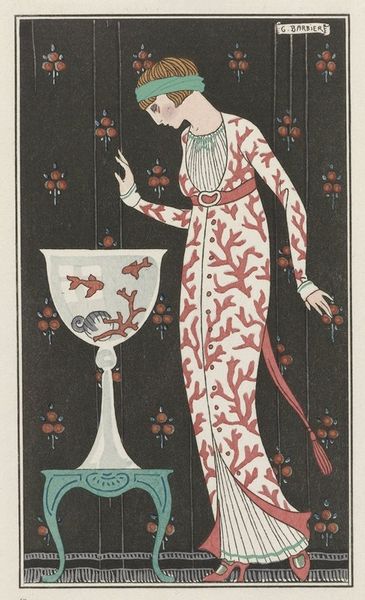
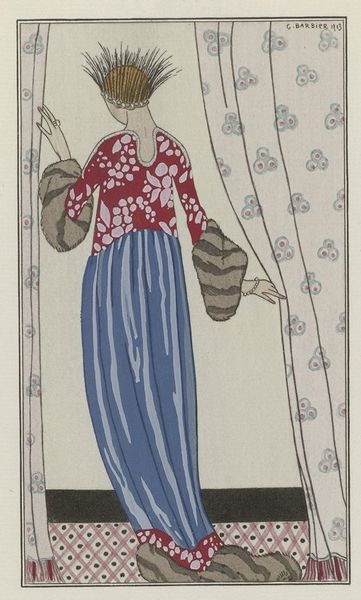
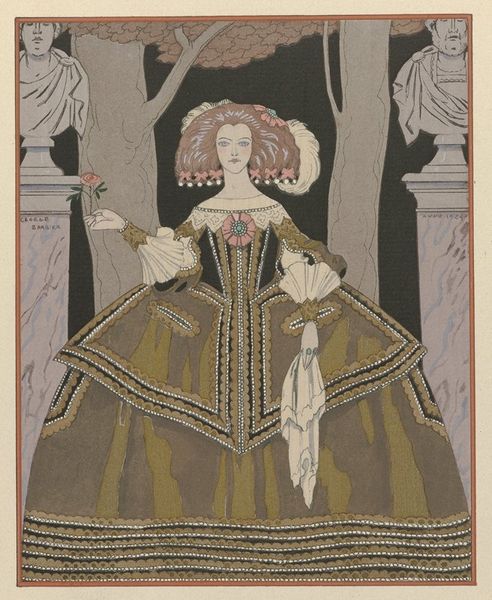
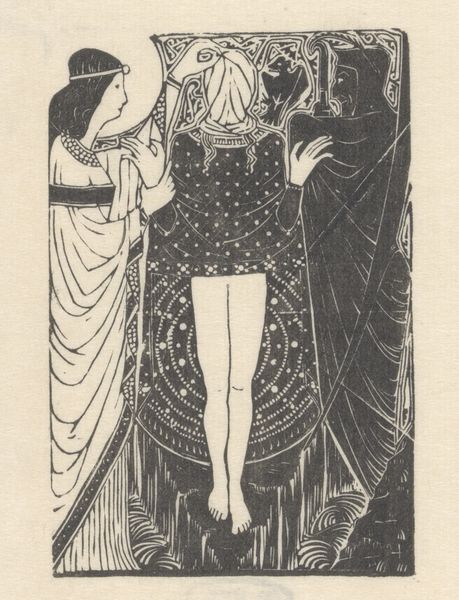
Editor: This is "Travestissement d’après Longhi" by George Barbier, made in 1913 using ink. It’s quite a striking image – almost like a cartoon. What do you see in this piece that maybe I'm missing? Curator: Well, beyond its surface appeal, consider this work within its historical context. Barbier, active during the "Années Folles," draws on 18th-century Venetian painter Pietro Longhi, known for genre scenes of aristocratic life. What Barbier *does* with that reference is key. Notice how he simplifies Longhi's detailed realism into flattened forms and bold colors – almost like a stage set. This aesthetic aligns with Art Nouveau’s embrace of Japonisme and a growing interest in theatricality, reflecting a society obsessed with appearances and role-playing in the years before the First World War. What statement is Barbier making here about art and society at this time? Editor: So, it’s not just a pretty picture but a commentary on the culture, using art of the past? That is quite the travesty, and certainly not accidental. I was focused on the surface, and I never noticed its potential political reading! Curator: Precisely! Think about how the museum, even today, presents the past. How do we select which narratives to highlight, and which to omit? Barbier's 'Travestissement' becomes, in this context, a mirror reflecting not only Longhi's Venice but also Barbier's Paris, and even our present-day fascination with curated histories. Editor: That's fascinating! Seeing it as a reflection of changing cultural values – a dialogue between centuries… it gives a new layer of depth to what I initially perceived as a simple drawing. Thanks! Curator: My pleasure! Recognizing the political implications inherent within even seemingly decorative art encourages us to think more critically about visual culture.
Comments
No comments
Be the first to comment and join the conversation on the ultimate creative platform.
 React
React Comment