

1776
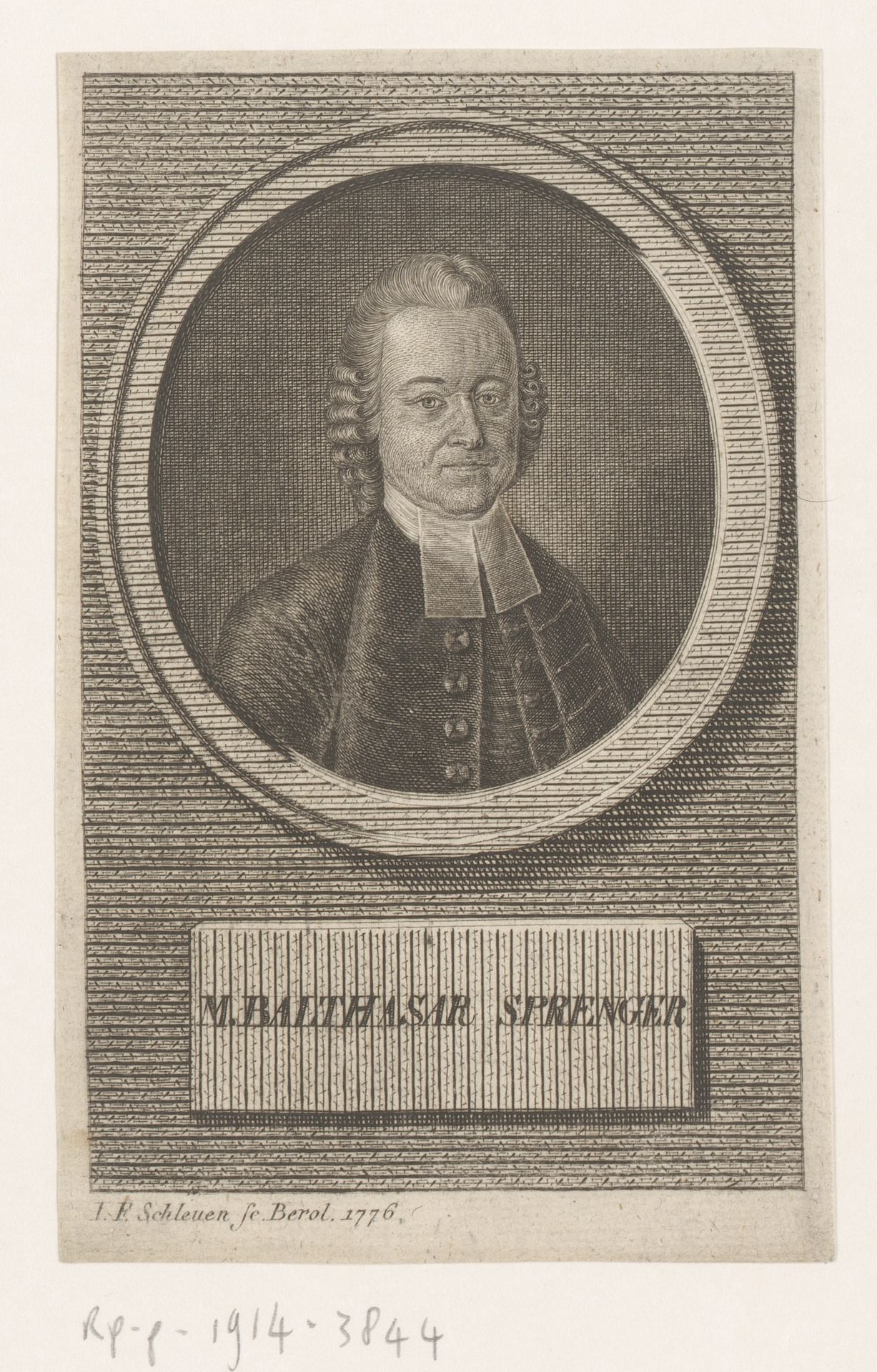
Portret van Balthasar Sprenger

Listen to curator's interpretation
Curatorial notes
Curator: Johann Friedrich Schleuen's "Portret van Balthasar Sprenger," created in 1776, captures its subject in meticulous detail through engraving. It's quite a striking image, really. Editor: Immediately, I'm struck by the almost clinical precision. The way the engraver uses line to define every contour, every fold in his vest... it’s formal, reserved, but also incredibly revealing, almost too realistic and the eyes stares piercing. Curator: It’s characteristic of the period, this almost scientific approach to portraiture. There's a need to document, to preserve an image for posterity with accuracy and decorum, not some artistic exaggeration. It says a lot about 18th century sensibilities. Editor: I agree it captures something particular about the era and its values. Is it merely for record keeping? I do wonder what Sprenger himself thought, about being rendered so... plainly. Curator: Given the context, it speaks to the evolving role of portraiture. No longer simply a celebration of the powerful elite but portraits becoming more accessible to and representative of the emerging middle classes and people interested in their public persona. It mirrors a societal shift, a democratization of image. Editor: Democratization, yes but perhaps more realistically just slightly more representation for the growing class in this medium... that does speak volumes in its own way. Curator: Absolutely. Even in its technical execution, the engraving process speaks to reproducibility, wider distribution of images. It’s about making the individual—even one who may not be royalty—known beyond their immediate circle. What does this reveal? Sprenger was a well known figure. It provides a kind of "image currency" in 1776 that hadn't existed centuries before. Editor: When you consider the level of detail rendered purely with line, its effect, although meticulous, appears a bit austere compared to the way we now use images for public figureheads, creating, curating, manipulating the media presence to capture our modern attention. It shows us more than ever now that there can be some level of control of a person's depiction that they may be able to exert over public sentiment. The implications feel kind of powerful, I think! Curator: I'm inclined to think the precision on display here isn’t just artistic skill, it represents something deeply held in social decorum during the Enlightenment. Perhaps more about reflecting an enlightened mindset for everyone in this media, from the artists all the way through to the printers? Editor: A world of order... A glimpse through a keyhole to reveal it’s intricacies with utmost poise! Well said! Curator: Always a pleasure.