c. 1761 - 1769
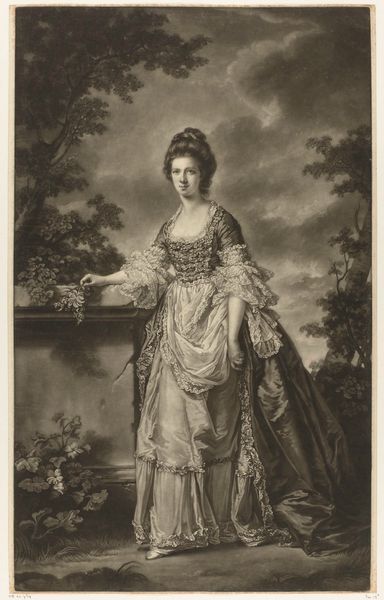
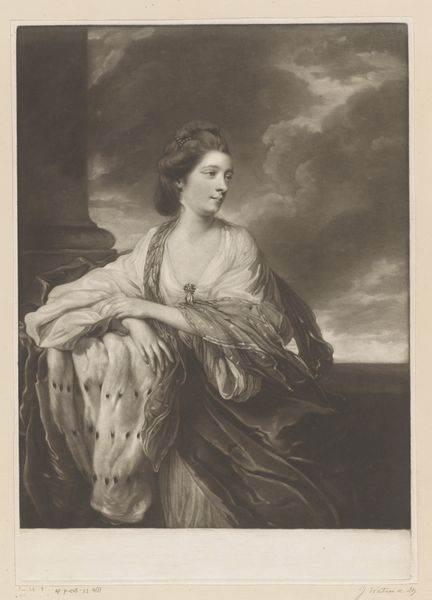
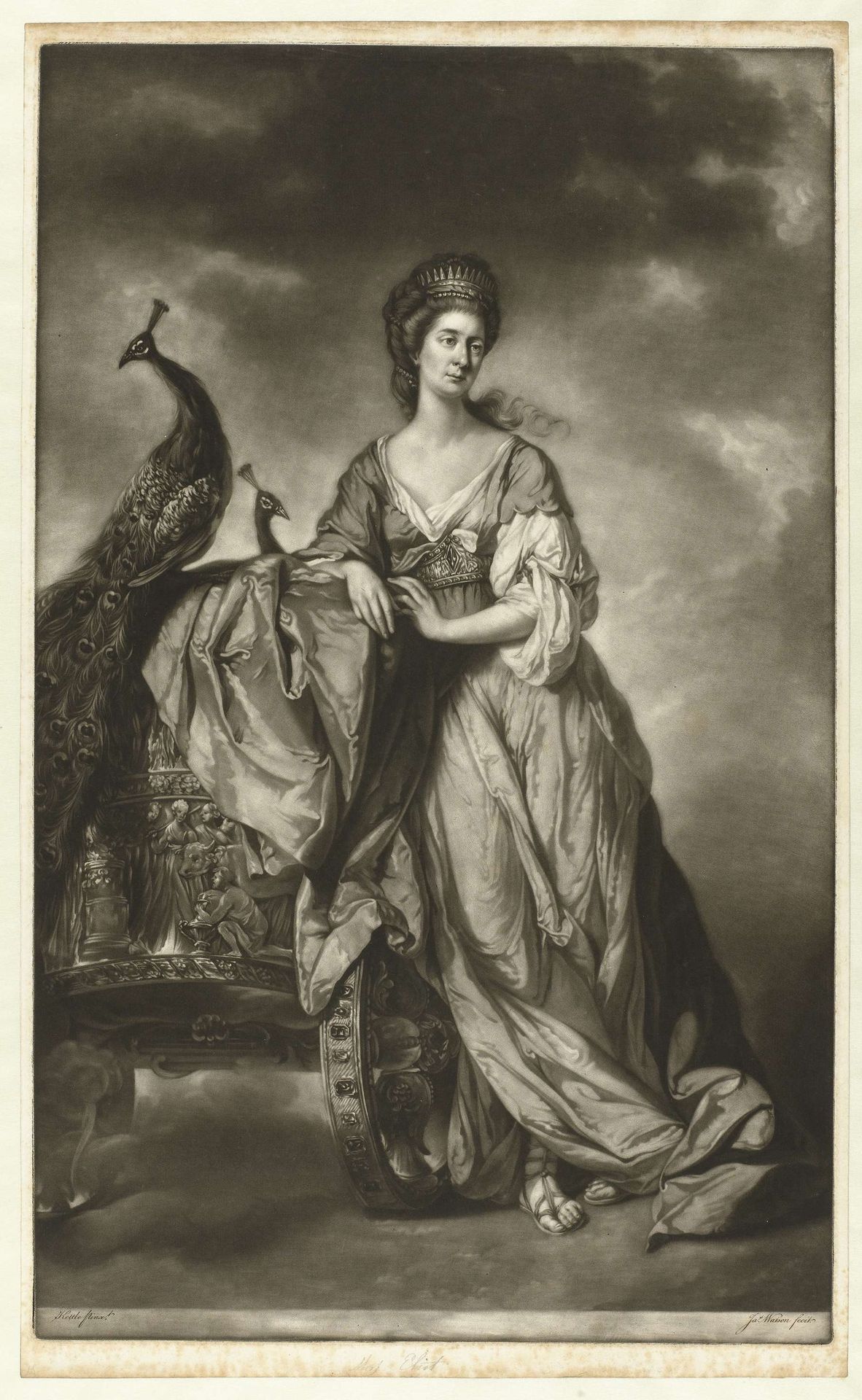
Portret van Ann Elliot als Juno

James Watson
1740 - 1790Location
RijksmuseumListen to curator's interpretation
Curatorial notes
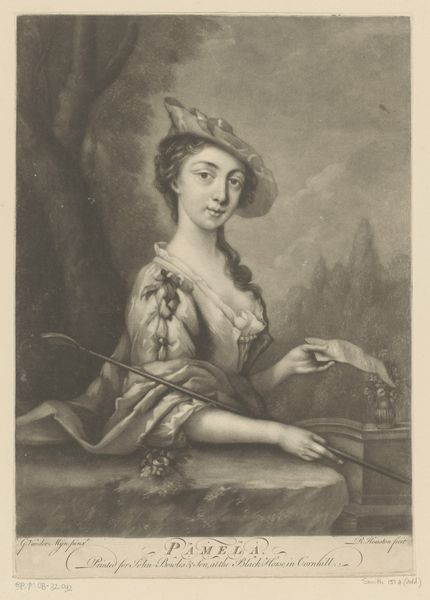
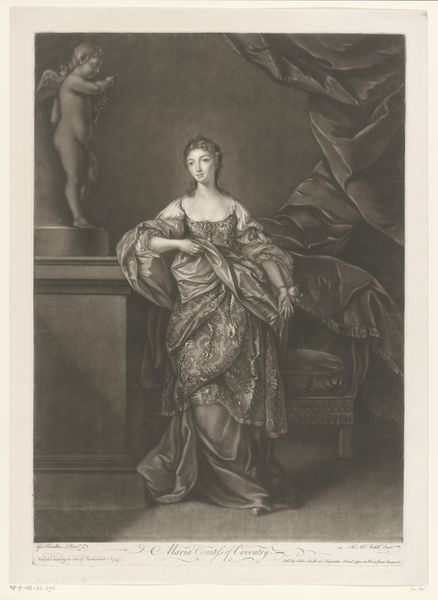
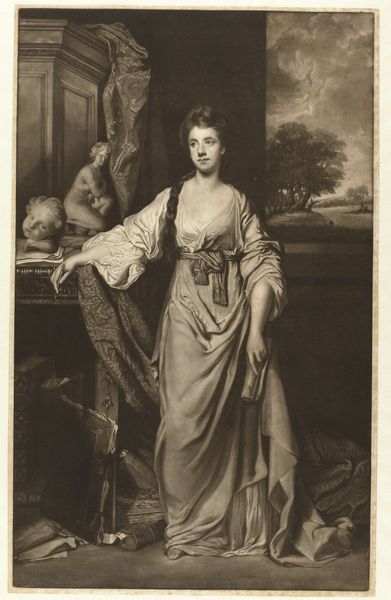
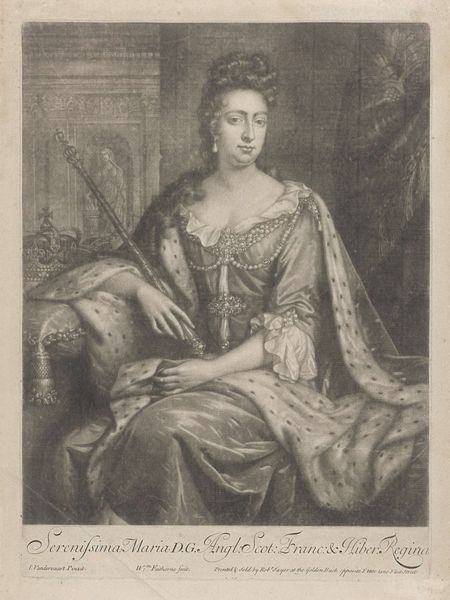
James Watson produced this mezzotint of Ann Elliot as Juno in the 18th century. It represents her, in the guise of a Roman goddess, leaning on a plinth, with attendant peacocks. The cultural elite of Britain used allegorical portraiture to associate themselves with the power of classical mythology. The mythology of ancient Rome suggested wealth, education, and a familiarity with courtly ritual. The image also reveals elements of institutional history, and a fascination with representing theatre. The fashions worn by the sitter resemble costumes that would have been worn on stage. The painting gestures towards the important place of theatre as a cultural institution. As art historians, we look to understand the place of images like this within British society at the time. We consider the changing fashions and the rise of theatre as a form of mass entertainment. By researching such things, we come to understand the place of portraiture in British culture.