

1764 - 1774
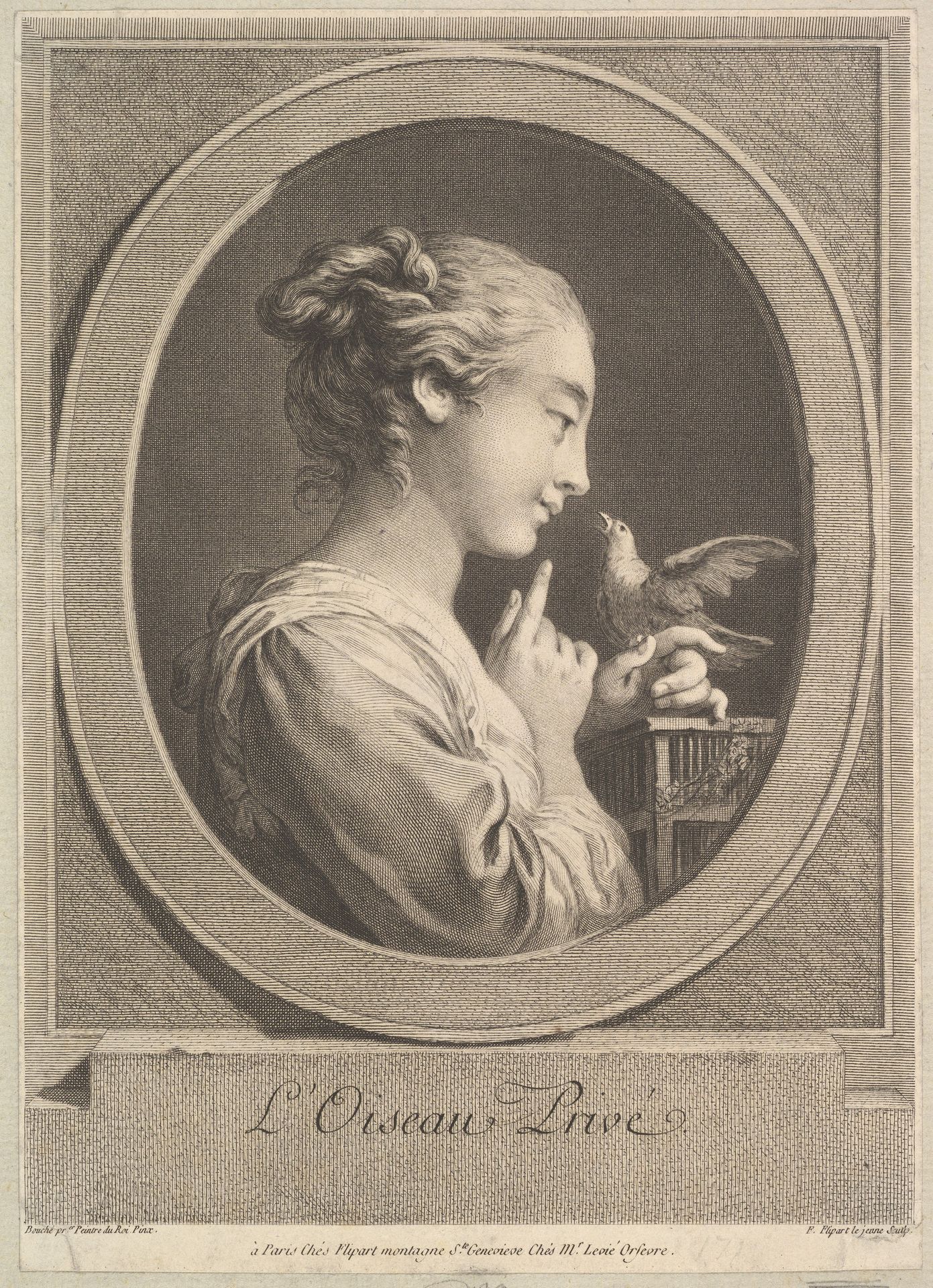
The Tamed Bird

Jean Jacques Flipart
1719 - 1782The Metropolitan Museum of Art
Metropolitan Museum of Art, New York, NYListen to curator's interpretation
Curatorial notes
Curator: This intaglio print, titled "The Tamed Bird," was created by Jean Jacques Flipart sometime between 1764 and 1774. It’s currently held at the Metropolitan Museum of Art. Editor: The detail is remarkable! Even within this small oval composition, you can almost feel the delicate texture of her skin and the bird's feathers. Curator: Indeed. Look closely, and you'll observe the masterful use of etching to capture the varying tonal values, especially how the ink interacts with the paper’s fibers, adding depth. Editor: It certainly exudes the airy, playful aesthetic characteristic of the Rococo style. The title suggests domestication, a concept that was frequently explored in art of this era as wealthy families became engrossed in collecting rare animals and other objects from all over the world, indicating status. The small bird cage further solidifies this statement. Curator: And, beyond the social symbolism, the composition reflects specific artisanal printmaking practices during that time. The quality of the paper stock, the biting of the plate—these factors determined the final visual impression. It reveals a society focused on producing finely made items. Editor: What strikes me is the complex role of women and class at that time. In art, birds are commonly paired with beautiful, fair-skinned women like this figure; were these objects viewed similarly, and could these works reinforce their societal power? The expression on her face does express the power to restrain. Curator: Good point. Consider the marketplace and trade involved, too. This print was likely circulated among a specific audience, those who appreciated these detailed renderings and their associated meanings, whether elite women, or their male suitors. Editor: Exactly. A reminder that art doesn’t exist in a vacuum. Its reception and function were intertwined with cultural and socio-political landscapes. This little scene carries heavy ideas regarding womanhood and status. Curator: Ultimately, these prints reflect a keen awareness of material culture and its social currency in 18th-century France. Editor: Absolutely, by carefully examining not only the aesthetic but also its purpose in reflecting societal expectations of luxury, it offers much food for thought.