1940
Relativity of Size Diagrams


Listen to curator's interpretation
Curatorial notes
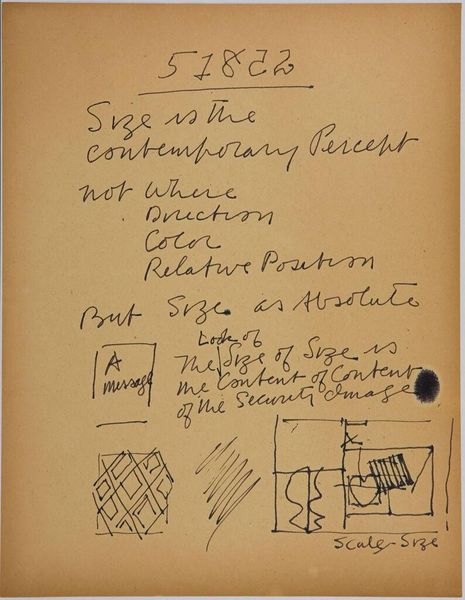
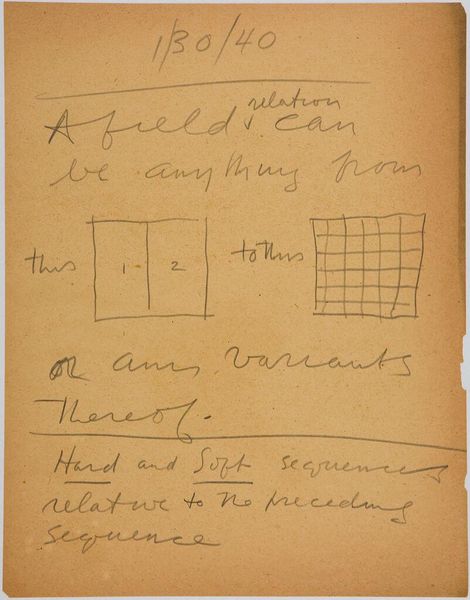
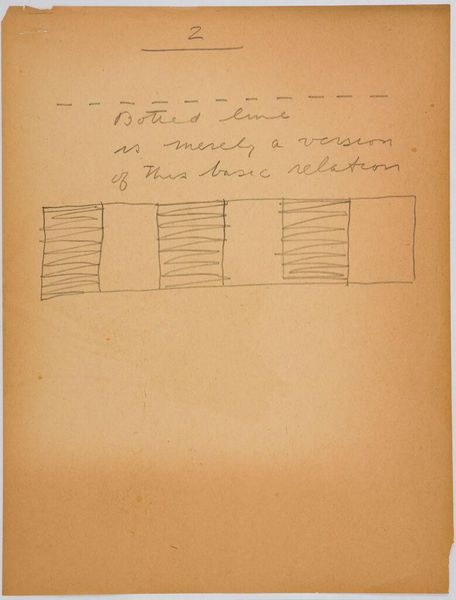
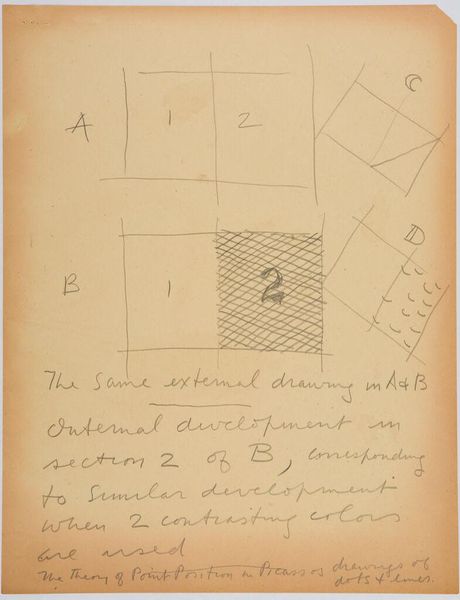
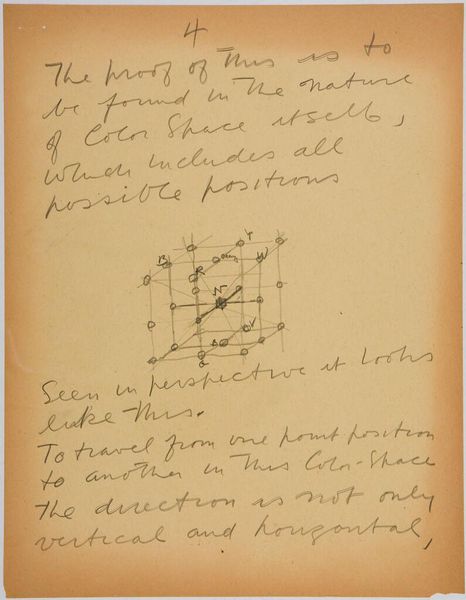
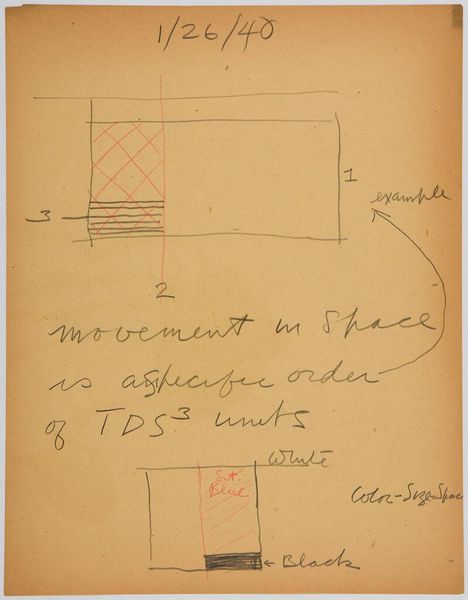
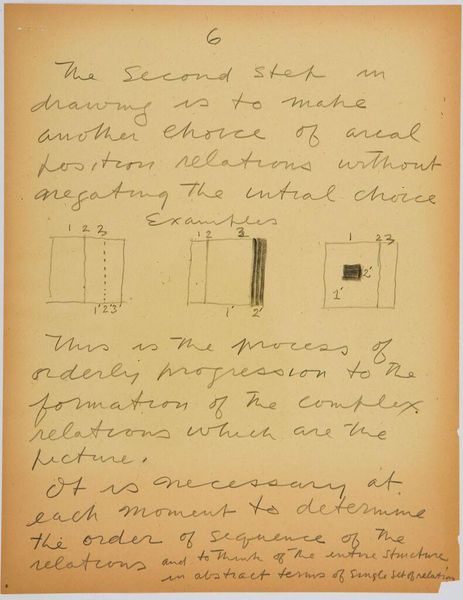
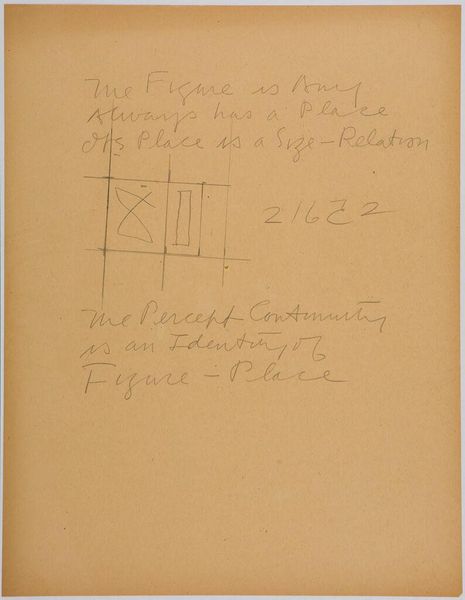
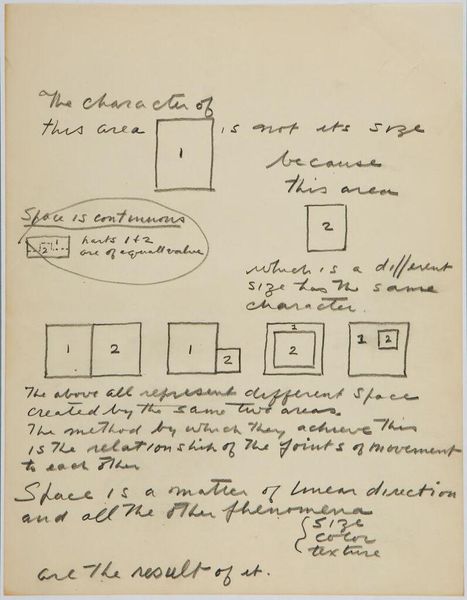
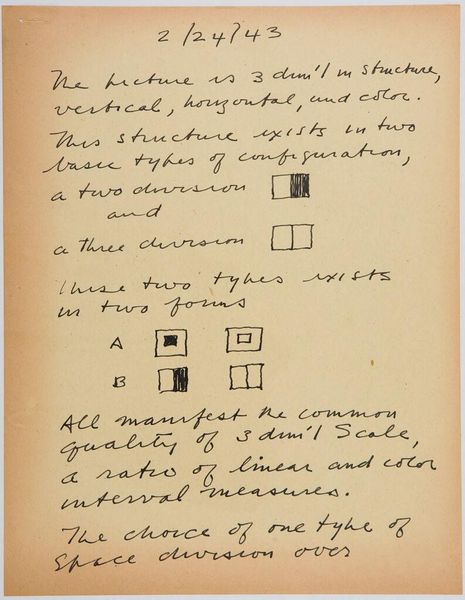
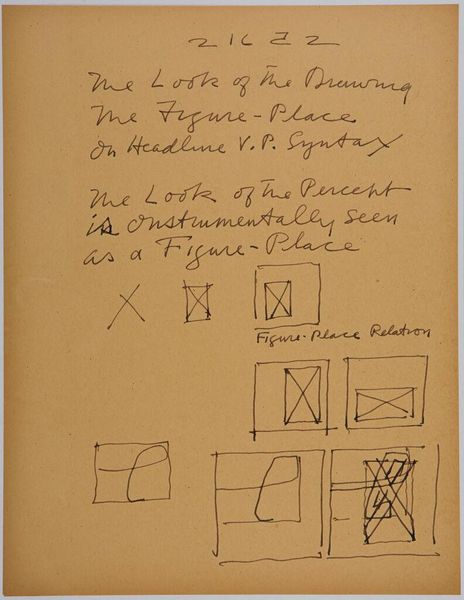
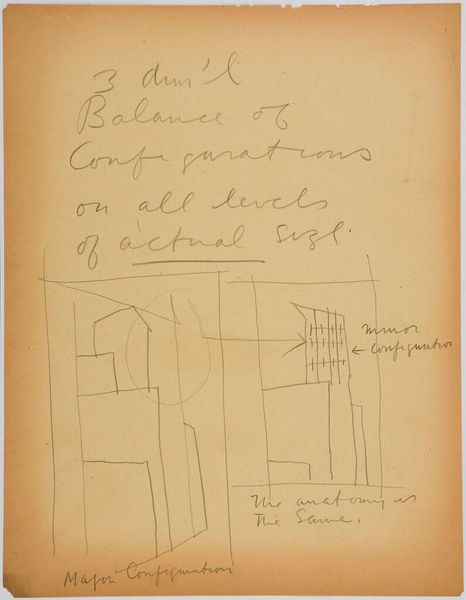
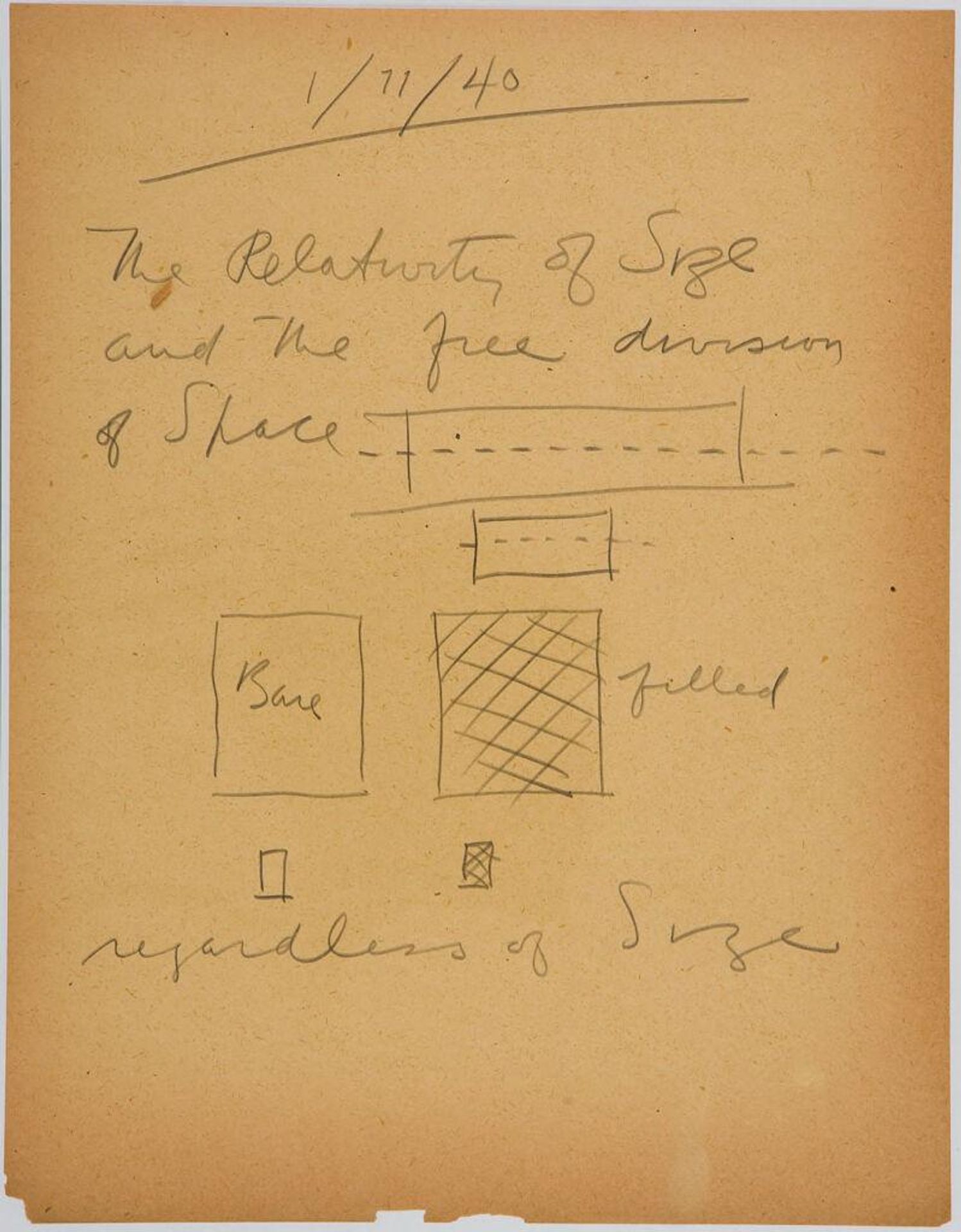
Curator: This is Stuart Davis's "Relativity of Size Diagrams," a sketch from 1940 held at the Harvard Art Museums. Editor: It feels like a visual equation, almost scientific, with a touch of whimsy in its execution. Curator: Davis was fascinated by how forms interact and create meaning. Here, he's exploring the concept of relative size and spatial division, ideas central to his abstract compositions. Editor: The words "bare" and "filled" next to the squares trigger something in me. It's a meditation on absence and presence. The empty square could represent potential, the filled one, realized form. Curator: Indeed, and consider the socio-political context. During the early 40s, abstraction was seen by some as detached from reality. Davis is asserting the intellectual rigor behind it. Editor: He reclaims abstraction, almost as if it were a universal visual language beyond any representational style or political agenda. A language to be decoded. Curator: It gives a peek into his creative process, reducing complex ideas to their most essential visual components. Editor: It does make you consider that, in art and in life, meaning is always relative. Curator: I’ll remember this sketch, a reminder that the value of art lies not just in the final work, but in the thinking behind it.