About this artwork
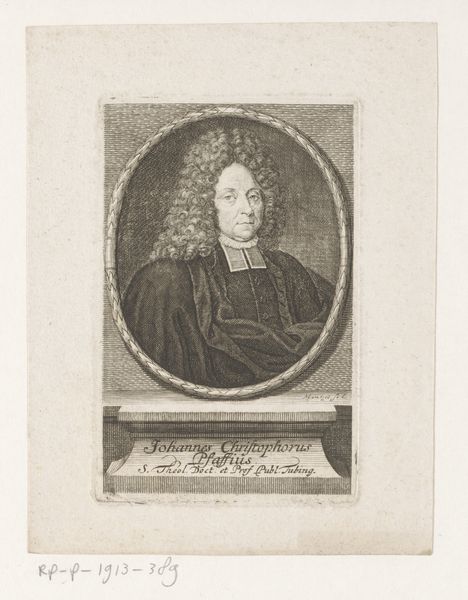
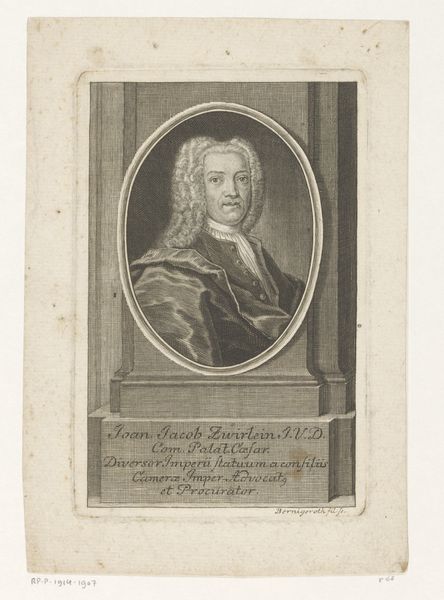
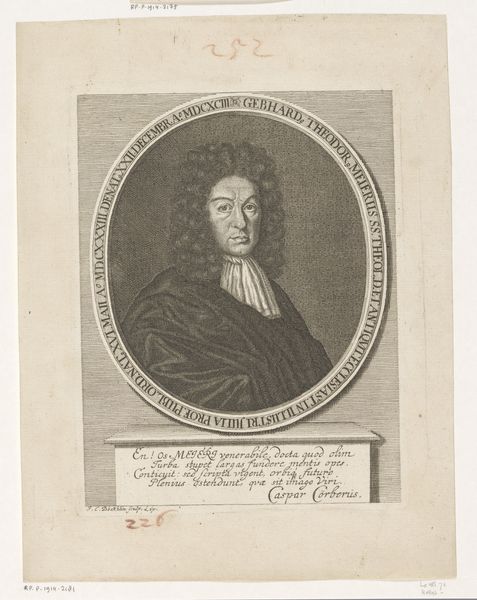
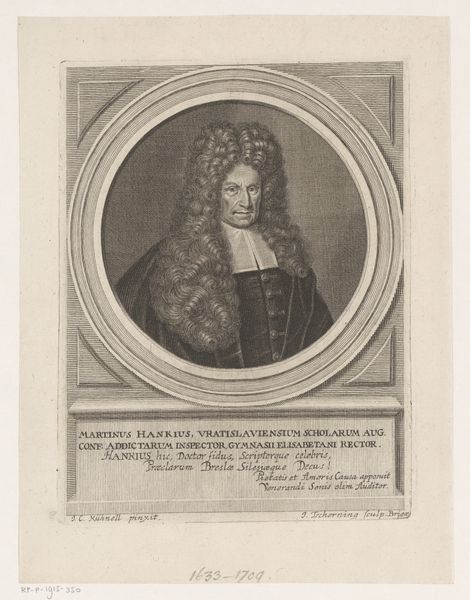
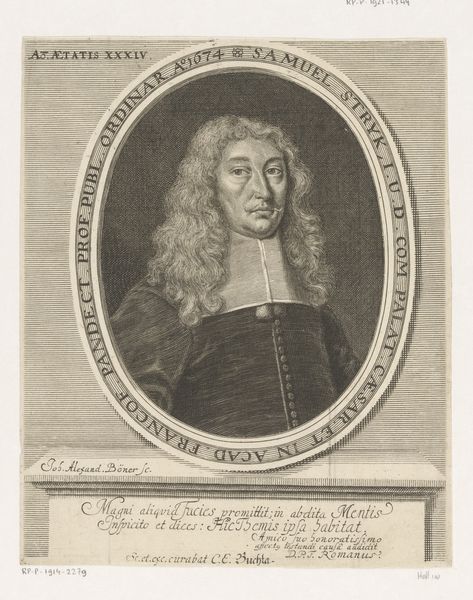
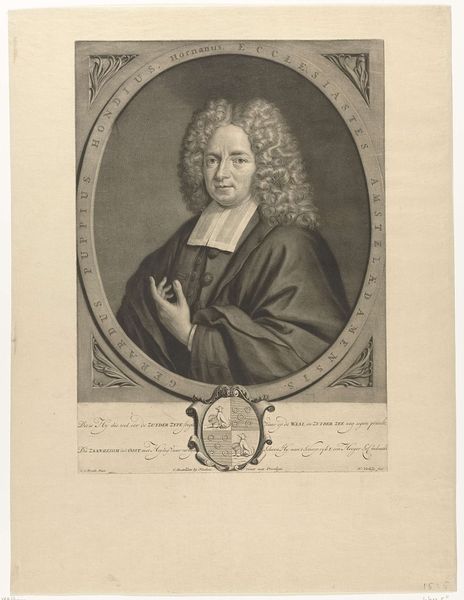
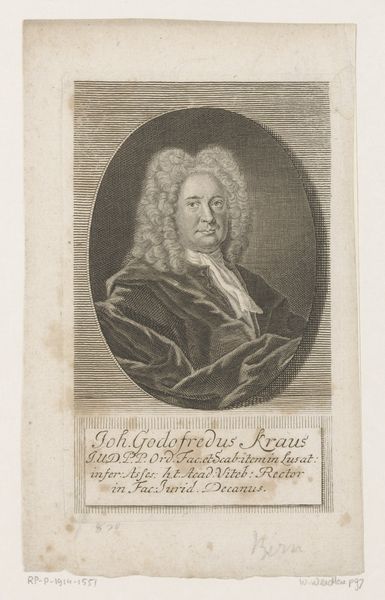
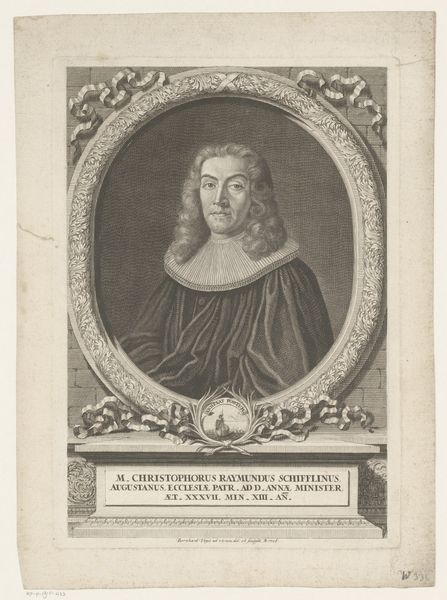
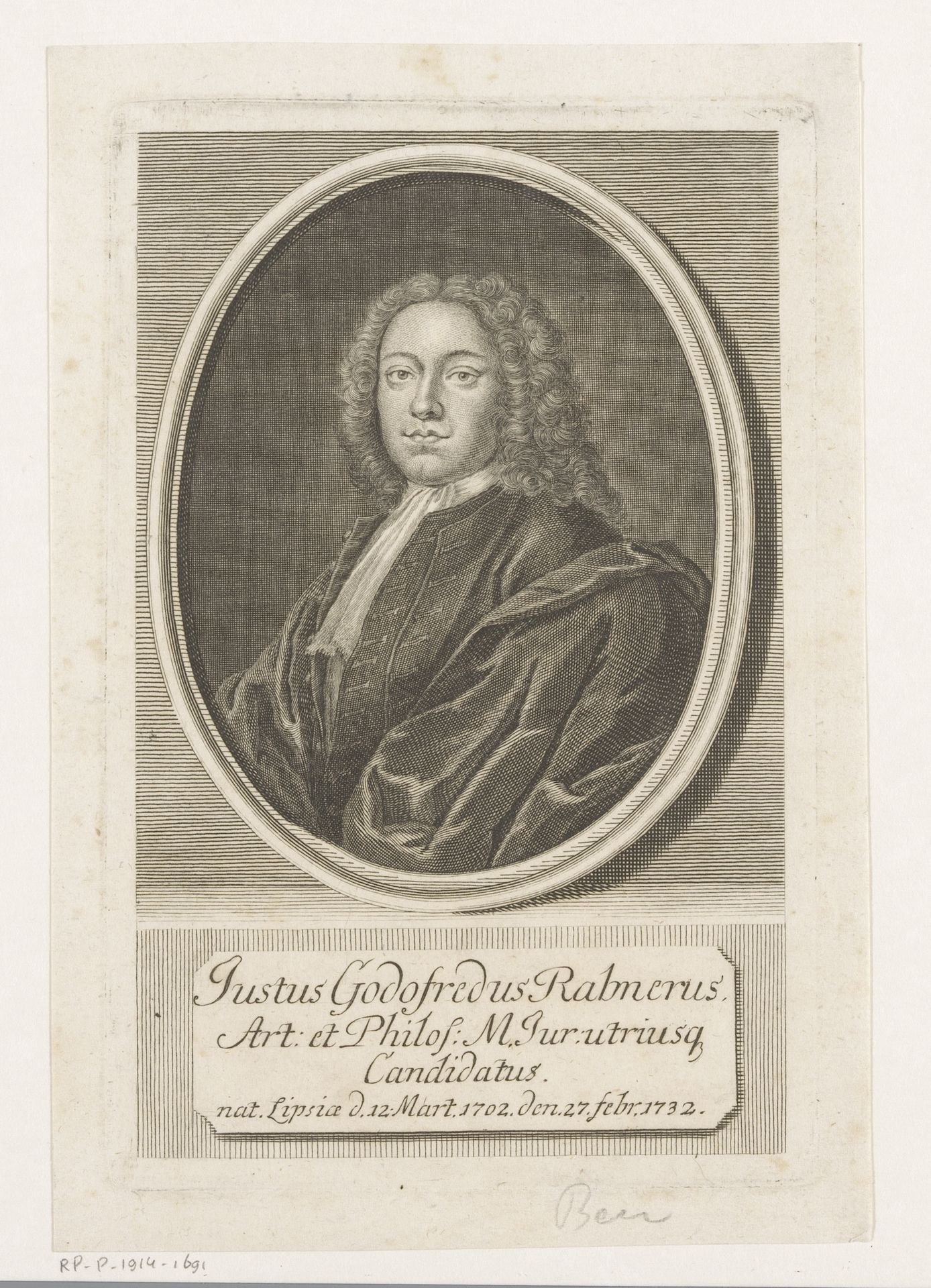
This is Martin Bernigeroth’s portrait of Justus Gottfried Rabener, made around 1732. It’s an engraving – a print pulled from a metal plate that has been incised with an image. Consider the labor involved: the engraver would have needed not only artistic skill, but also expertise in metallurgy and printing. The lines that define Rabener’s face and clothing are not simply drawn; they are the result of careful, precise cuts into the metal. The varying depth and density of these lines create a sense of volume and texture, bringing the portrait to life. Engravings like this one were often commissioned as a way to commemorate or celebrate an individual. The very act of creating a portrait in this way elevates the subject, placing them within a tradition of artistic representation that dates back centuries. It also speaks to the social context in which this artwork was created: a world where craftsmanship and artistic skill were highly valued. This portrait isn’t just a likeness; it’s a testament to the power of materials, making, and context in understanding the full meaning of an artwork.
Portret van Justus Gottfried Rabener
1732 - 1767

Martin Bernigeroth
1670 - 1733Location
RijksmuseumArtwork details
- Medium
- drawing, print, engraving
- Dimensions
- height 176 mm, width 114 mm
- Location
- Rijksmuseum
- Copyright
- Rijks Museum: Open Domain
Tags
Comments
Share your thoughts
About this artwork
This is Martin Bernigeroth’s portrait of Justus Gottfried Rabener, made around 1732. It’s an engraving – a print pulled from a metal plate that has been incised with an image. Consider the labor involved: the engraver would have needed not only artistic skill, but also expertise in metallurgy and printing. The lines that define Rabener’s face and clothing are not simply drawn; they are the result of careful, precise cuts into the metal. The varying depth and density of these lines create a sense of volume and texture, bringing the portrait to life. Engravings like this one were often commissioned as a way to commemorate or celebrate an individual. The very act of creating a portrait in this way elevates the subject, placing them within a tradition of artistic representation that dates back centuries. It also speaks to the social context in which this artwork was created: a world where craftsmanship and artistic skill were highly valued. This portrait isn’t just a likeness; it’s a testament to the power of materials, making, and context in understanding the full meaning of an artwork.
Comments
Share your thoughts