1606
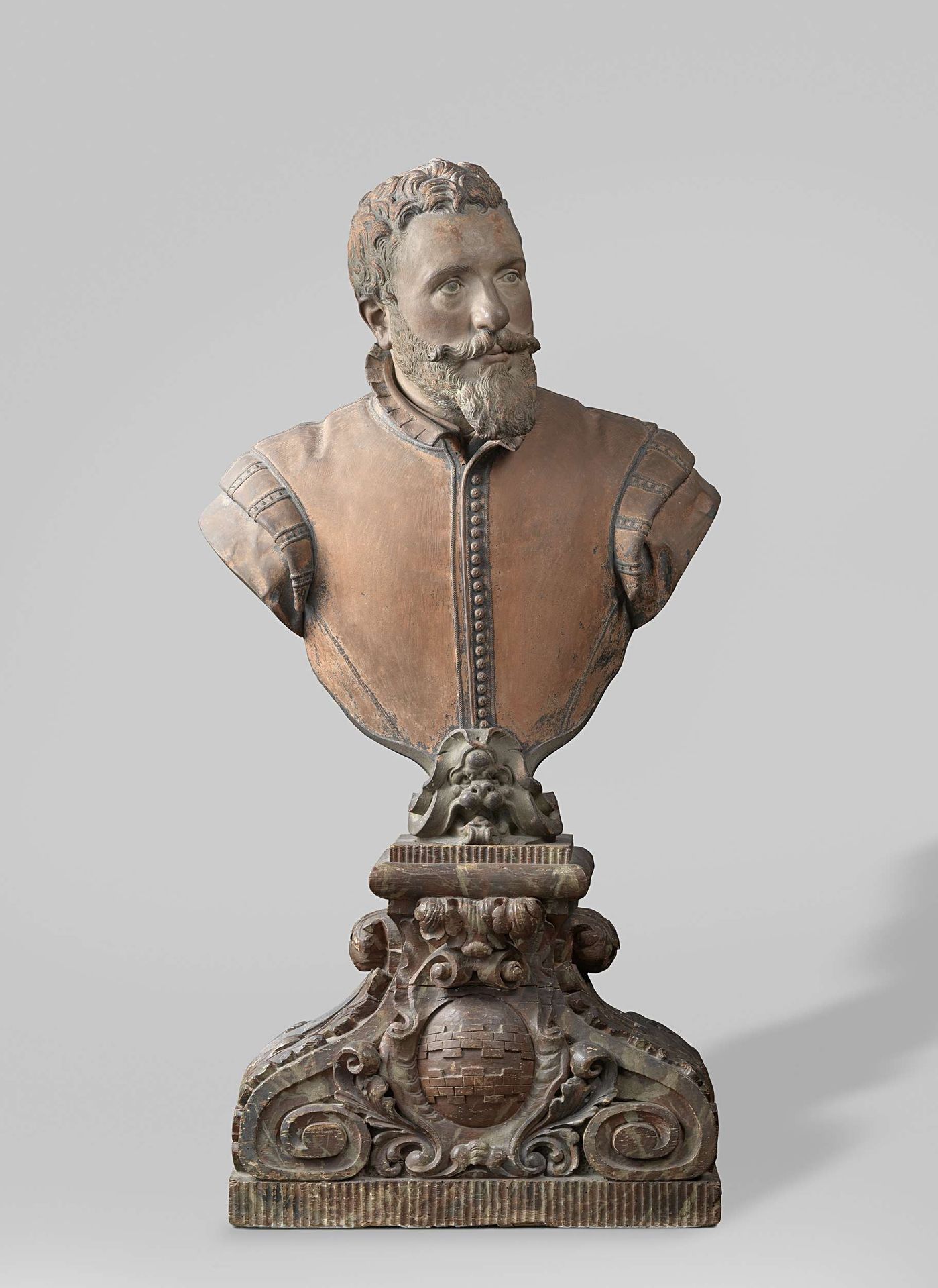
Bust of a Man Hendrik de Keyser (1565–1621)

Hendrick de (I) Keyser
1565 - 1621Location
RijksmuseumListen to curator's interpretation
Curatorial notes
This is a terracotta bust of a man, made by Hendrick de Keyser in the Netherlands at the beginning of the 17th century. The man is portrayed in formal attire, with close attention paid to his garments and facial features. Hendrick de Keyser was a leading sculptor and architect in Amsterdam, and this bust reflects the growing importance of individual portraiture in Dutch society at the time. The Dutch Republic was emerging as a major economic and cultural power, and this new sense of national identity was expressed through art. Busts like this were commissioned by wealthy merchants and members of the ruling class. The elaborate carving of the base, complete with heraldic shield, also speaks to the sitter's high social status. As art historians, we look at archival records and other historical sources to better understand the relationship between art, patronage, and social identity in the Dutch Golden Age.