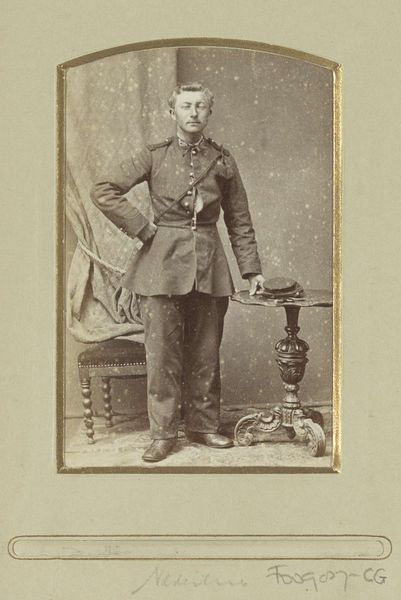
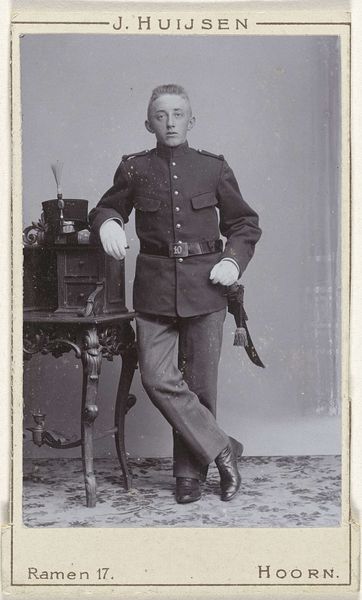
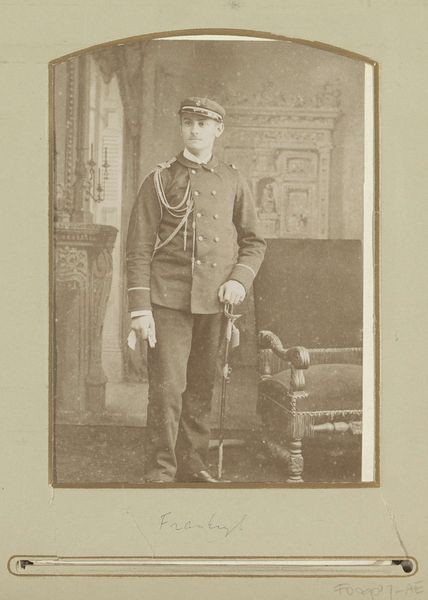
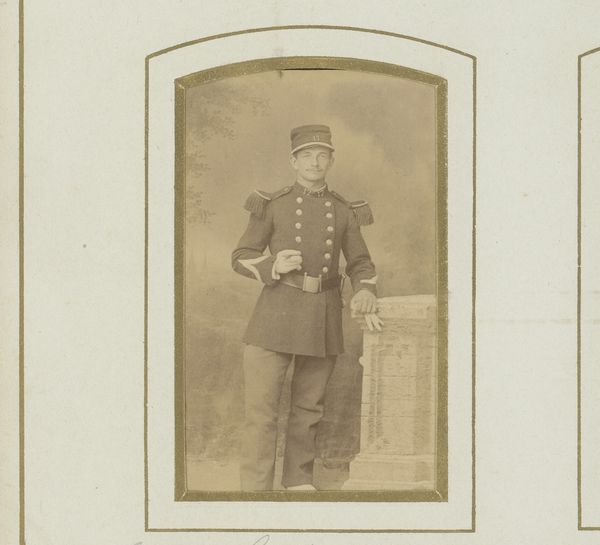
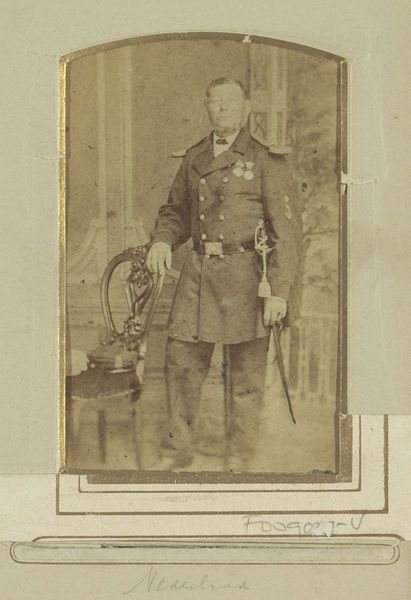
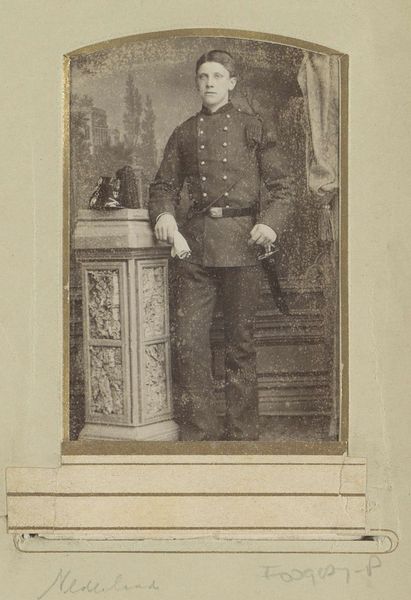
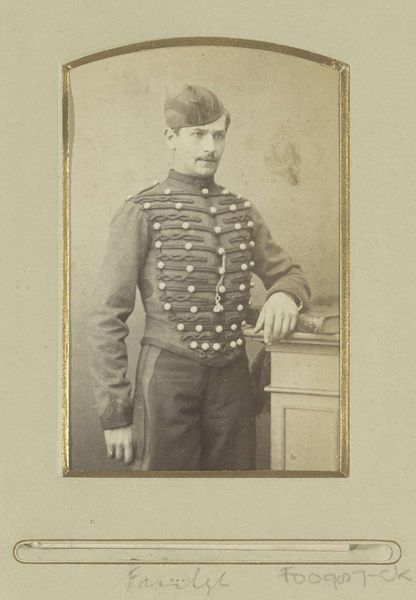
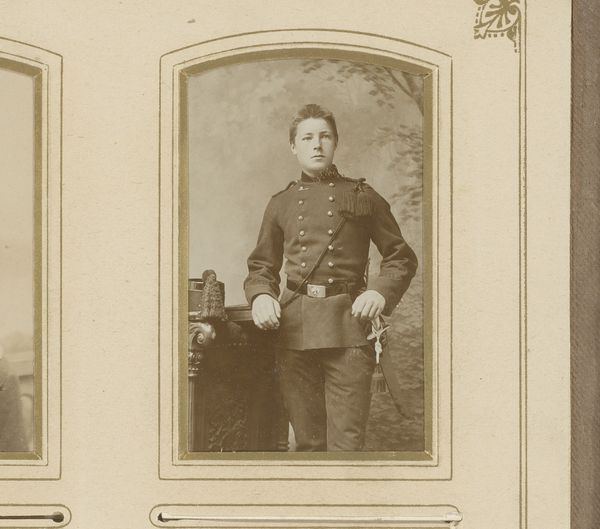
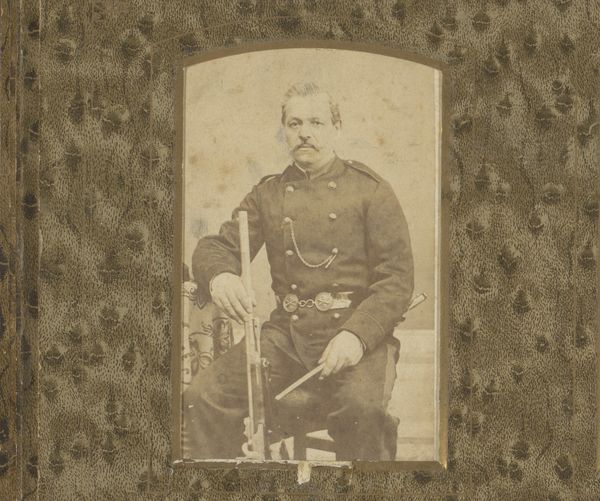
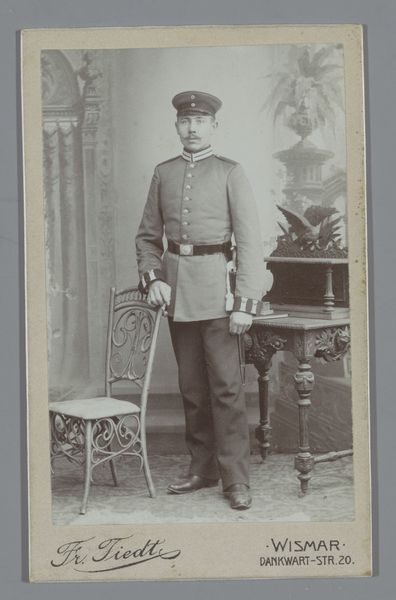
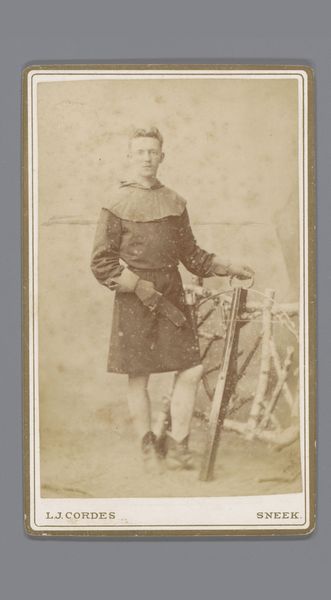
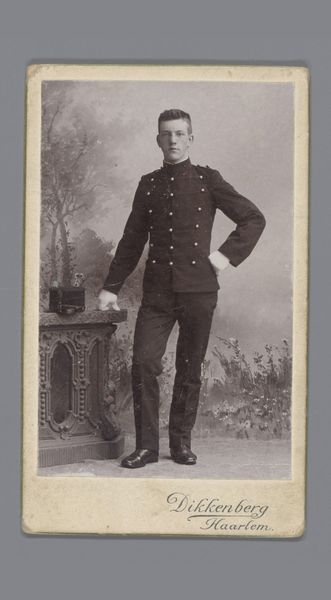
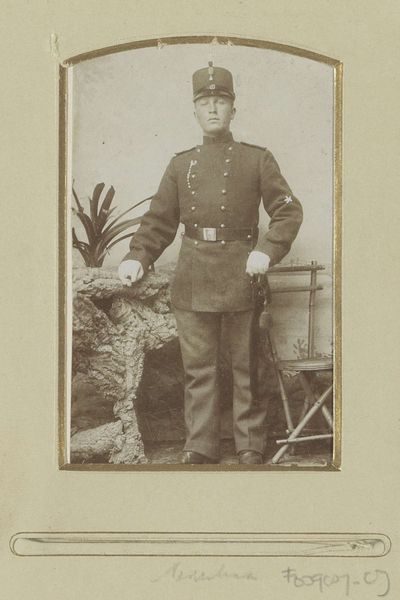
Portret van een (vermoedelijk) Nederlandse militair, staand naast een helm en een bord met opschrift 'tot weerzien 1898' before 1898
0:00
0:00

photography
#
portrait
#
charcoal drawing
#
photography
#
genre-painting
#
realism
Dimensions: height 165 mm, width 105 mm
Copyright: Rijks Museum: Open Domain
Editor: This photograph, “Portrait of a presumably Dutch Military man, standing next to a helmet and a sign with the text ‘tot weerzien 1898’," dates to before 1898. The realism in the photograph makes it appear very official, but the coloring and the framing add a soft and somewhat sad mood. How would you interpret this work and what it is saying about that era, socially and politically? Curator: Well, framed photographs like this were often commissioned to solidify social status, to present an image of authority or commitment. What I see is a negotiation between a formal military portrait and the impending end of a tour. The text "tot weerzien", see you later, suggests both a farewell to service, but perhaps also the looming potential for further deployment or conflict. Editor: So the text isn't necessarily as hopeful as it appears at first glance? Curator: Precisely. Consider the date. The late 19th century was a time of increasing colonial tensions, even in Europe. Is this man preparing to leave a peaceful domestic life, or might "tot weerzien" refer to parting ways before heading overseas? What message did the family who probably commissioned it want to convey? Duty, honor, pride – or maybe something more complex, like anxiety? The staging here–helmet and dress uniform are deliberate–they attempt to manage an affect, even manipulate the viewer to some extent. Editor: It's amazing to think about how even a seemingly simple portrait can carry such complex layers of meaning about the subject’s historical context! Curator: Absolutely. Images like this functioned as vital tools in shaping both individual and collective memory. Thinking about *why* they were made, not just *what* they depict, helps unlock fascinating insights into that time. Editor: Thanks for making me look deeper. This helps to understand the historical significance, and the power of visual culture in even a relatively straightforward work like this.
Comments
No comments
Be the first to comment and join the conversation on the ultimate creative platform.
 Collect
 React
React Comment
More like this