325 BC
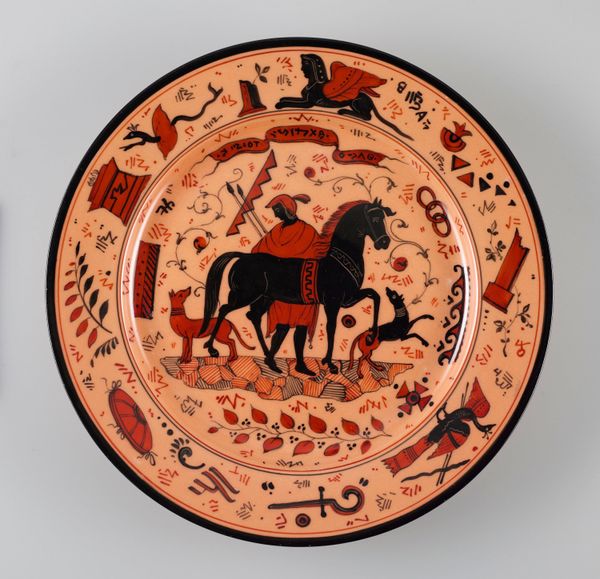
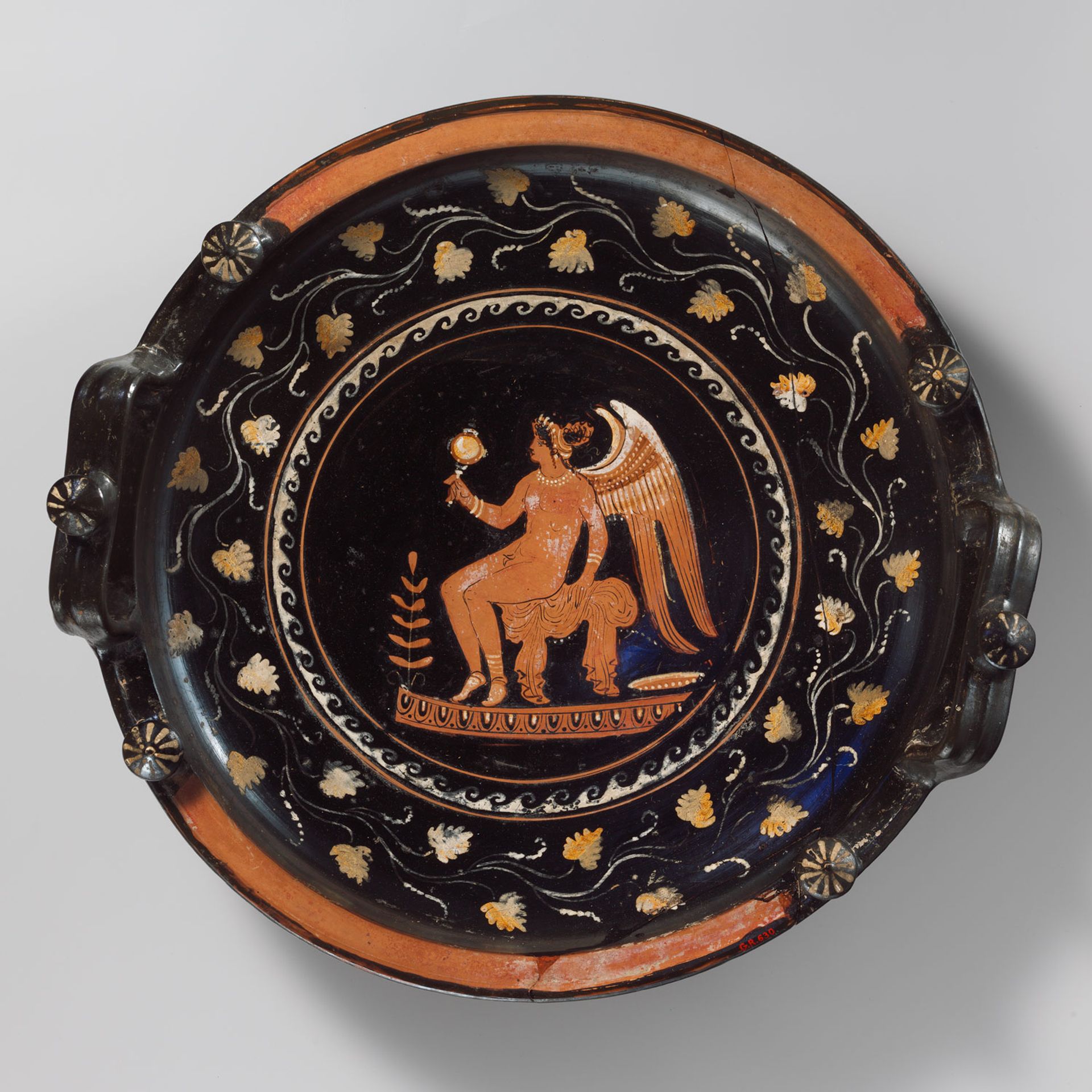
Terracotta Lekanis (dish)

Ancient Greek Pottery
@ancientgreekpottery
The Metropolitan Museum of Art
Metropolitan Museum of Art (Met), New York City, NY, USListen to curator's interpretation
Curatorial notes
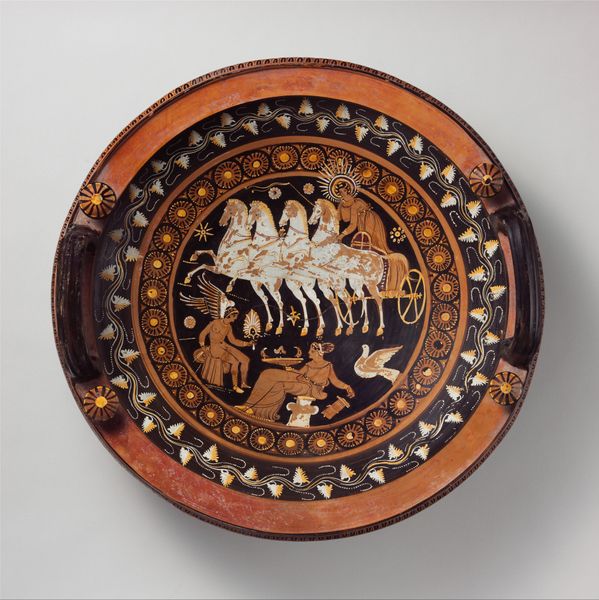
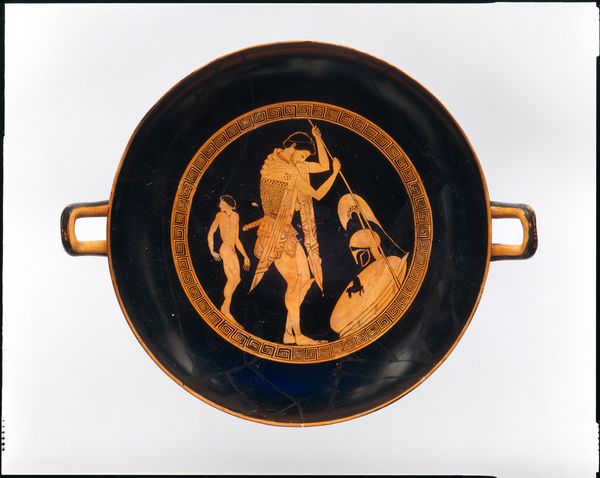
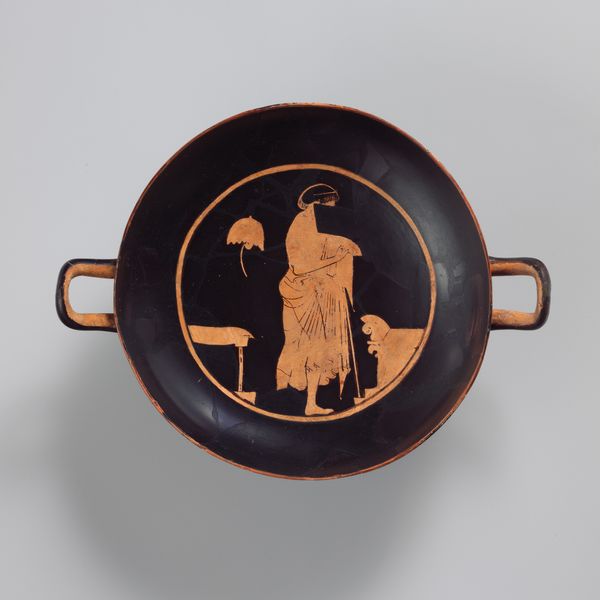
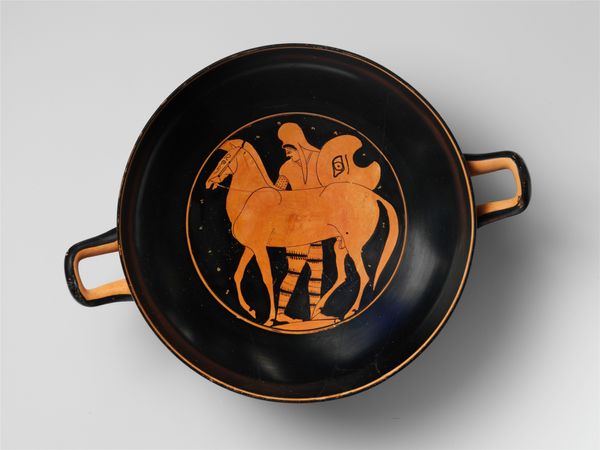
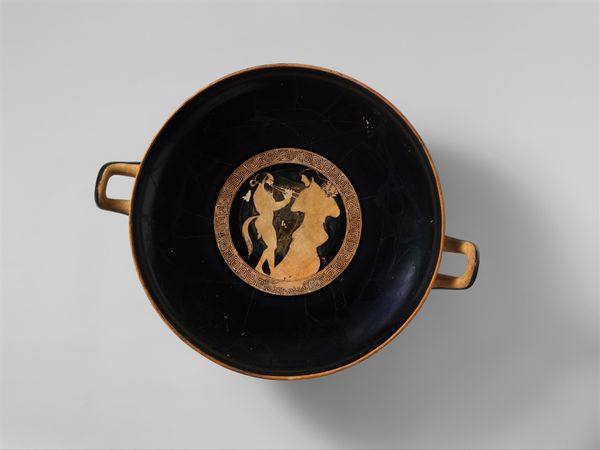
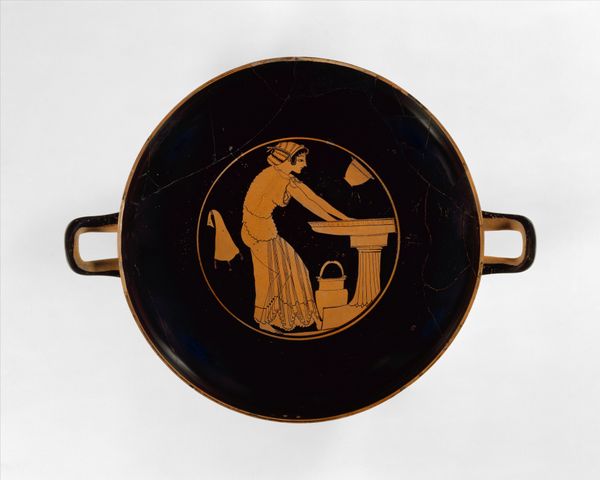
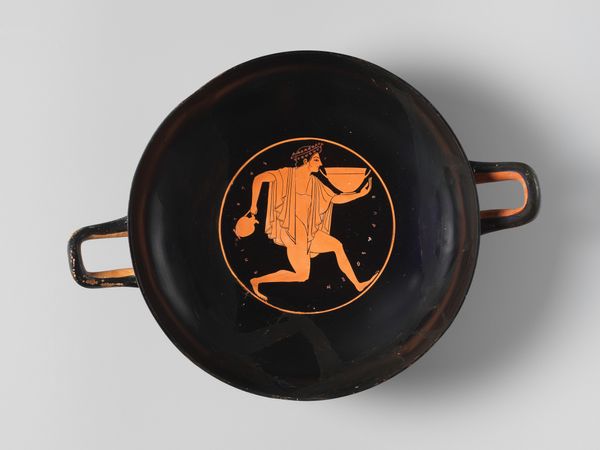
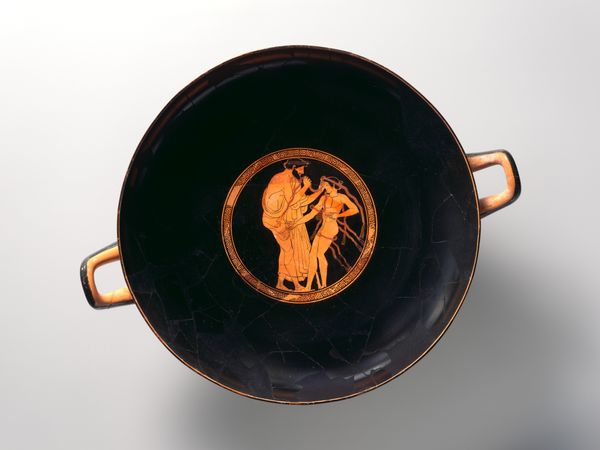
Curator: Before us is a Terracotta Lekanis, or dish, crafted around 325 BC. It's currently housed at the Metropolitan Museum of Art. What strikes you most about it? Editor: The contrasting palette. It's immediately captivating—the dark ground against the figure rendered in warm colors creates a dynamic visual tension. And the overall design, framed with those repeating motifs…it’s quite decorative, almost theatrical. Curator: Indeed. Let's consider the process involved. This ceramic piece, likely fashioned using a potter's wheel, represents a fusion of technical skill and artistic vision. Notice the smooth, even surface of the earthenware; the application of slip to create the black glaze. How might these choices reflect societal values of the time? Editor: The black glaze sets off the red figure beautifully. Formally, that central image is all about balance. We have a winged figure seated, a sprig of leaves offering a visual counterweight to the wings on the other side. It creates a satisfying equilibrium, a harmonic design. Curator: It’s believed that the vessel may have had a functional purpose, for containing cosmetics or jewelry perhaps? This connects art directly to the everyday rituals of women in ancient Greece. Editor: Perhaps, but focusing purely on the arrangement of forms, there’s more. The artist employed a language of curves versus straight lines, darks against lights. And, of course, that wave motif. The symmetry provides this incredible harmony. Curator: Looking at the way this piece might have been produced, how the economic structure dictated specialization within craft production, or how the very consumption of such items reinforced status... Editor: Yes, all worthy questions, of course. But my eye is always drawn back to the pure aesthetics. Ultimately, this lekhanis offers more than just utility. It invites us into a world defined by symmetry and decorative balance. Curator: This approach opens avenues to explore function as form and vice versa in craft. The lekhanis stands not merely as an aesthetic statement but also as a tangible record of human enterprise. Editor: And I would maintain it also invites us into this fascinating dialogue between artistic intention, skillful creation, and, ultimately, our subjective visual pleasure.