oil-paint
#
baroque
#
dutch-golden-age
#
oil-paint
#
landscape
#
river
#
charcoal drawing
#
oil painting
#
forest
#
watercolour illustration
#
watercolor
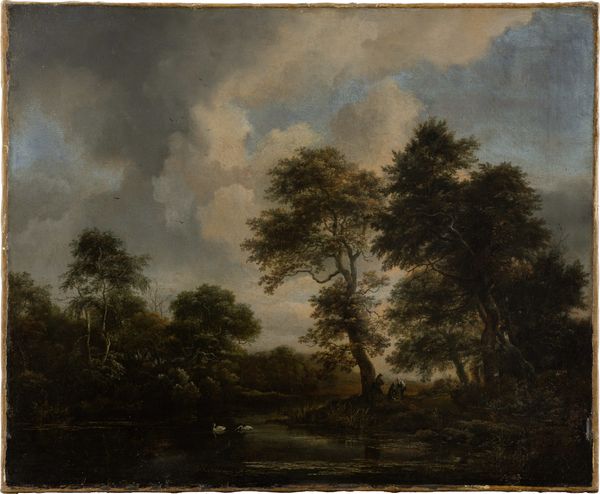
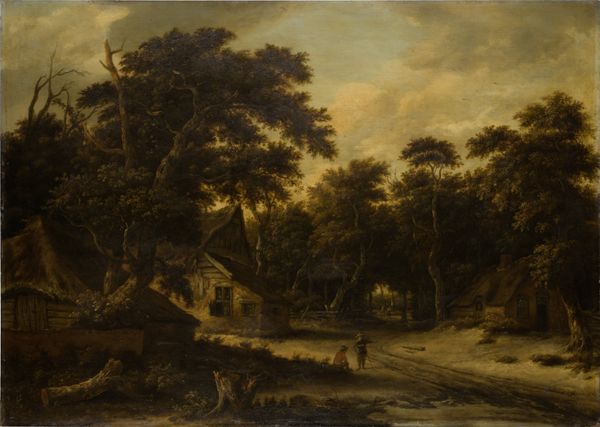
Dimensions: height 52 cm, width 62 cm
Copyright: Rijks Museum: Open Domain
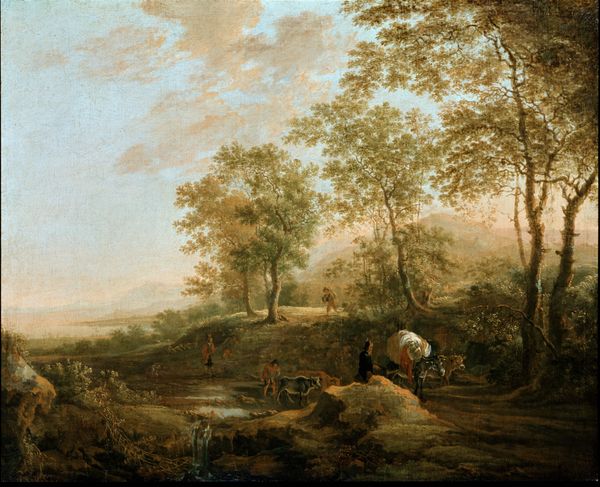
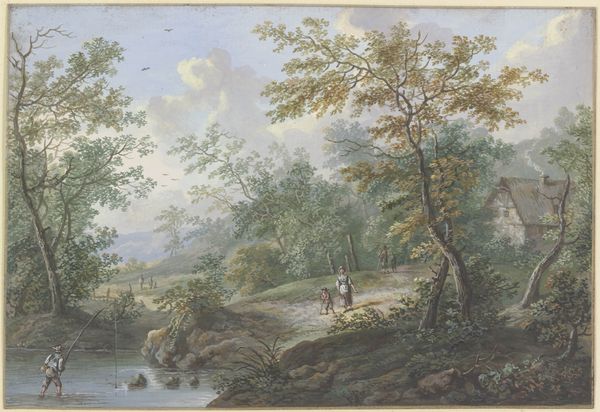
Anthonie Waterloo's "Wooded Landscape," now at the Rijksmuseum, invites us into a 17th-century Dutch forest painted with oil on canvas. The forest here is more than just trees; it's a stage where nature and humanity meet. The trees, especially, have always been powerful symbols. Since antiquity they have been associated with the source of life and death. This can be seen in ancient mythology, for example in the Nordic Yggdrasil, a cosmic tree connecting heaven, earth, and the underworld. But look closer, and you'll find how the Dutch masters have transformed ancient nature worship into a form of psychological observation. The forest becomes a space where the individual contemplates their place in the world. A similar feeling we see echoed in German Romanticism, where the forest becomes a dark, subconscious landscape. This intense engagement with nature has been with us through the ages, evolving through the collective memory of mankind. The forest is a symbol that reappears, shaped and reshaped, reflecting our deepest selves.
Comments
No comments
Be the first to comment and join the conversation on the ultimate creative platform.
 Collect
 React
React Comment
More like this