1843
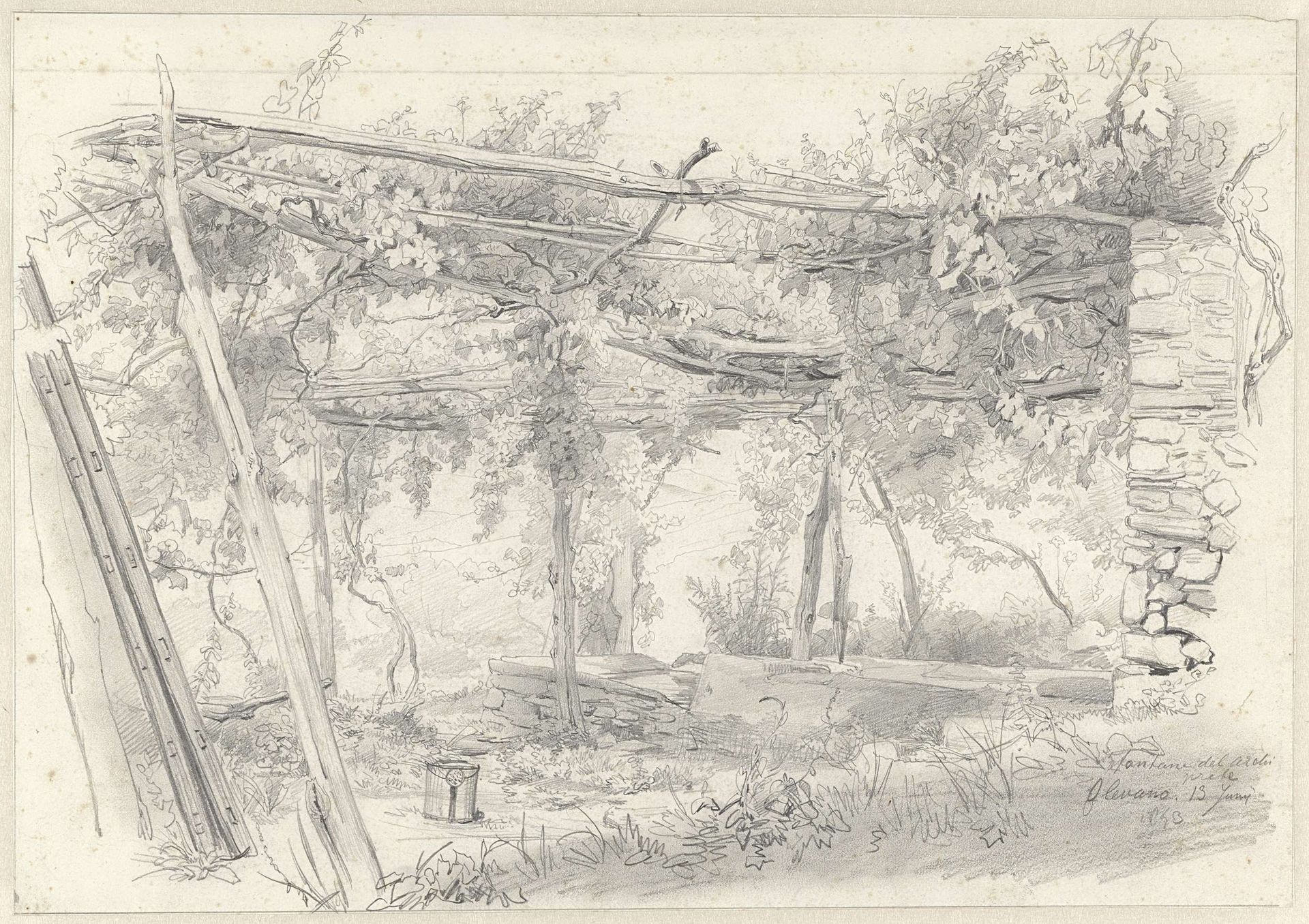
A vineyard in Olevano

Pierre Louis Dubourcq
1815 - 1873Location
RijksmuseumListen to curator's interpretation
Curatorial notes
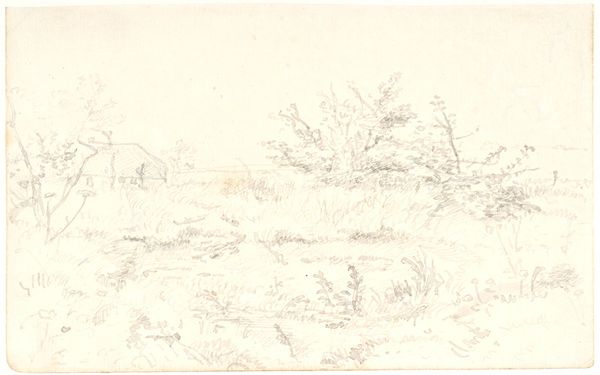
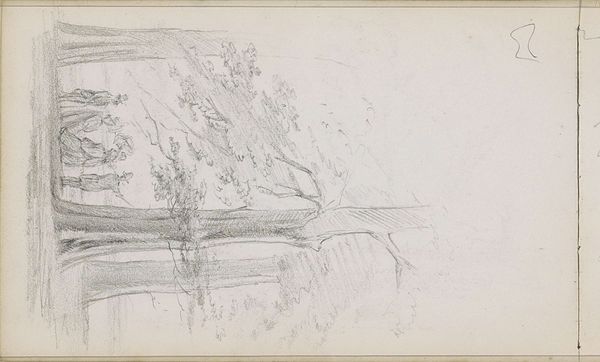
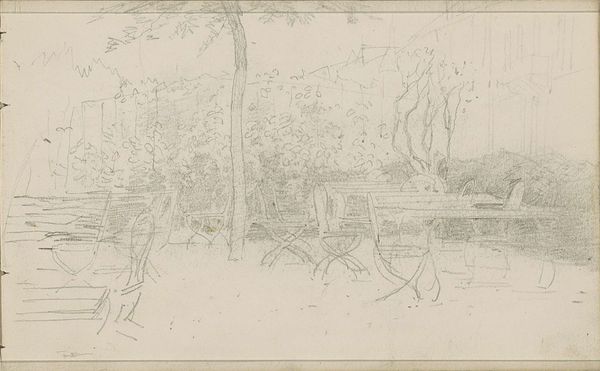
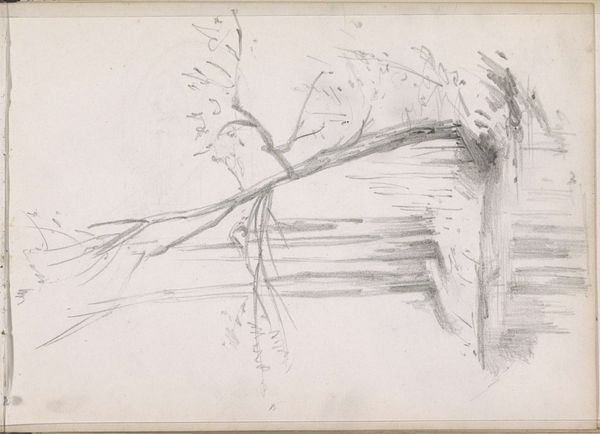
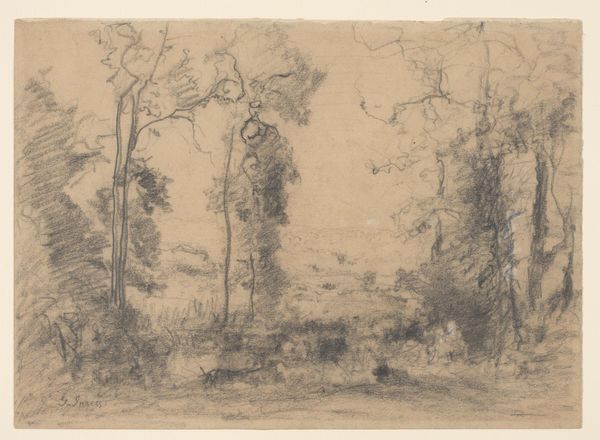
Curator: Just in from the Rijksmuseum archives, we have a glimpse into the past through Pierre Louis Dubourcq’s “A vineyard in Olevano” made in 1843 using pencil. Editor: My first thought: stillness. The light is exquisitely captured with delicate gradations; it feels suspended. There's also an interesting play between defined structural forms and the looser, organic shapes of nature. Curator: Notice the arbour. For me it suggests not only the taming of nature, but also represents hospitality and the nurturing presence of a community that gathers beneath it. Consider the symbol of the grapevine throughout history - linked to ideas of prosperity, joy, and shared heritage. Editor: Precisely! And the contrast between the rough-hewn stones of the building in the corner and the seemingly random arrangement of branches is striking. Do you think the ladders leaning precariously add to a sense of immediacy? It hints at ongoing work, interrupting the tranquility. Curator: It lends the piece authenticity; the artist wasn’t attempting a perfect, romantic vision, but rather capturing a truthful slice of rural life. The Realism is a clear stylistic intent; though the scene inspires reflection it doesn't stray into idealism. Look closely; do you see how even the humblest objects are rendered with thoughtful detail? Editor: I do, the pail by the ground seems deliberately placed in contrast with the more natural growth surrounding it, perhaps an analogy about humankind attempting to coexist with nature? The foreground details offer a depth of perspective while using contrast that creates this amazing interplay with space. It's like layers of narrative stacked one atop another. Curator: Yes, I see it too; such a dialogue indeed between humanity and nature but, ultimately, suggesting continuity and resilience. These quiet, overlooked corners of the world speak volumes if one listens close. Editor: I'll walk away seeing value even in this monochrome piece—its value lies in its meticulous study and a thoughtful assembly that offers tranquility with layers. It also reflects life during a specific period of art history as represented here so well.