About this artwork
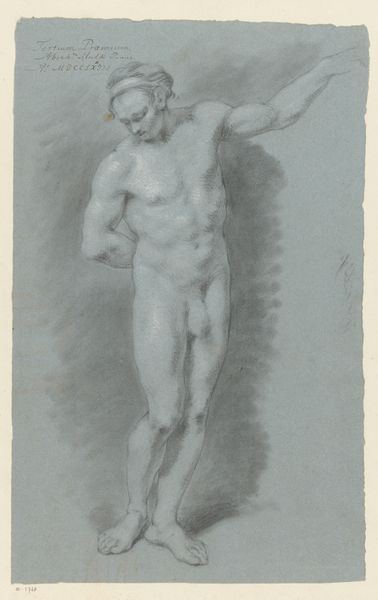
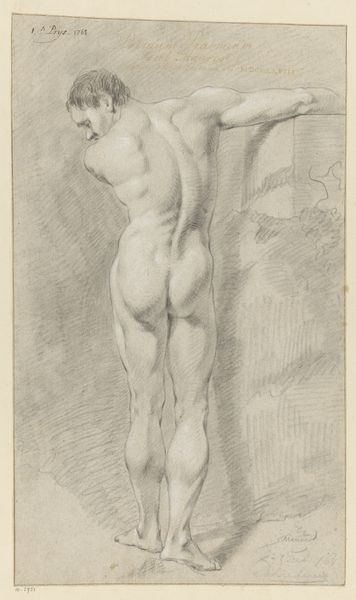
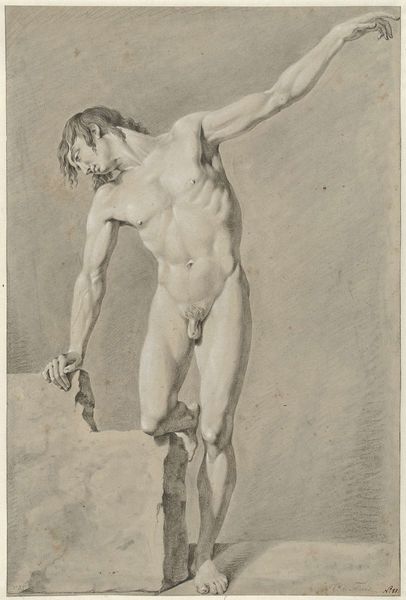
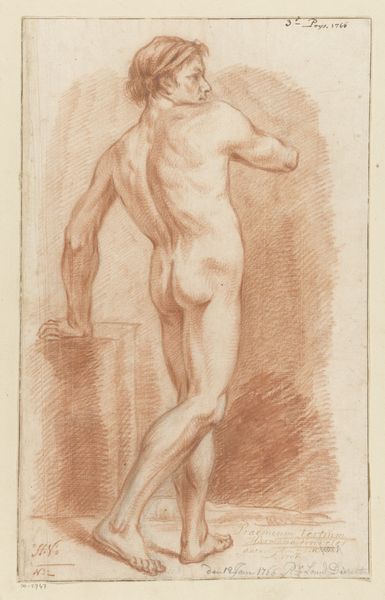
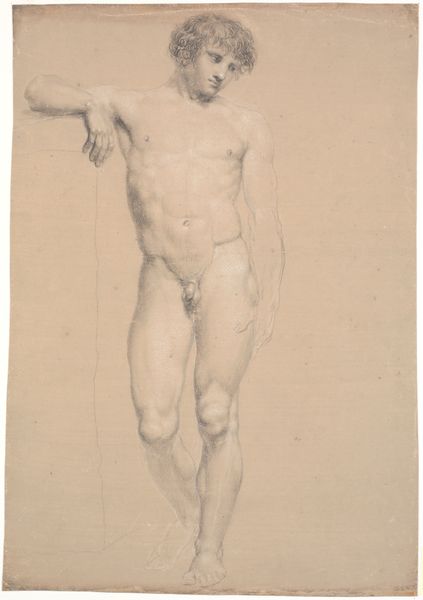
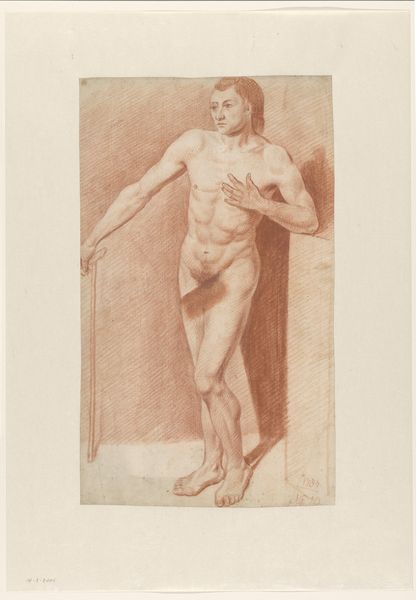
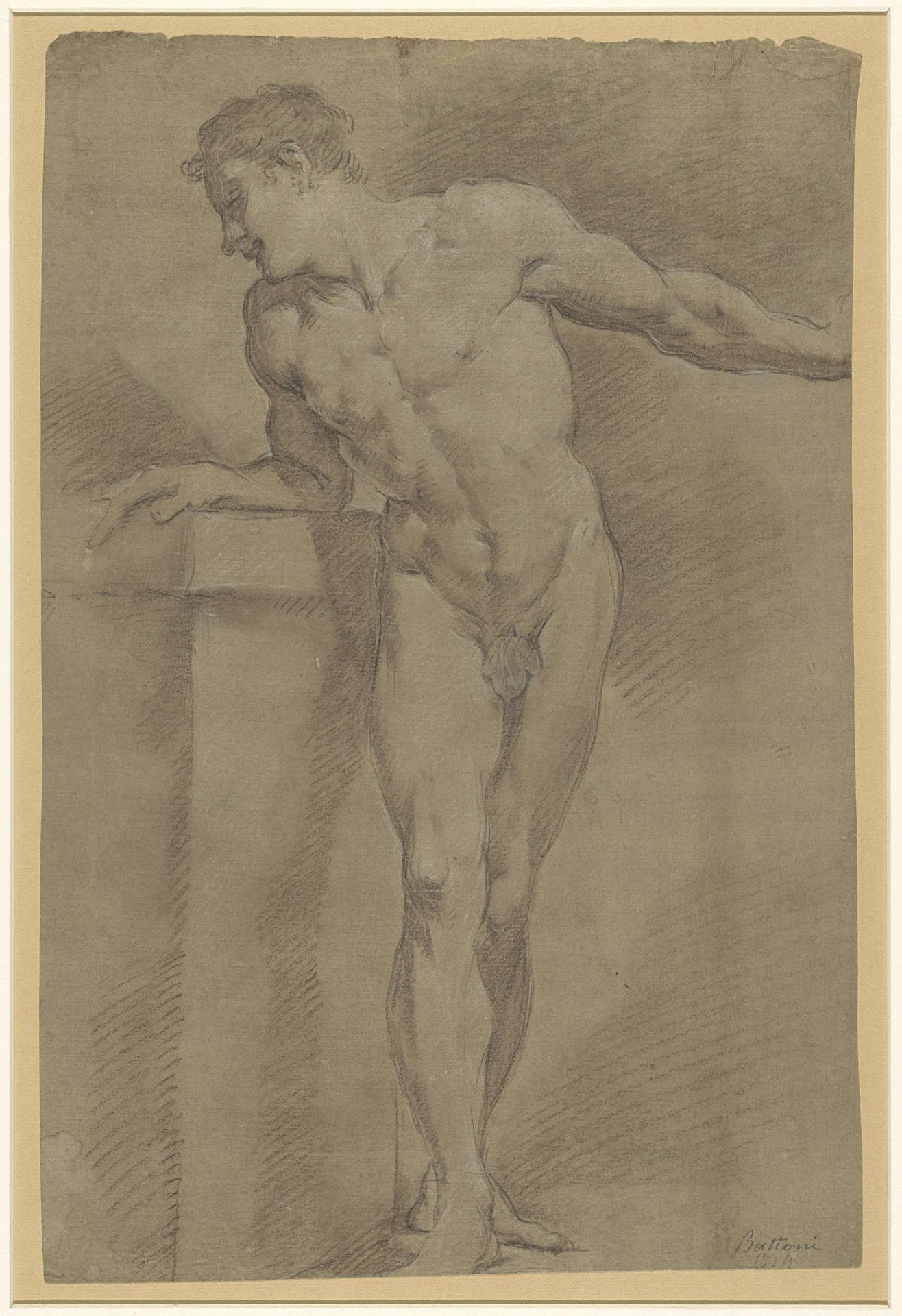
Pompeo Batoni captured this standing male model in a drawing, using confident strokes to define the subject. Notice how the man leans casually against a structure, a motif resonating through art history. This pose echoes the classical contrapposto, where the figure's weight shifts, creating a natural, relaxed stance. We see it echo in the sculptures of antiquity, like the Doryphoros of Polykleitos, where balance and harmony are expressed through the body. This borrowing from classical forms represents more than just an aesthetic choice. It is a conscious connection to a past era viewed as a golden age, seeking to imbue the present with the power and authority of antiquity. It signifies a cyclical return to foundational principles and the continuous reinvigoration of cultural memory.
Studie van een staand mannelijk model, geleund tegen een borstwering
1718 - 1787

Artwork details
- Medium
- drawing, pencil
- Dimensions
- height 425 mm, width 283 mm
- Copyright
- Rijks Museum: Open Domain
Tags
Comments
Share your thoughts
About this artwork
Pompeo Batoni captured this standing male model in a drawing, using confident strokes to define the subject. Notice how the man leans casually against a structure, a motif resonating through art history. This pose echoes the classical contrapposto, where the figure's weight shifts, creating a natural, relaxed stance. We see it echo in the sculptures of antiquity, like the Doryphoros of Polykleitos, where balance and harmony are expressed through the body. This borrowing from classical forms represents more than just an aesthetic choice. It is a conscious connection to a past era viewed as a golden age, seeking to imbue the present with the power and authority of antiquity. It signifies a cyclical return to foundational principles and the continuous reinvigoration of cultural memory.
Comments
Share your thoughts