photography, gelatin-silver-print
#
public art
#
landscape
#
outdoor photo
#
photography
#
urban art
#
gelatin-silver-print
#
cityscape
#
time lapse photography
#
public art photography
Dimensions: height 90 mm, width 120 mm
Copyright: Rijks Museum: Open Domain
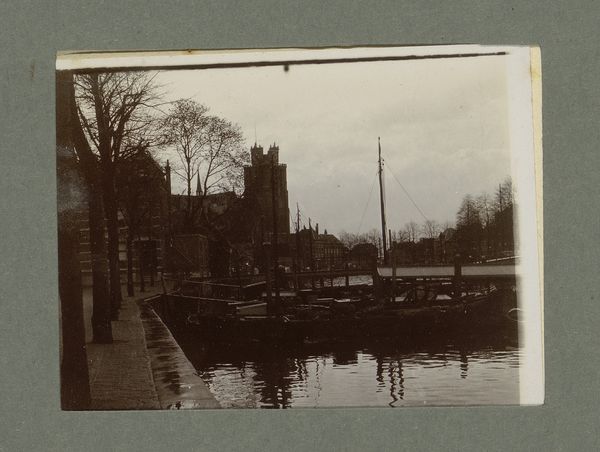
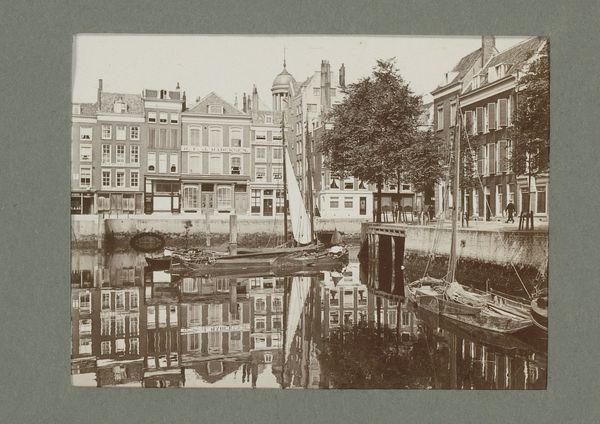
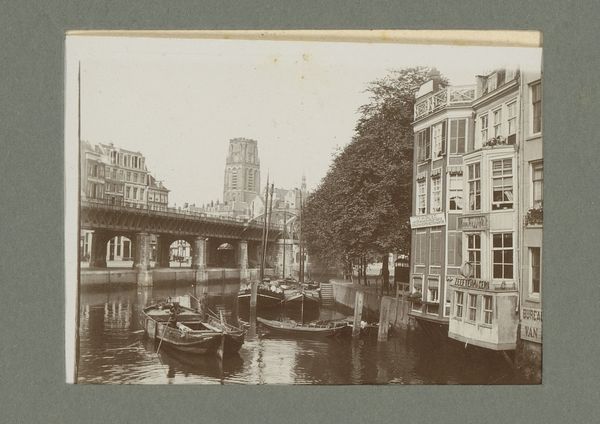
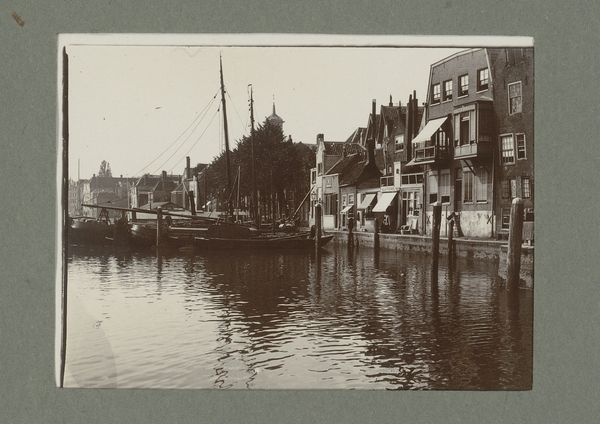
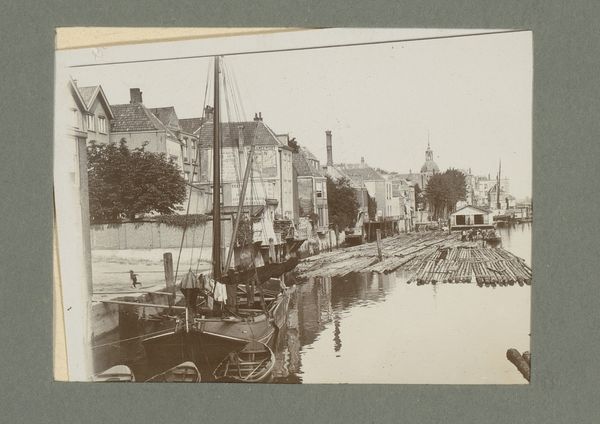
Curator: This gelatin-silver-print, dating to 1916, by Sebastiaan Alphonse Van Besten, is titled "De Grote Kerk te Dordrecht, gezien vanaf de Nieuwe Haven," which translates to "The Great Church in Dordrecht, seen from the New Harbor". Editor: What strikes me immediately is this incredibly soft, sepia-toned light. It gives everything a dreamlike quality, like looking at a memory slowly fading. Curator: Indeed. The choice of the gelatin-silver process is crucial here. This photographic printing method allows for a wide tonal range, capturing subtle details in the architecture of the Grote Kerk and the textures of the boats docked in the harbor. This era also witnessed technological changes impacting image permanence. Editor: It's funny, even though it depicts a grand church and a bustling port, there's something very intimate about the scene. The people strolling along the quay give it this beautiful, almost snapshot-like feel. Look at the kid in the push chair. It feels familiar, timeless almost. Curator: That feeling stems, in part, from Van Besten's understanding of composition. He has strategically positioned the figures to create a sense of depth and movement within the static image. He used a time-lapse technique here. Note how the water reflects light as material and energy in this cityscape, demonstrating a balance between organic forms and industrial development, reflecting societal priorities in that time. Editor: Right! It captures this amazing duality—the monumental weight of the church towering in the background juxtaposed with the ephemeral, fleeting moments of everyday life unfolding in the foreground. I find that paradox deeply moving. It's both epic and incredibly tender. Curator: Ultimately, Van Besten used photographic techniques and contextual placement in society as material expressions. He was negotiating between documentary impulse and the constructed image of progress at the time, which still has meaning today. Editor: I agree. Thinking about the push and pull between past and present, enduring structures and ephemeral moments... I see it everywhere now, echoing in my own life. Thanks for bringing this photo to life.
Comments
No comments
Be the first to comment and join the conversation on the ultimate creative platform.
 Collect
 React
React Comment
More like this