lithograph, print, woodblock-print
#
portrait
#
lithograph
# print
#
ukiyo-e
#
woodblock-print
#
orientalism
Dimensions: height 366 mm, width 256 mm
Copyright: Rijks Museum: Open Domain
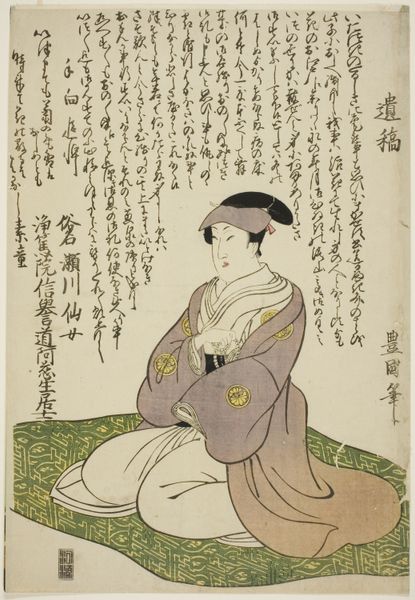
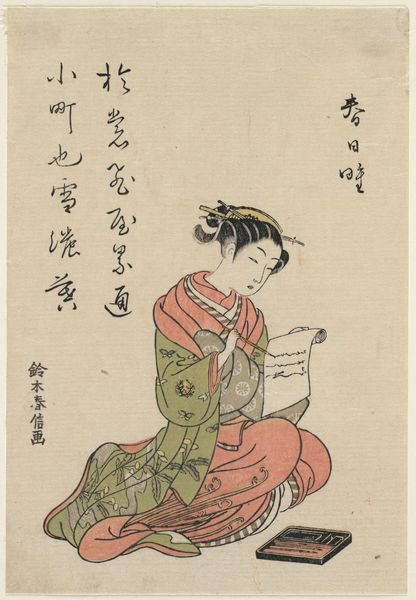
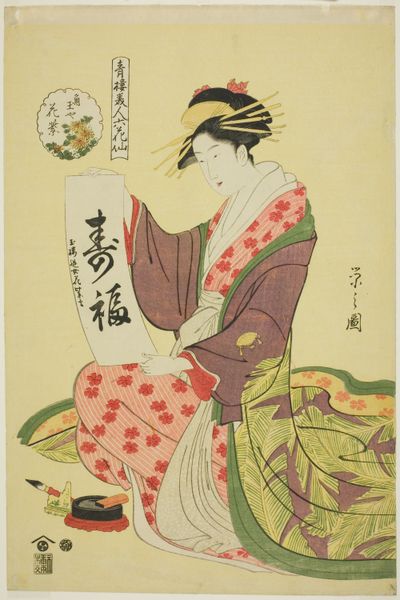
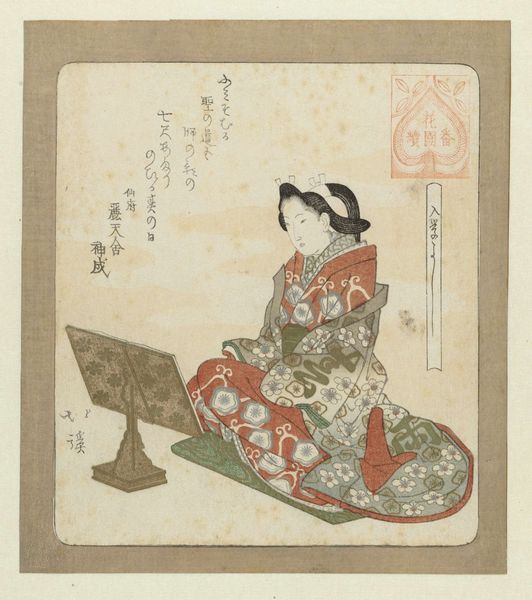
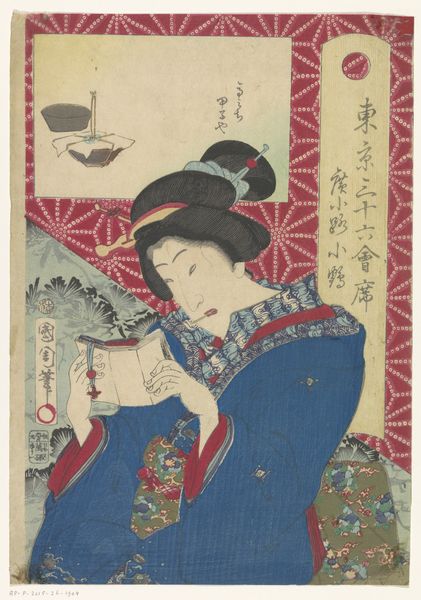
Editor: Here we have Utagawa Toyokuni I's "Man met een prent in zijn handen," created sometime between 1779 and 1825. It's a woodblock print, an example of ukiyo-e, and it gives the impression of quiet contemplation. What significance do you see in the man's focused attention on the print he holds? Curator: That’s a keen observation. Ukiyo-e, translating to "pictures of the floating world," were not simply aesthetic objects; they actively participated in constructing social identities. Here, consider the gaze: Whose gaze is valued? Who has the power to look, and who is subjected to that gaze? The man's focused attention suggests a cultural elite, someone with the leisure and resources for intellectual pursuits. Notice his elaborate kimono. What does this portrait say about class and the consumption of art within that social context? Editor: So, it's less about the image on the print and more about what his engagement with it signifies about him? Curator: Exactly! Think about who was commissioning and consuming these prints. Were they part of a broader cultural shift? How did prints function as a form of social currency, defining one's position within the shifting social landscape of Edo-period Japan? This artwork speaks to the formation of identity through cultural commodities. What does it tell us about how class, gender, and perhaps even political allegiances were visually expressed and consumed? Editor: That frames it so differently. It's less about passive appreciation and more about actively performing a role, or broadcasting one's position through cultural engagement. Curator: Precisely! And how does the choice of subject matter – a man engaging with art – reflect upon the value placed on artistic and intellectual pursuits within that society? We might also think about the print *within* the print: who is it trying to reach and influence? Editor: I never would have considered that angle, the art within the art piece. Now I am thinking about layers of audiences, both present and absent from this work. Thanks.
Comments
No comments
Be the first to comment and join the conversation on the ultimate creative platform.
 Collect
 React
React Comment
More like this