


Curatorial notes
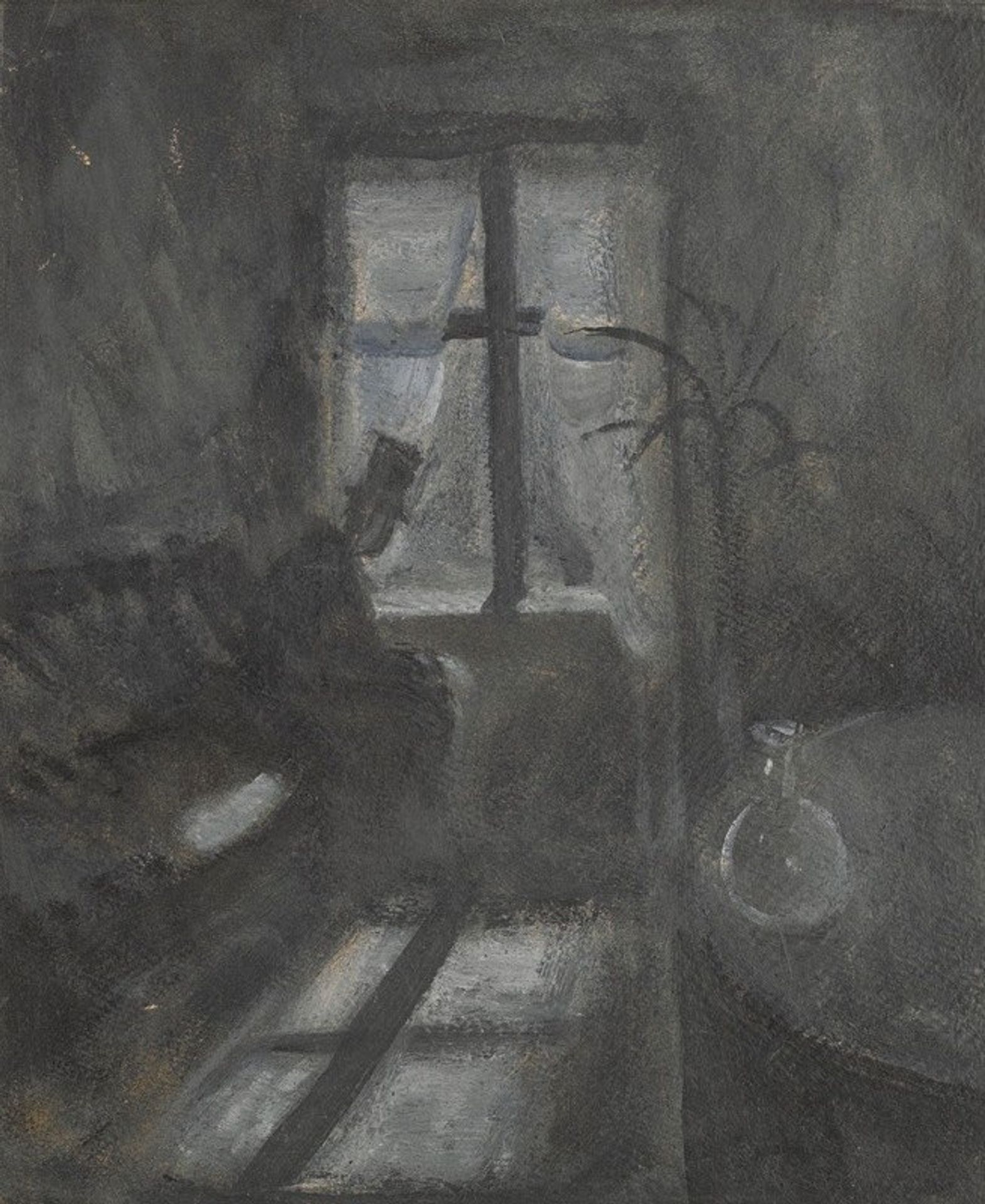
Curator: Here we have Edvard Munch's "Night in Saint-Cloud," an oil painting from 1892. It depicts an interior scene dominated by shades of grey and a somber mood. Editor: It certainly is… heavy. Almost oppressive. The overwhelming darkness, broken only by the ghostly light from the window...it evokes such a feeling of isolation. The window pane almost looking like a cross, bringing thoughts about a penitentiary and the repentance feeling when locked there at night. Curator: Interestingly, Munch painted this while living in Saint-Cloud, near Paris. It’s thought to reflect a period of intense personal grief for him, following his father's death a few years prior. These sorts of pieces are usually the most powerful artworks created. Editor: The lone figure sitting by the window then becomes a symbol of mourning, perhaps even Munch himself wrestling with loss. It reminds me a little of traditional memento mori imagery, that contemplative quietude focused on the awareness of death. Curator: Absolutely. The social and personal context is key to understanding the work. This was painted during a time when grief and melancholy were common artistic themes, partly reflecting broader anxieties about mortality and spiritual uncertainty in a rapidly modernizing Europe. And Munch never shied away from personal subjects as an inspiration for a concept. Editor: I see how he translated this melancholy in the visual symbols; the barren plant on the table next to the carafe speaks of decay, but there’s a translucent quality as the room’s atmosphere melts with light... Like hope stubbornly persisting, even in deep sorrow. Curator: His innovative style contributes to this feeling, breaking away from more traditional academic approaches. We see a more subjective approach when it comes to applying the color. A modern view applied on canvas. Editor: For me, the lasting impression is that pervasive gloom—yet, that window hints that some kind of redemption exists. Light will always come through, regardless. Curator: An incredibly personal painting capturing a universal human experience in that moment, but now made eternal by Munch. Editor: I’ll definitely remember this piece and the way the color gray, rather than being drab, shows this introspective emotional state.