1768
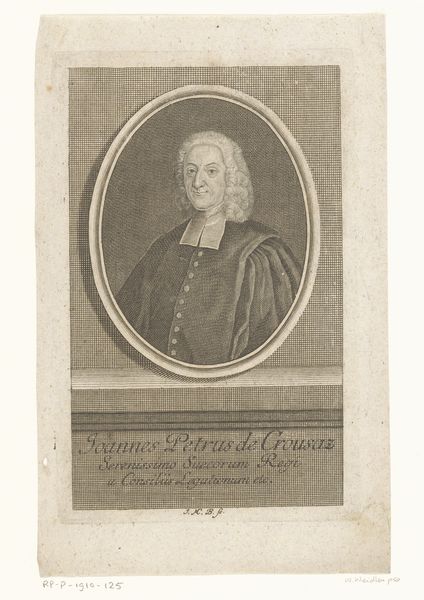
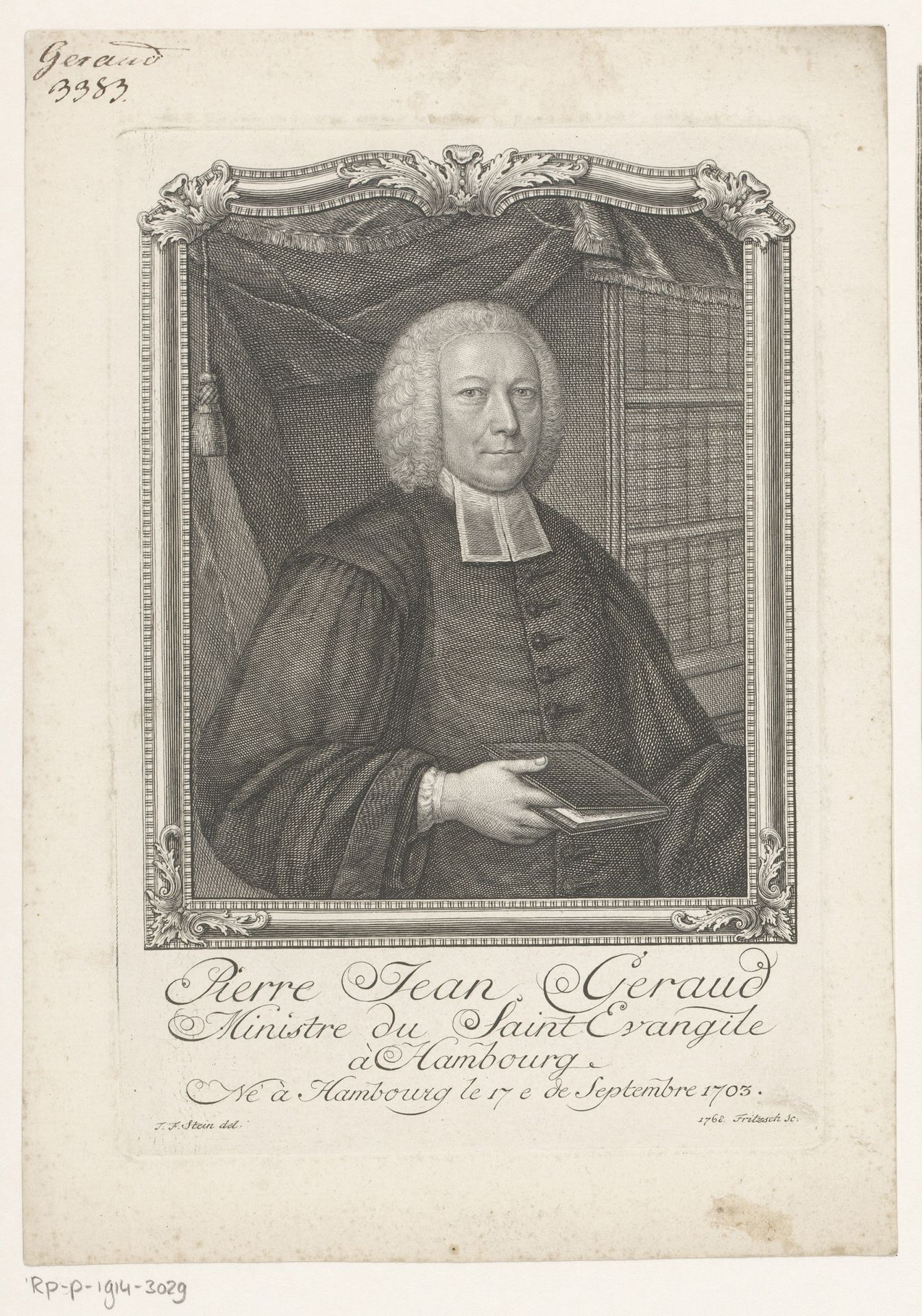
Portret van Jean Pierre Géraud

Christian Fritzsch
1695 - 1769Location
RijksmuseumListen to curator's interpretation
Curatorial notes
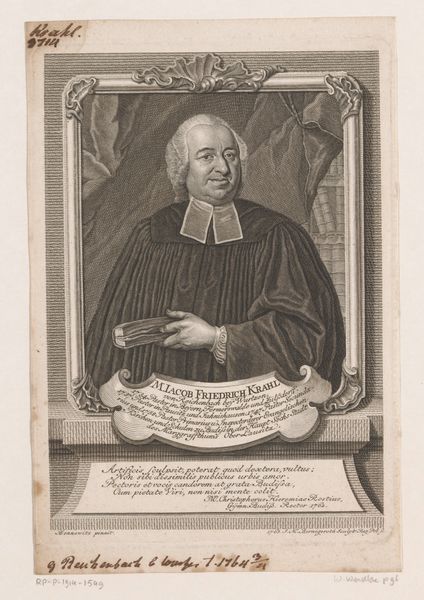
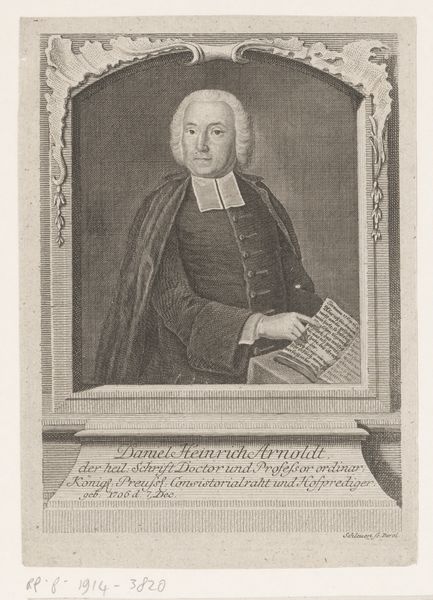
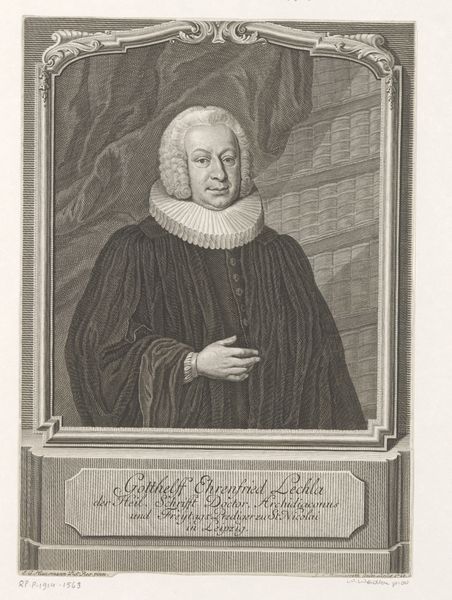
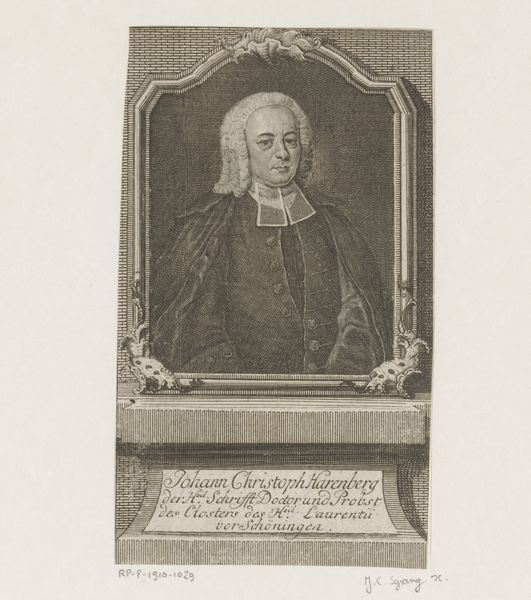
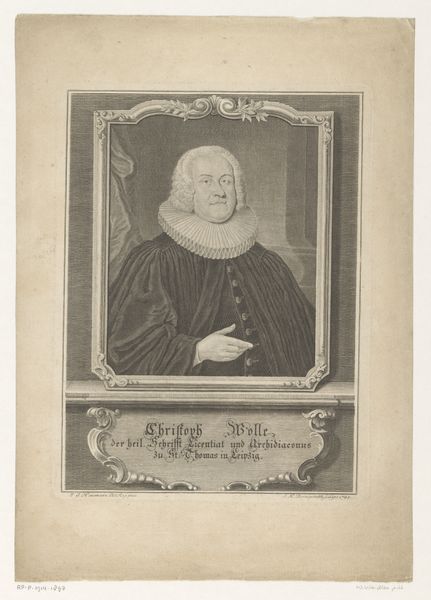
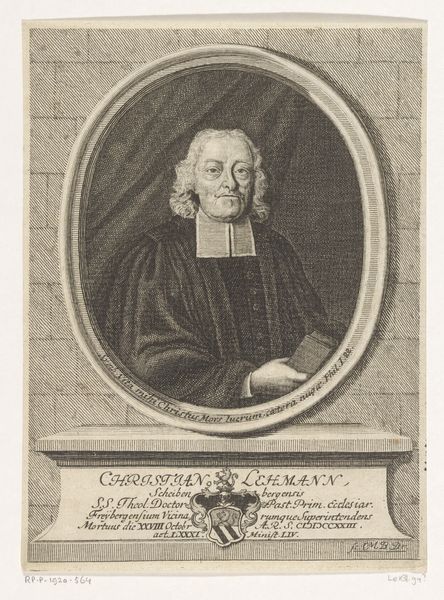
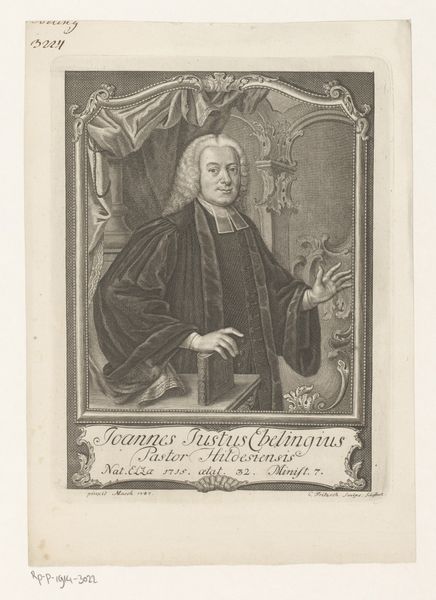
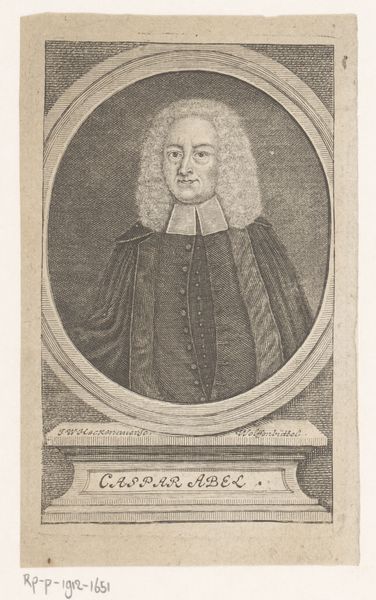
Editor: This is "Portret van Jean Pierre Géraud," an engraving from 1768, currently housed in the Rijksmuseum. I'm immediately struck by how the subject, despite being confined within a decorative frame within the print itself, still manages to project an air of authority. It makes me wonder, how would this image function in 18th-century society? Curator: That's a great observation! The portrait, beyond its immediate function as a representation of an individual, operated within a complex visual and social system. Consider the subject, a minister, likely an important figure in his community. The trappings of his office—the robes, the book, the suggestion of a study filled with more books— all contribute to constructing a very specific public image. What impact do you think the choice of engraving, a reproducible medium, had on the dissemination of that image? Editor: Well, since it's a print, wouldn't that allow it to circulate more widely than, say, a painted portrait? Therefore broadening the reach of his authority? Curator: Precisely! The print medium facilitated distribution and reproduction. Think about who the intended audience might have been: congregants, fellow clergy, potential patrons? This image works as both a personal memento and a piece of political imagery, reinforcing the church's influence in public life. Did the artistic choices further these aims? Editor: The Baroque frame adds an ornate touch that seems designed to ennoble him, right? Also the lettering is interesting, almost like another decorative element. Curator: Exactly. These aesthetic choices served to further legitimize his status within the cultural context of 18th-century Hamburg. It's a carefully constructed image intended to convey not just likeness, but also power and position within a social structure. This illuminates how even something that seems simple, like a portrait, engages with really crucial socio-political dynamics. Editor: It’s fascinating to think about how much this little engraving is communicating about the broader power dynamics of the time. Curator: Absolutely. And understanding the role of art within those systems allows us to really unlock the multiple layers of meaning in even the seemingly simplest images.