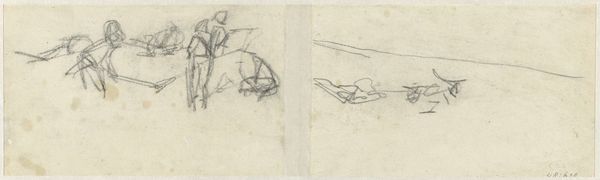
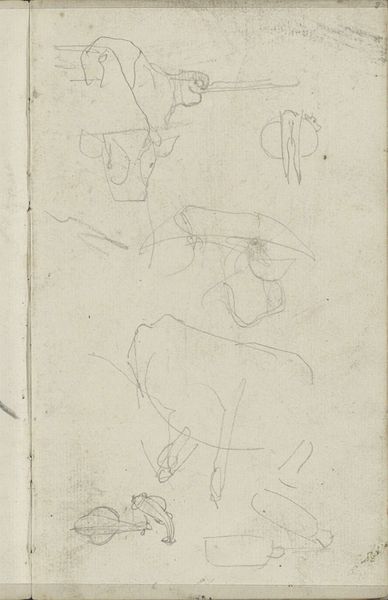
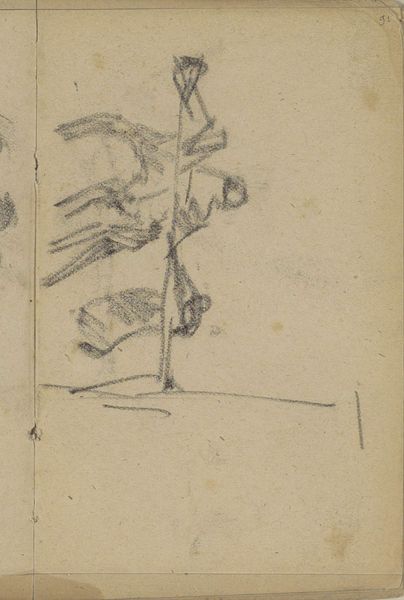
drawing, ink, pen
drawing
dutch-golden-age
pen sketch
landscape
figuration
ink
pen work
pen
realism
Dimensions: height 80 mm, width 180 mm
Copyright: Rijks Museum: Open Domain
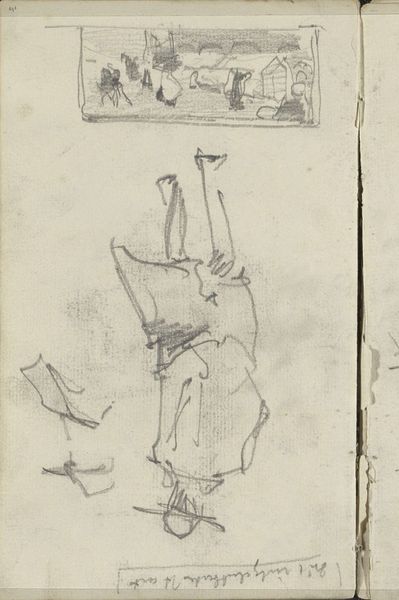
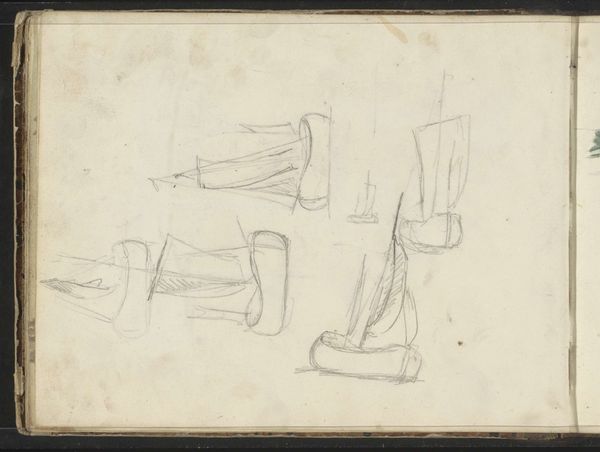
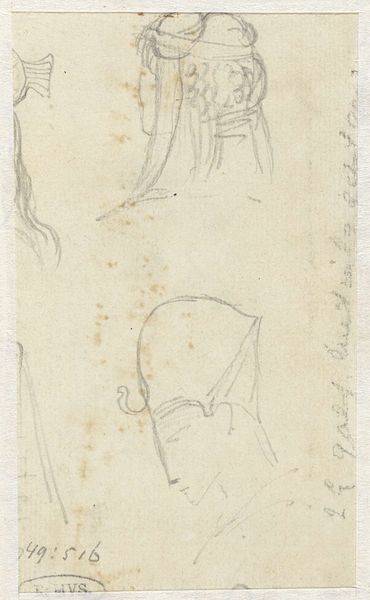
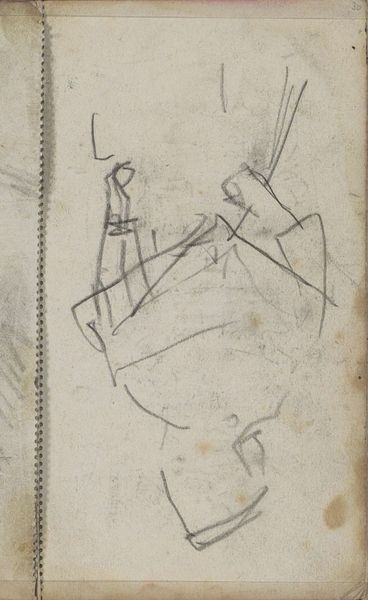
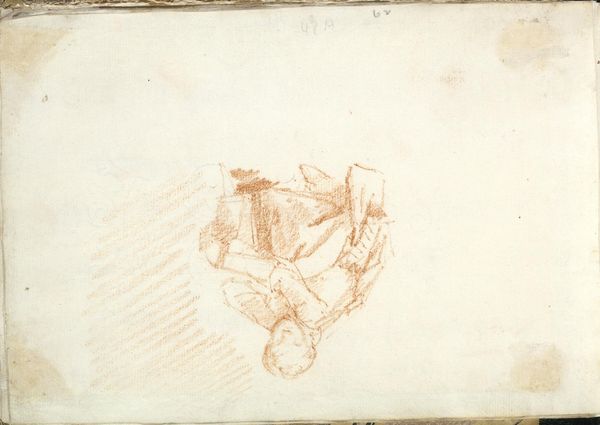
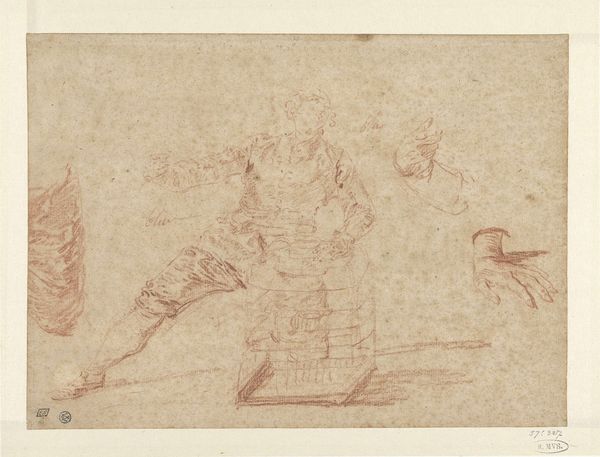
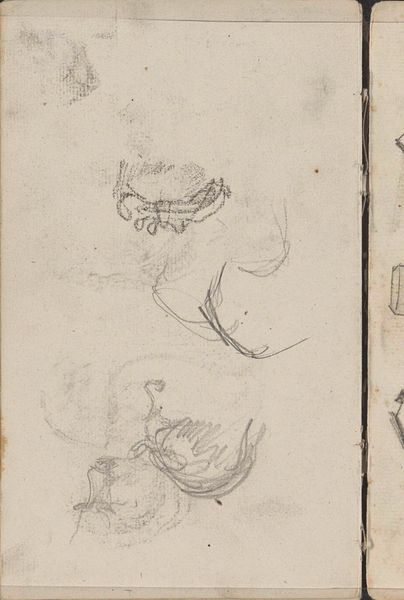
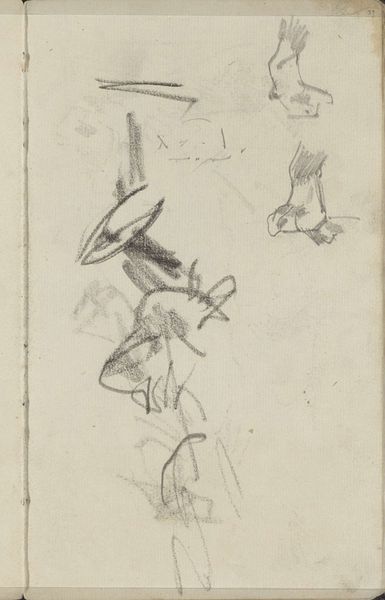
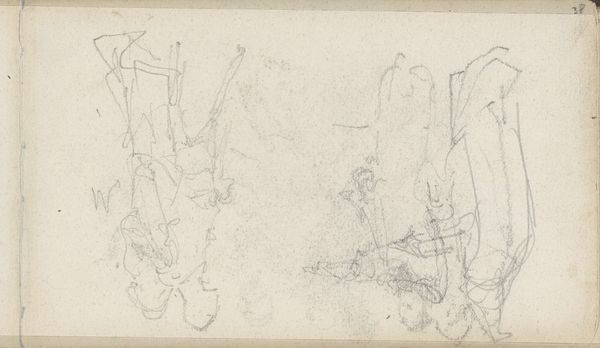
Curator: Welcome. We're looking at "Three Studies of a Sledge with a Horse," a drawing by Gerard ter Borch the Younger, likely from 1631. It's currently held at the Rijksmuseum. Editor: It strikes me immediately as economical – the quick, almost frenetic pen strokes, the stark simplicity... you sense the cold, perhaps the haste, of the artist capturing the scene. Curator: Indeed. Ter Borch was known for his genre scenes, depicting daily life with an eye for detail. However, this isn't the highly polished, refined style he later became famous for. This is more of a sketch, possibly a preliminary study. The ink and pen medium is incredibly telling, as he seems to have been concerned with efficiency. Editor: Absolutely. You can practically feel the movement – the horse straining, the driver urging it forward. And considering the prevalence of canals in Dutch society at the time, the sledge becomes almost as important as the people depicted. Curator: Right. Winter scenes held a certain appeal for Dutch Golden Age artists. The sledge signifies both work and leisure, pointing towards class and economy in Dutch culture. Was it a merchant using this for trade or was this an example of upper class citizens engaging in leisure activity? Editor: Good question. You know, the immediacy of the pen and ink is so powerful here. There is no fuss; just line work rendered with incredible confidence to give volume. Consider that it also makes this piece highly reproducible. How did a study like this get used at the time? Curator: Likely for reference in a more elaborate painting, intended for sale on the open market. Genre paintings, which represented daily life, were booming. We might see, then, how a sketch becomes crucial in the final artwork and how these artworks reflect back on their societal origin. Editor: Exactly. Even this humble sketch reflects something about 17th century labor and the way people related to their material world, like canals, horses, and winter conditions. It’s fascinating. Curator: Agreed. These everyday moments become portals to understanding Dutch society and its values, reminding us of the depth present even in what may seem like simple sketches. Editor: Well, considering what Ter Borch was looking to later produce, the importance of this means of production becomes rather clear.
Comments
No comments
Be the first to comment and join the conversation on the ultimate creative platform.
 React
React Comment