About this artwork
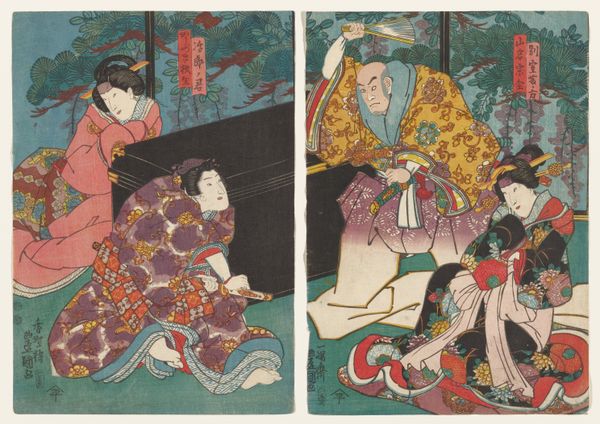
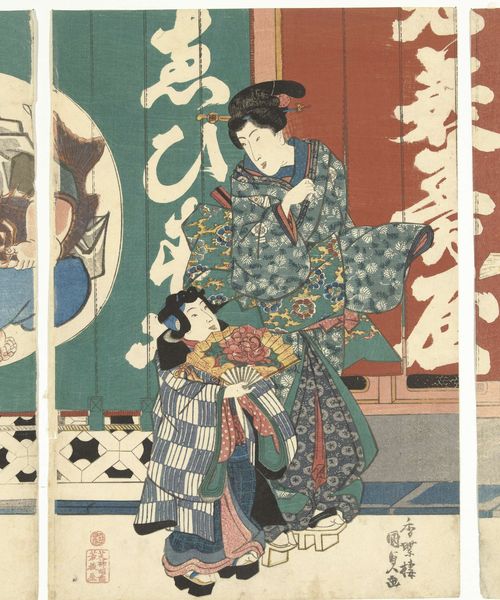
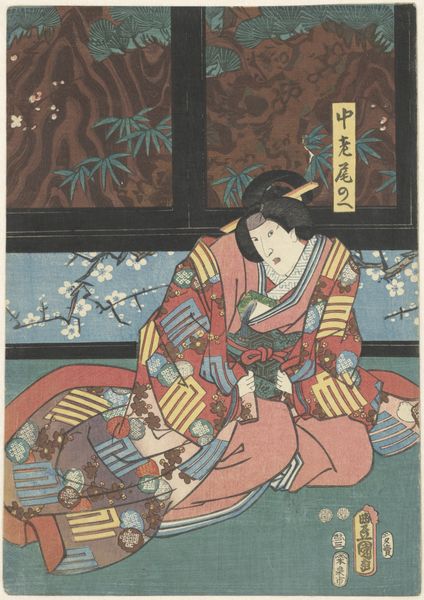
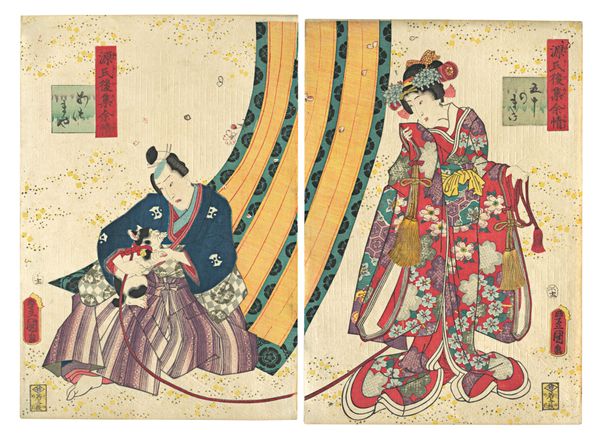
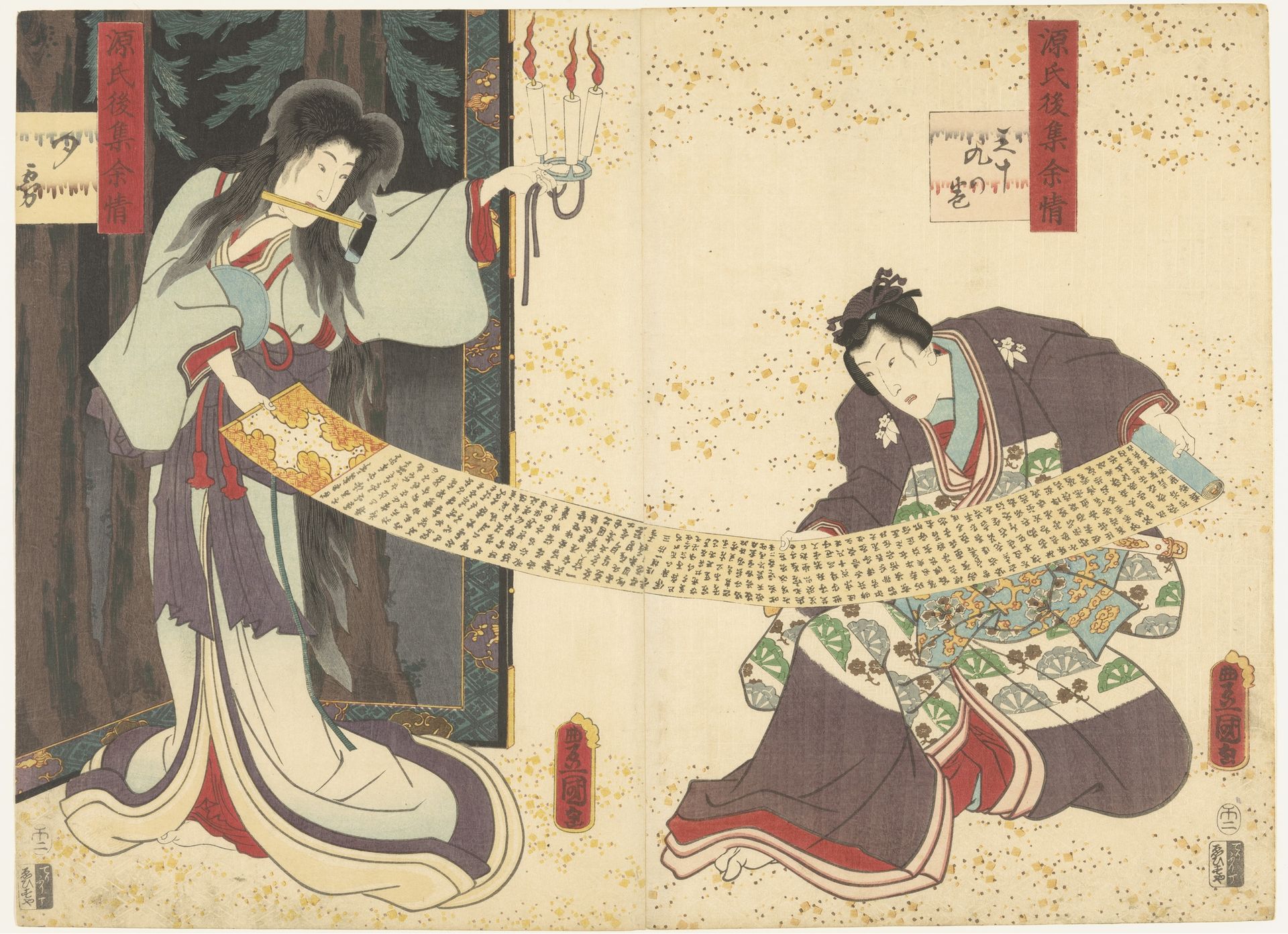
This is a woodblock print by Utagawa Toyokuni I, made in Japan. Two figures are connected through a long scroll. The actor to the left seems to be in the role of a ghost. The composition is divided into two distinct areas, one shadowy and one light. The artist uses color and line to create a dynamic tension between the two halves. Note how the scroll visually links the figures. It acts as a bridge and its textual content serves as a signifier of narrative connection. The use of text is a strong device in the artwork. We might ask how Toyokuni uses the form of theater, in combination with literary traditions, to explore themes of identity and illusion. The artwork’s formal qualities—its play of light and shadow, its graphic lines, and its textual integration—destabilize any singular interpretation. The ghostly apparition, for example, unsettles notions of reality. This print, through its structure, engages us in a broader discourse about the nature of representation itself.
Twee acteurs waarvan een in de rol van spook 1779 - 1825

Utagawa Toyokuni I
1769 - 1825Location
RijksmuseumArtwork details
- Medium
- print, woodblock-print
- Dimensions
- height 355 mm, width 487 mm
- Location
- Rijksmuseum
- Copyright
- Rijks Museum: Open Domain
Tags
narrative-art
asian-art
ukiyo-e
figuration
historical fashion
woodblock-print
watercolour illustration
Comments
No comments
About this artwork
This is a woodblock print by Utagawa Toyokuni I, made in Japan. Two figures are connected through a long scroll. The actor to the left seems to be in the role of a ghost. The composition is divided into two distinct areas, one shadowy and one light. The artist uses color and line to create a dynamic tension between the two halves. Note how the scroll visually links the figures. It acts as a bridge and its textual content serves as a signifier of narrative connection. The use of text is a strong device in the artwork. We might ask how Toyokuni uses the form of theater, in combination with literary traditions, to explore themes of identity and illusion. The artwork’s formal qualities—its play of light and shadow, its graphic lines, and its textual integration—destabilize any singular interpretation. The ghostly apparition, for example, unsettles notions of reality. This print, through its structure, engages us in a broader discourse about the nature of representation itself.
Comments
No comments