Dimensions: image: 640 x 420 mm
Copyright: © Helmut Federle | CC-BY-NC-ND 4.0 DEED, Photo: Tate
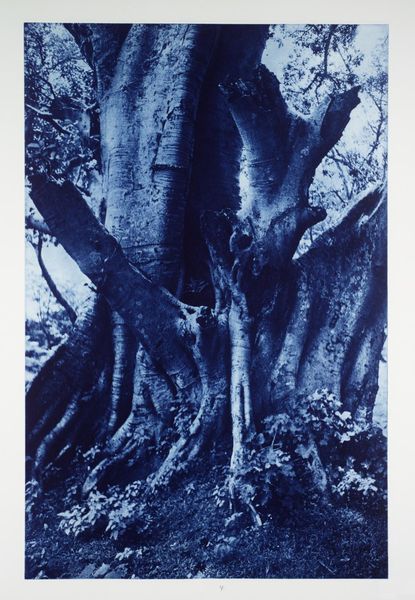
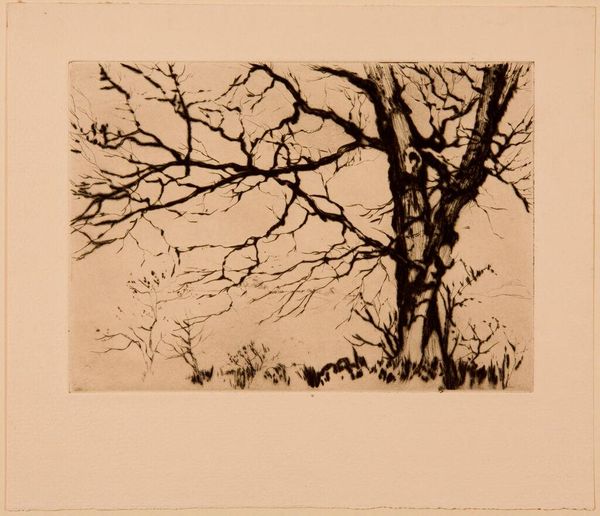
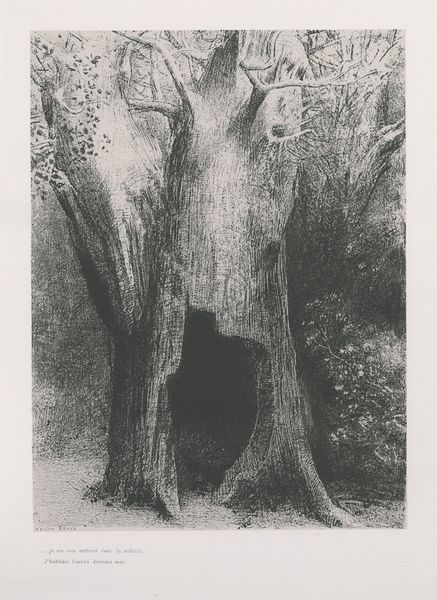
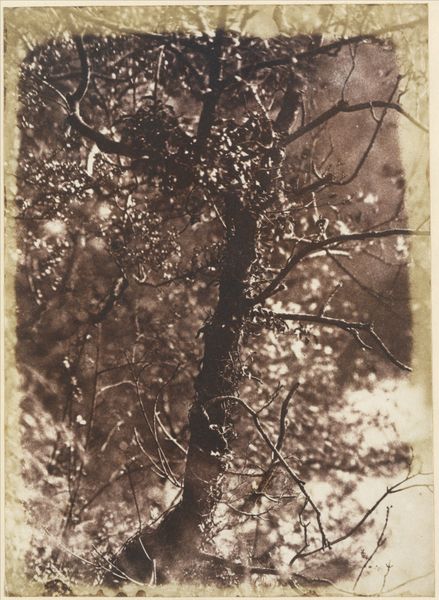
Curator: This is Helmut Federle’s "Morocco," a photogravure from 1998. It's part of the Tate collection and presents a large tree rendered in deep blues. Editor: It feels like a dreamscape, almost otherworldly. The monochrome palette gives it this somber, reflective quality. Curator: Indeed. Trees, of course, have long been symbols of life, growth, and interconnection. Federle’s choice of such a stark, almost haunting, representation prompts us to reflect on those associations, doesn't it? Editor: The singular color really strips away the everyday. It is like a memory distilled, highlighting the symbolic weight of the tree rather than its literal form. The imposing, majestic tree becomes a kind of monument. Curator: I find the cultural layering fascinating—Morocco, a place of vibrant colors, rendered in this blue. Perhaps a meditation on distance, memory, and the transformation of place into image. Editor: It certainly reframes the Moroccan landscape, inviting a slower, more contemplative viewing experience. I think it's a powerful inversion that amplifies the symbolic register. Curator: Yes, it encourages us to reconsider our perception of both the natural world and its representation. Editor: A striking image that lingers long after you’ve seen it.
Comments


Join the conversation
Join millions of artists and users on Artera today and experience the ultimate creative platform.

tate 12 months ago
⋮
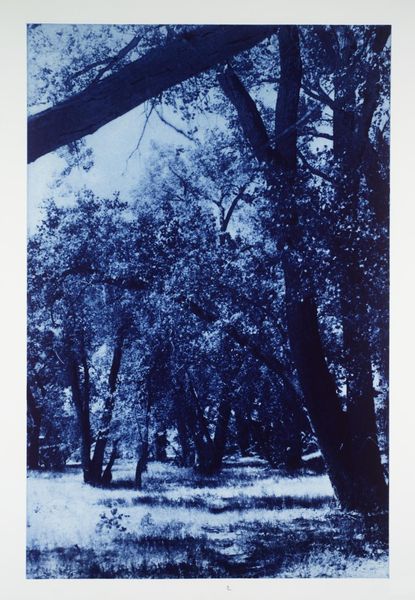
Blue Sisters, Structures of Deviance is a portfolio of ten prints executed in blue ink on white paper. Five are photogravures depicting trees. The other five are soft ground etching and aquatint on paper; these images are abstract and have a smaller plate size than the photogravures. The prints were produced at Druckatelier Kurt Zein in Vienna, where the artist lives and works. They were published in an edition of thirty-five with ten artist’s and publisher’s proofs; Tate owns number eleven in the edition.
 Collect
More like this