About this artwork
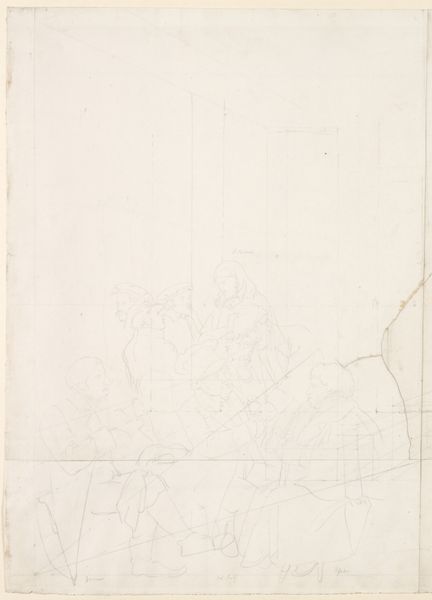
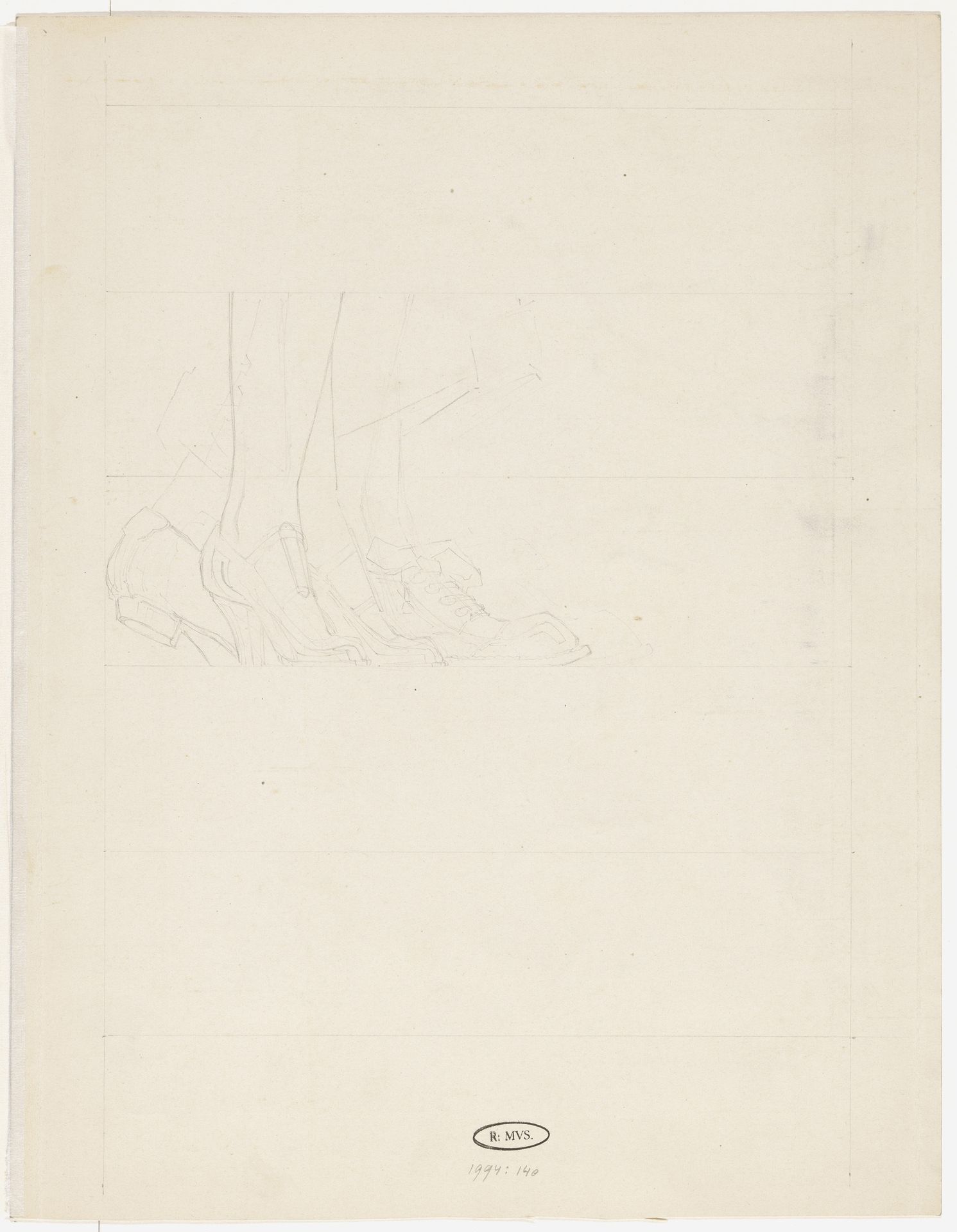
This is Reijer Stolk's "Studieblad met drie benen en geschoeide voeten," a pencil drawing on paper. Stolk was born in Rotterdam, in 1896, and would have been coming of age during a time of great cultural upheaval. Stolk tragically died in 1945, the same year the second World War ended. We don't know what Stolk intended with this drawing, as it wasn't until after his death that his work began to gain public recognition. What can be gained from this work, however, is the exploration of human identity as it pertains to the most subtle details. Stolk seems to have abandoned the tradition of representing the body in its entirety, choosing instead to focus on a small fragment. Consider how Stolk's careful rendering of feet and shoes challenges conventional notions of beauty and representation. What do we usually conceal or display? What can be revealed about a person's identity through these features? The feet, often overlooked, here become a focal point, inviting us to reflect on the significance of the corporeal.
Studieblad met drie benen en geschoeide voeten
1906 - 1945

Reijer Stolk
1896 - 1945Location
RijksmuseumArtwork details
- Medium
- drawing, pencil
- Dimensions
- height 322 mm, width 249 mm
- Location
- Rijksmuseum
- Copyright
- Rijks Museum: Open Domain
Tags
Comments
Share your thoughts
About this artwork
This is Reijer Stolk's "Studieblad met drie benen en geschoeide voeten," a pencil drawing on paper. Stolk was born in Rotterdam, in 1896, and would have been coming of age during a time of great cultural upheaval. Stolk tragically died in 1945, the same year the second World War ended. We don't know what Stolk intended with this drawing, as it wasn't until after his death that his work began to gain public recognition. What can be gained from this work, however, is the exploration of human identity as it pertains to the most subtle details. Stolk seems to have abandoned the tradition of representing the body in its entirety, choosing instead to focus on a small fragment. Consider how Stolk's careful rendering of feet and shoes challenges conventional notions of beauty and representation. What do we usually conceal or display? What can be revealed about a person's identity through these features? The feet, often overlooked, here become a focal point, inviting us to reflect on the significance of the corporeal.
Comments
Share your thoughts