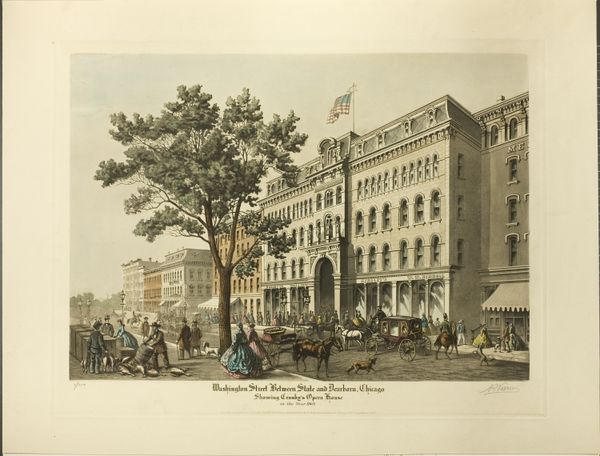
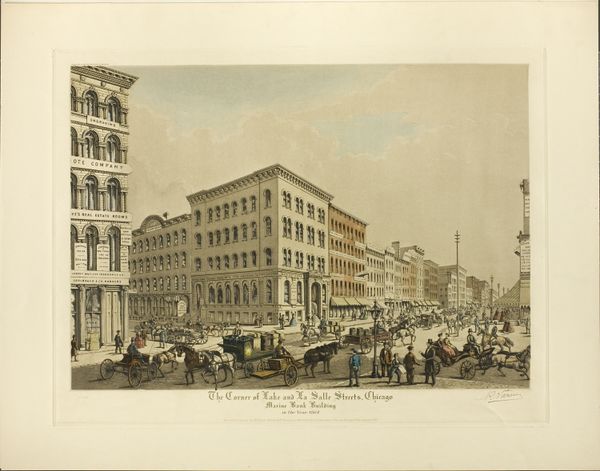
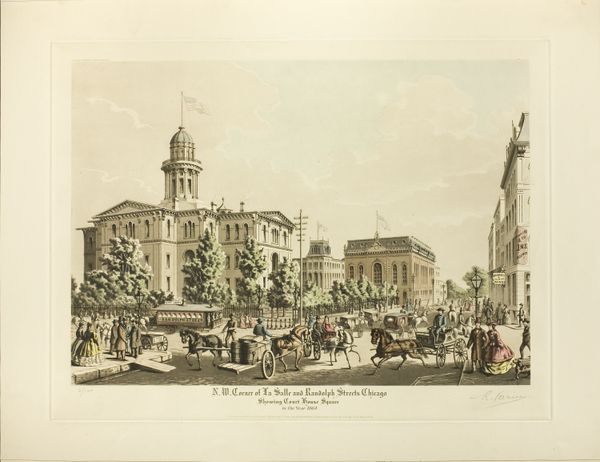
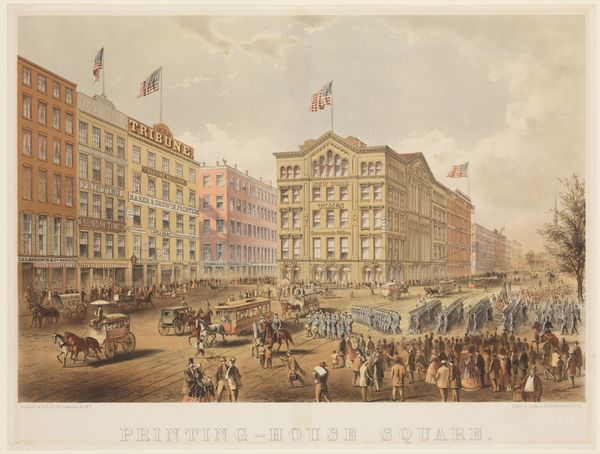
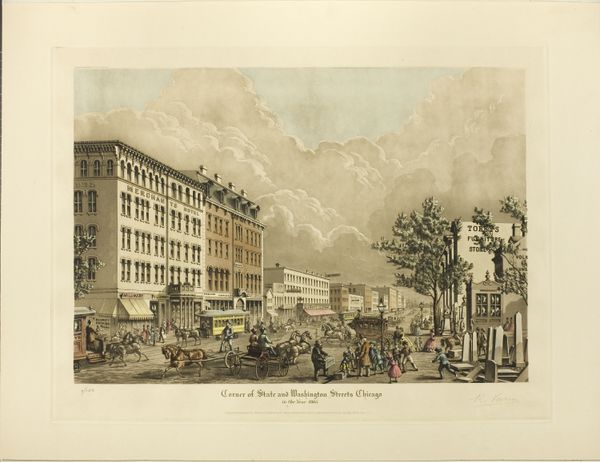
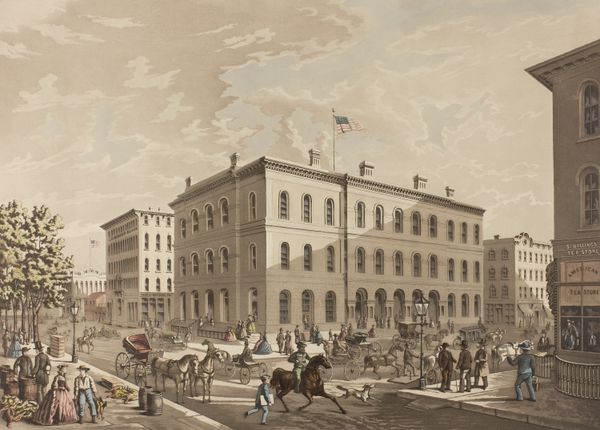
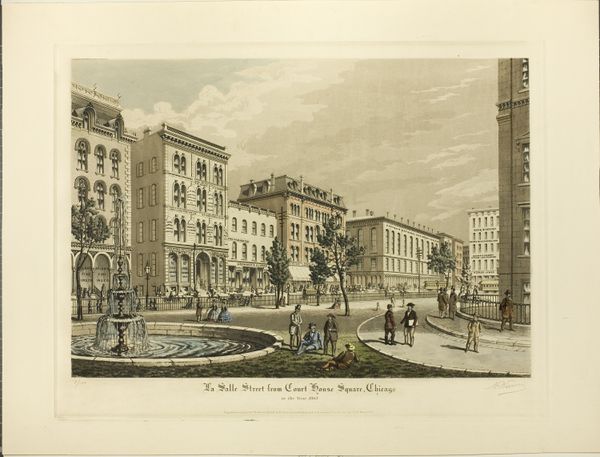
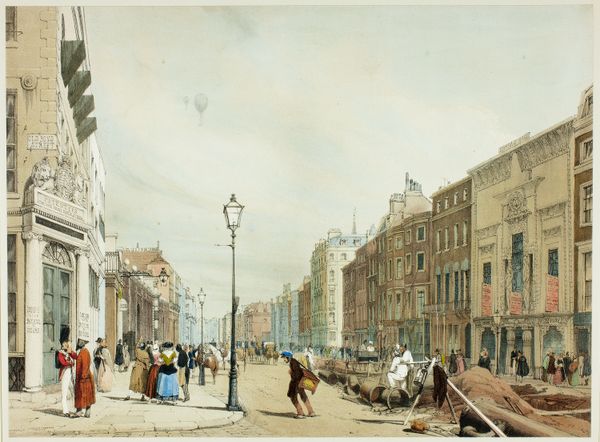
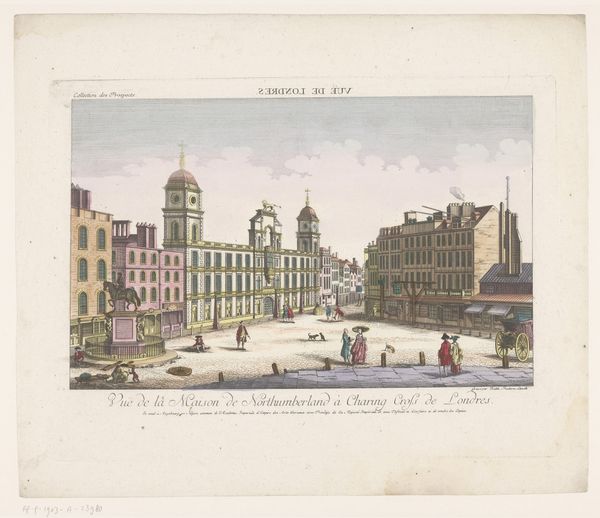
Randolph Street, Chicago, from Clark to State Streets in the Year 1865 c. 1926 - 1928


drawing, lithograph, print, paper
drawing
lithograph
landscape
etching
paper
cityscape
Dimensions: 390 × 547 mm (image); 455 × 587 mm (plate); 553 × 707 mm (sheet)
Copyright: Public Domain
Curator: Raoul Varin's lithograph, "Randolph Street, Chicago, from Clark to State Streets in the Year 1865," composed sometime between 1926 and 1928, offers a captivating glimpse into the historical urban fabric. Editor: It has a slightly sepia-toned feel, very linear with an almost blueprint-like precision and detail. I love the sheer flatness of the picture plane itself. Curator: Precisely, Varin orchestrates depth through strategic layering and diminution, creating a distinct foreground, middle ground, and background. Consider the rhythmic repetition of architectural forms—the ordered placement of windows, for example, and signage—along Randolph Street. Editor: I’m intrigued by the visual layering of signs, almost competing for space on the buildings. "Baker's Wood Engraving Rooms" screams the presence of industry; these were not only places for craftsmanship but nodes in the burgeoning commercial network. Curator: Indeed. The use of line, shading, and form emphasizes the rigid geometry that signifies urban growth. And notice how Varin interweaves signs as symbolic markers, creating a spatial articulation. Each element establishes formal clarity, revealing not only place but social conditions as well. Editor: Speaking of conditions, think about what a lithograph like this demanded in terms of material preparation—the stone itself, the labor-intensive transfer of image, and the printing process, churning out potentially numerous copies that, in their distribution, further shaped perceptions of a rapidly evolving city. It emphasizes the handwork in a machine age. Curator: Varin expertly guides the viewer's eye, crafting a legible, organized space in spite of the details. Consider the effect of using linear precision and restrained palette as critical devices. Editor: Agreed, and by considering the modes of production, labor practices, and circulation of the print, we start to discern its larger contribution in visualizing the industrial age as it truly stood: crafted, material, and of its time. Curator: A striking example of how urban development finds ordered articulation. Editor: For me, it evokes an exploration of how even an ostensibly objective portrayal bears the marks of those very systems that bring art into being.
Comments
No comments
Be the first to comment and join the conversation on the ultimate creative platform.
 React
React Comment