About this artwork
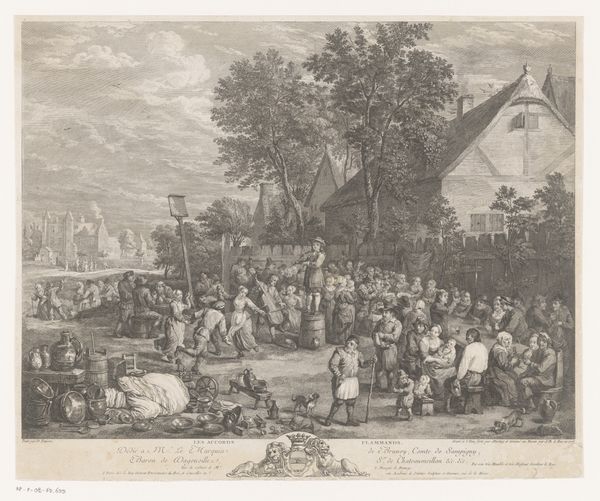
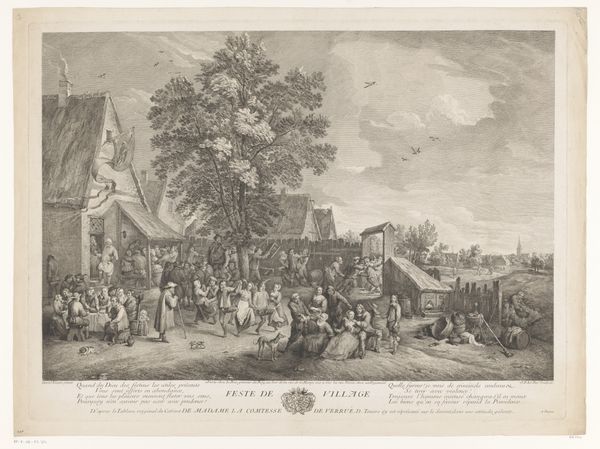
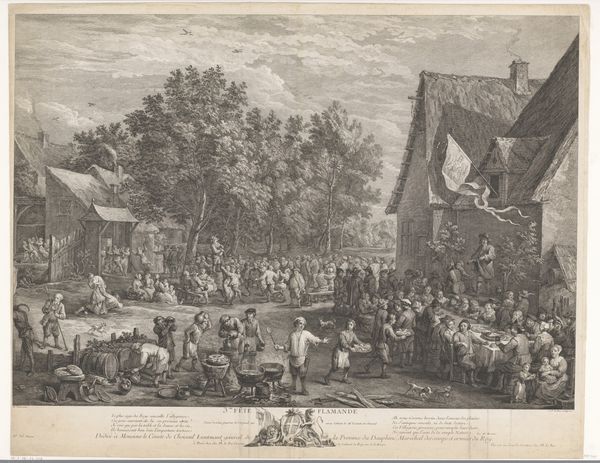
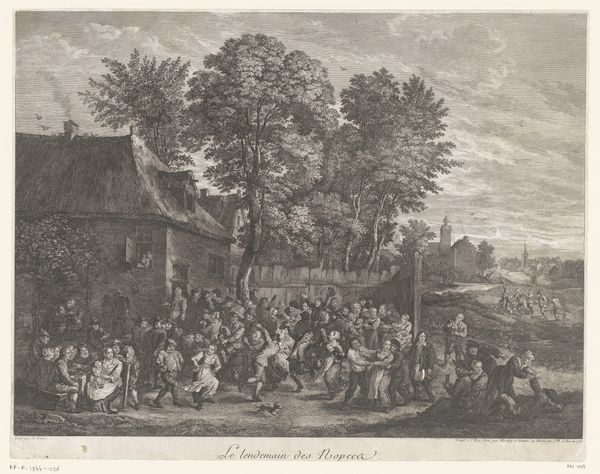
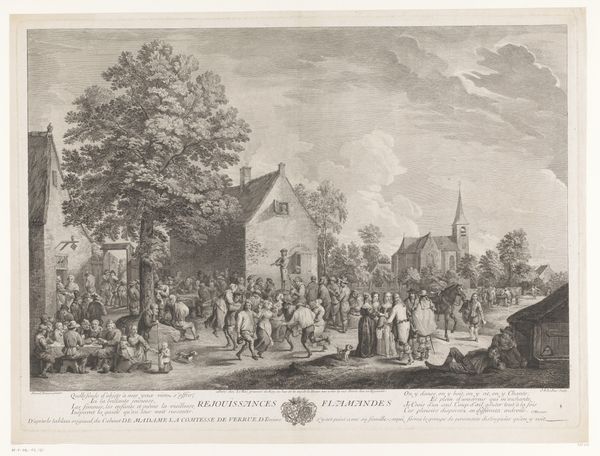
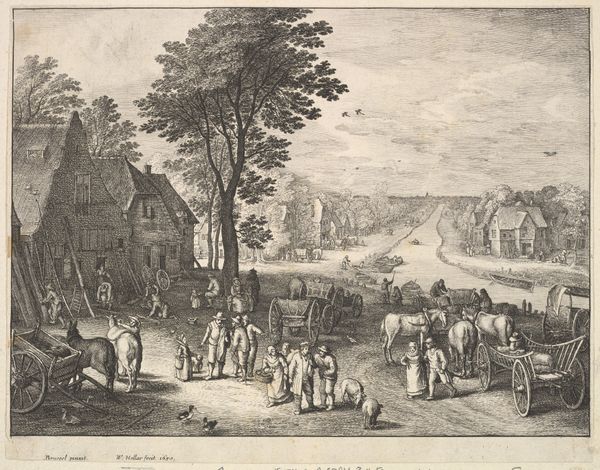
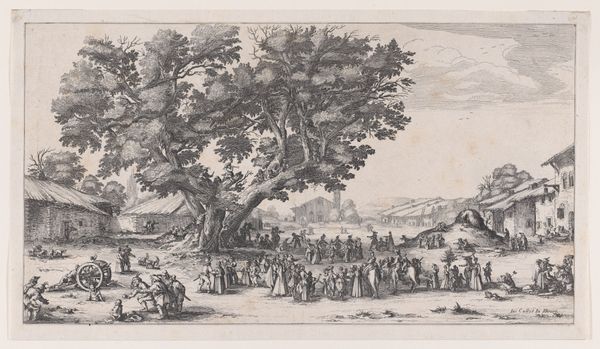
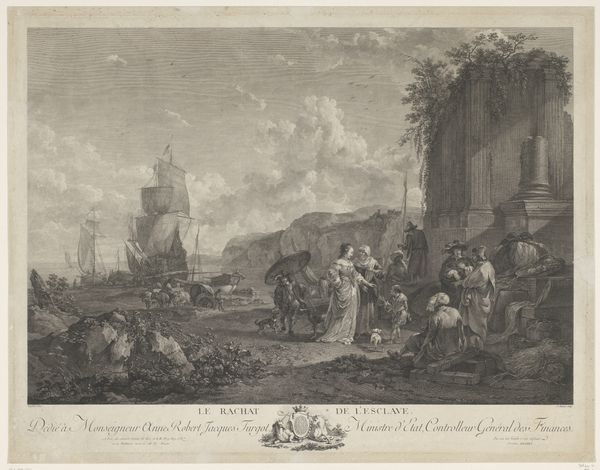
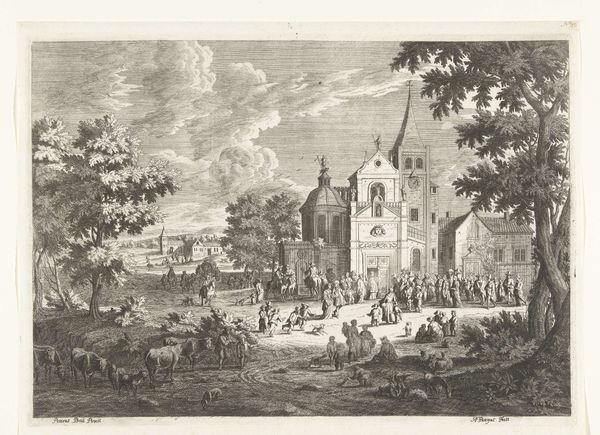
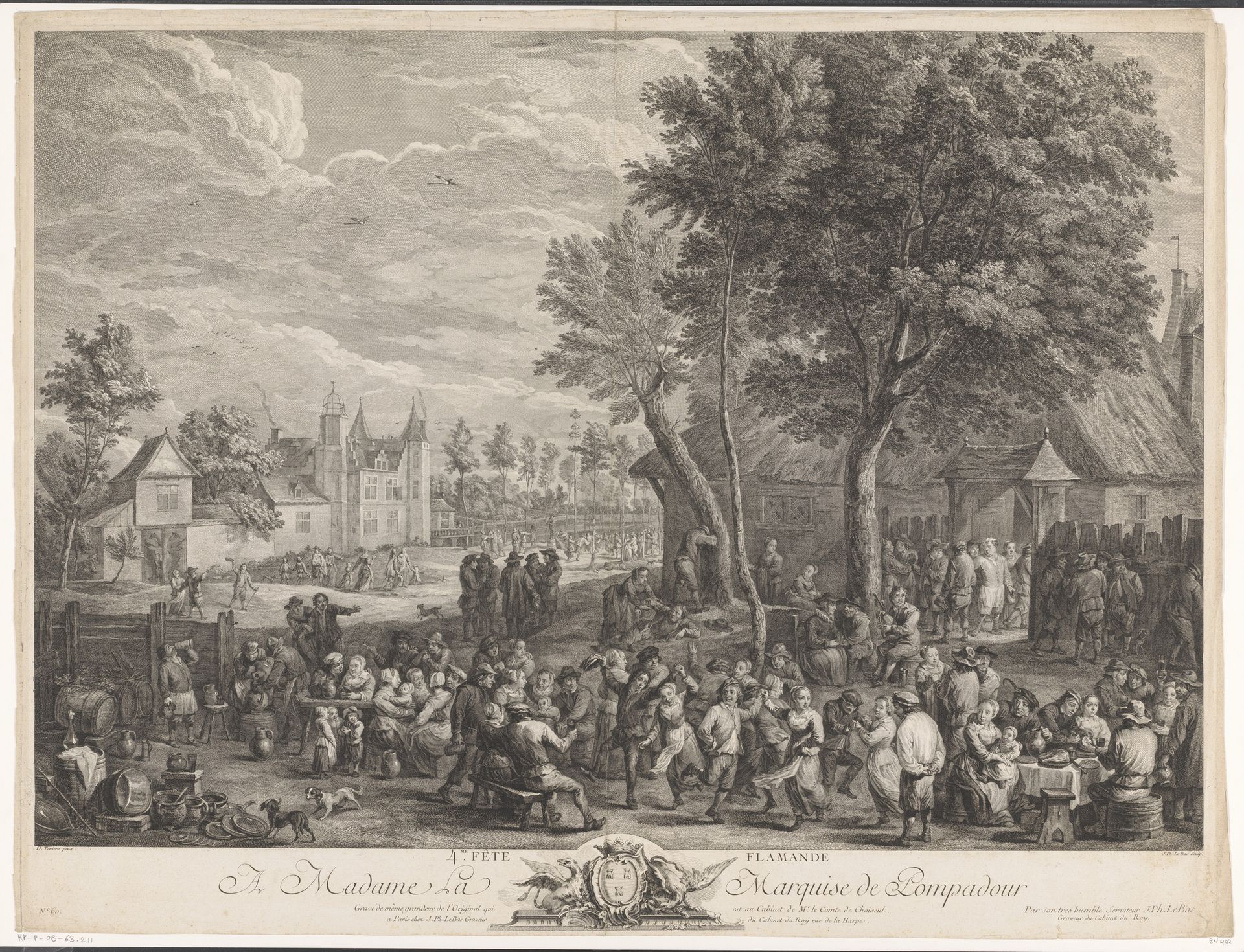
Jacques Philippe Le Bas created this print, "Dorpsfeest," sometime in the 18th century, using etching and engraving techniques. The composition is dominated by a lively scene, teeming with figures engaged in various activities within a village setting. Notice how the figures are arranged, creating a dynamic interplay between foreground and background. Lines define the architecture and the natural elements of the landscape. The formal structure of the print points to an engagement with social representation and the depiction of communal life. The engraving technique itself, with its meticulous lines, acts as a sign of cultural and social meanings embedded in the artwork. The image challenges fixed notions about social gatherings, engaging viewers with evolving ideas about community, representation, and the structuring of visual narratives.

Artwork details
- Medium
- print, engraving
- Dimensions
- height 580 mm, width 757 mm
- Location
- Rijksmuseum
- Copyright
- Rijks Museum: Open Domain
Tags
Comments
Share your thoughts
About this artwork
Jacques Philippe Le Bas created this print, "Dorpsfeest," sometime in the 18th century, using etching and engraving techniques. The composition is dominated by a lively scene, teeming with figures engaged in various activities within a village setting. Notice how the figures are arranged, creating a dynamic interplay between foreground and background. Lines define the architecture and the natural elements of the landscape. The formal structure of the print points to an engagement with social representation and the depiction of communal life. The engraving technique itself, with its meticulous lines, acts as a sign of cultural and social meanings embedded in the artwork. The image challenges fixed notions about social gatherings, engaging viewers with evolving ideas about community, representation, and the structuring of visual narratives.
Comments
Share your thoughts