Possibly 1651
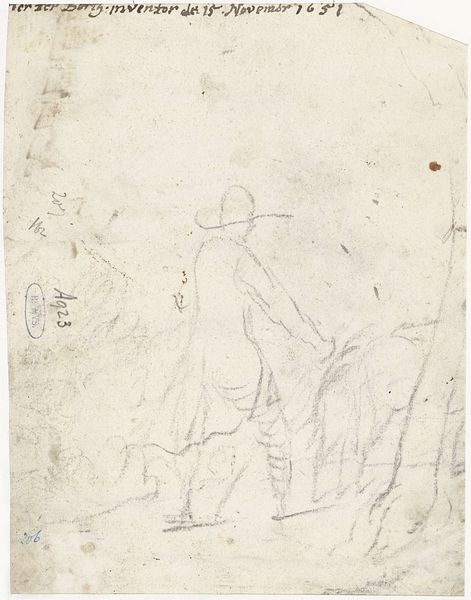
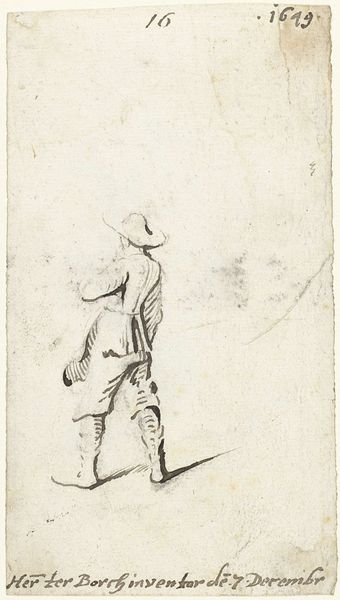
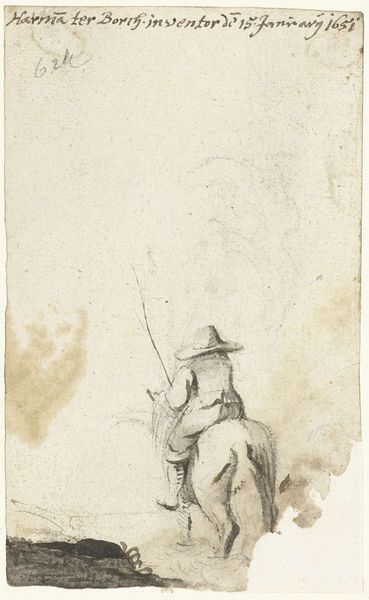
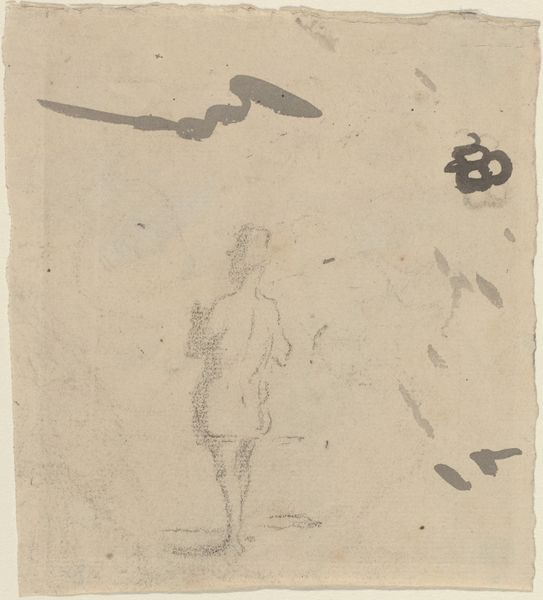
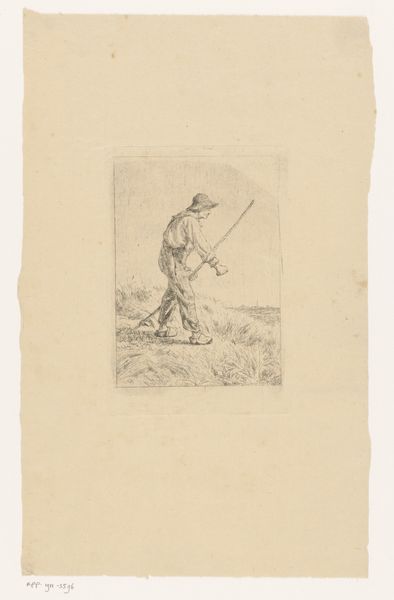
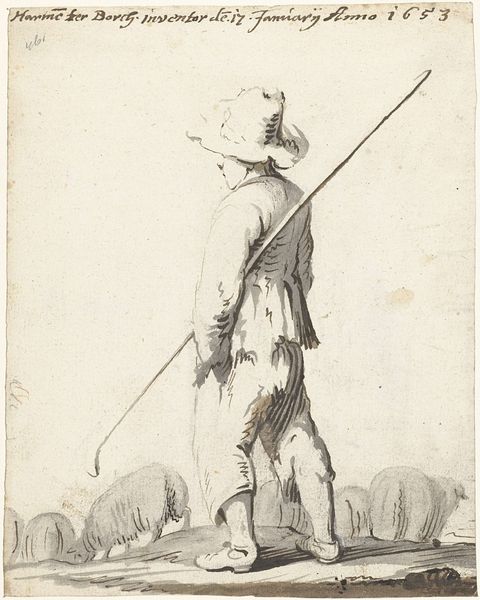
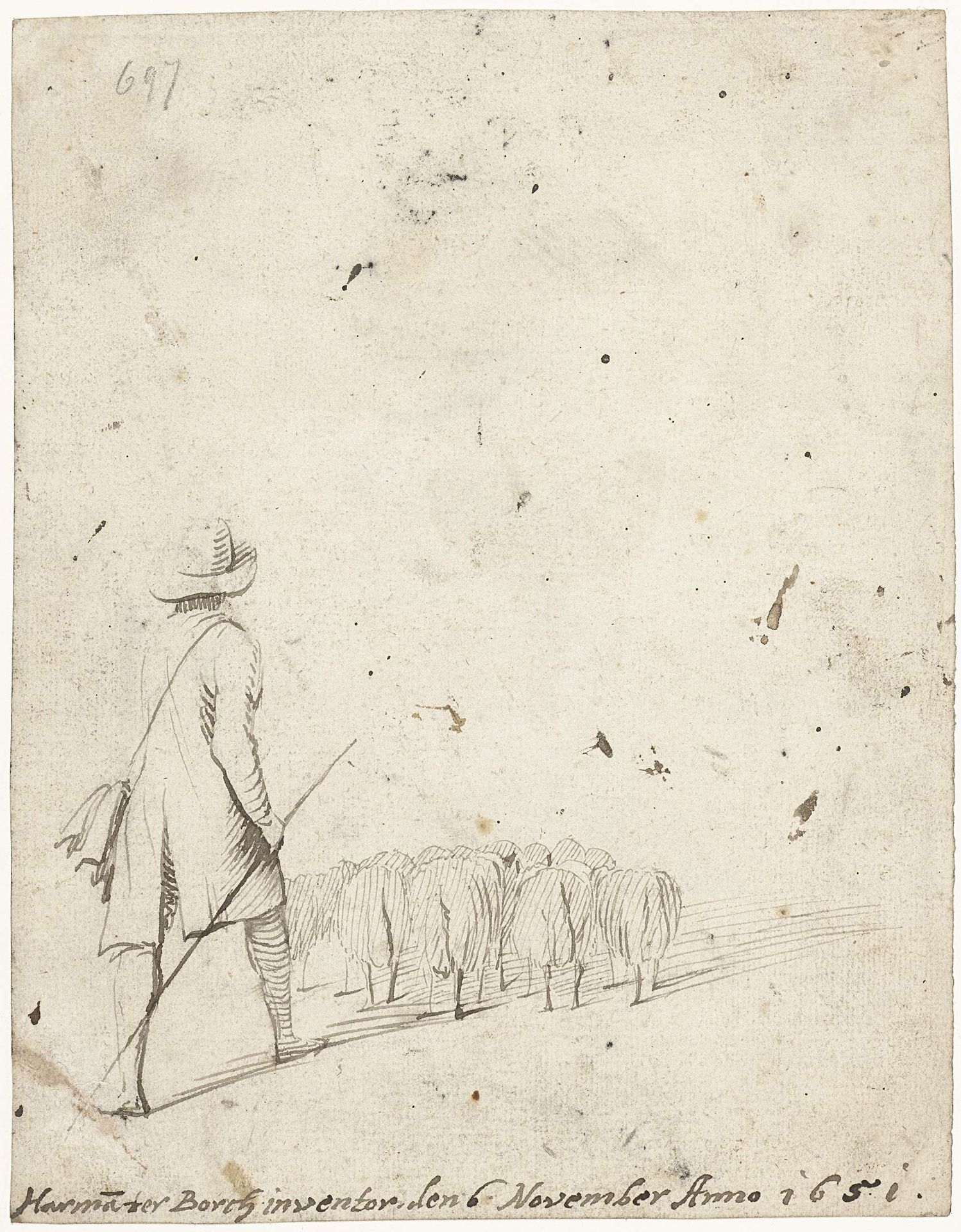
Herder en zijn schapen, van achteren

Harmen ter Borch
1638 - 1677Location
RijksmuseumListen to curator's interpretation
Curatorial notes
Harmen ter Borch rendered this ink drawing of a shepherd and his sheep in 1656. The shepherd, seen from behind, guides his flock, a motif laden with symbolism. The shepherd, historically, embodies leadership and care, echoing the Good Shepherd of Christian iconography, a protective figure guiding his followers. This imagery appears across cultures, from ancient pastoral poems to the visual arts, each time subtly shifting in meaning yet retaining its core essence of guidance and guardianship. Consider, too, the flock of sheep, huddled together, blindly following the shepherd. Are they a representation of humanity's need for guidance, or a darker symbol of conformity? Such depictions engage our collective memory, stirring subconscious associations tied to leadership, obedience, and the delicate balance between individual autonomy and collective identity. This simple scene, therefore, invites a deeper contemplation of our societal structures and the timeless dance between leader and follower.