1658
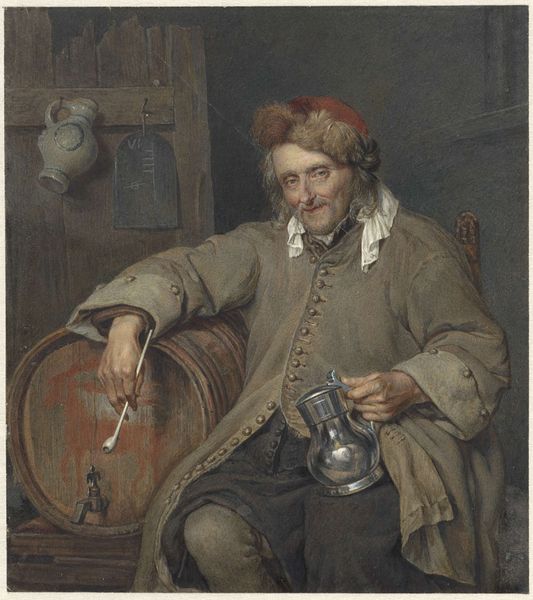
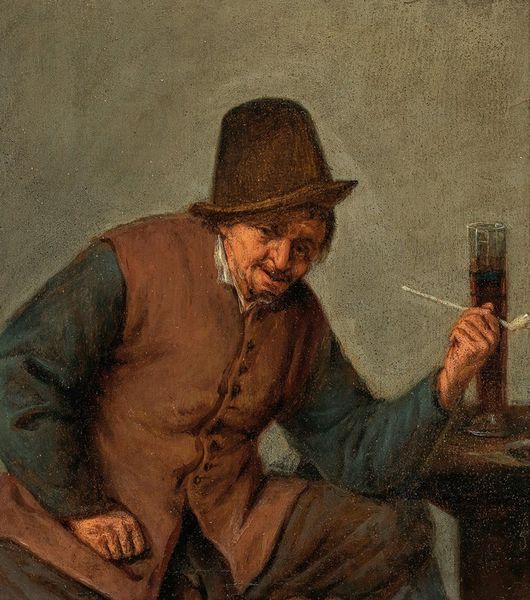
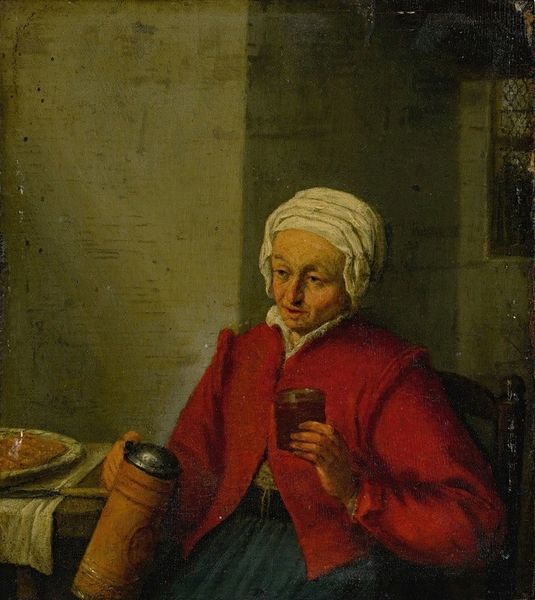
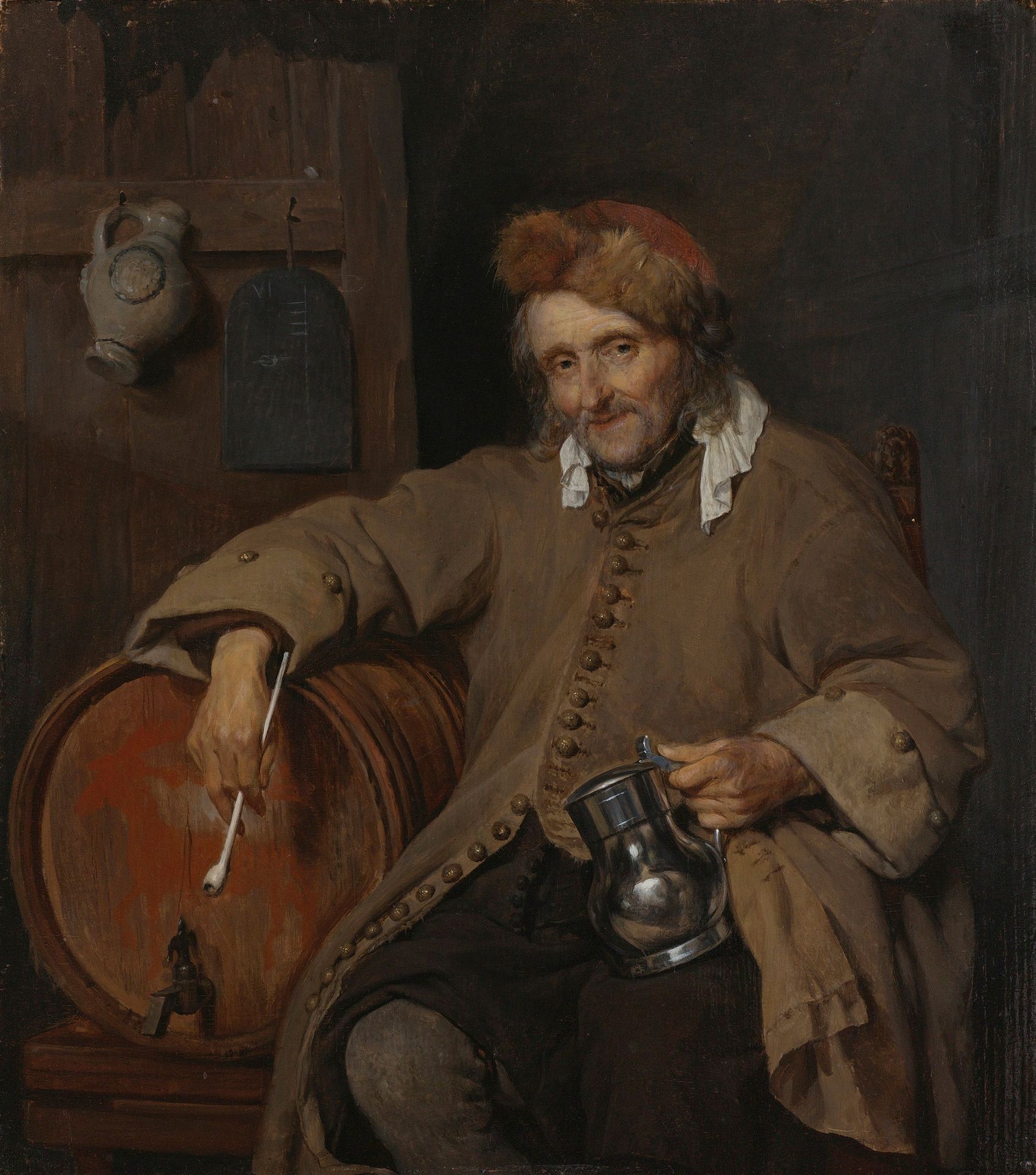
The Old Drinker

Gabriel Metsu
1629 - 1667Location
Rijksmuseum, Amsterdam, NetherlandsListen to curator's interpretation
Curatorial notes
Curator: Gabriel Metsu’s oil painting, "The Old Drinker," dates from 1658 and offers an intimate look into everyday life. Editor: It strikes me immediately as melancholic. The muted colors and that slightly drooping expression... there’s a weariness to him. Curator: Notice how Metsu carefully renders the materials – the coarse texture of the fur hat, the smooth gleam of the pewter tankard. It's a detailed catalog of 17th-century material culture and the means of production for these things. He also painstakingly depicts the labor to craft these objects. Editor: Absolutely, but beyond the materials themselves, what about what they represent? The tankard and the proximity to the barrel clearly symbolize indulgence, perhaps even escape from some form of hardship. The hat feels less about warmth and more about character, possibly even of folly, traditionally associated with such coverings. Curator: I see your point about hardship. Genre painting often presented moral lessons, cautioning against excessive consumption, particularly among the working class. This might not merely be about documenting material production but reinforcing social hierarchies through that depiction. Editor: Perhaps, but I find something genuinely human in his gaze. There's an acknowledgment of the viewer, a sense of shared understanding, that complicates a simple moral reading. Consider, too, the earthenware jug on the wall. The arrangement here seems almost performative. Curator: It's a carefully constructed scene, indeed. Each element—from the barrel to his clothes—speaks volumes about the economic and social realities of the time. The quality of his clothes compared to that barrel speaks to different echelons in that era. Editor: Ultimately, it invites speculation rather than easy answers about his situation. Curator: Agreed. The beauty lies in its subtle depiction of lived experiences. We examined here material concerns and even questions surrounding labor that this snapshot illuminates. Editor: And through a close reading of its symbols and the lasting impact of this particular imagery.