metal, sculpture
#
portrait
#
medieval
#
metal
#
dark-toned
#
dark environment
#
dark colour palette
#
sculpture
#
costume
#
history-painting
#
armor
Copyright: Rijks Museum: Open Domain
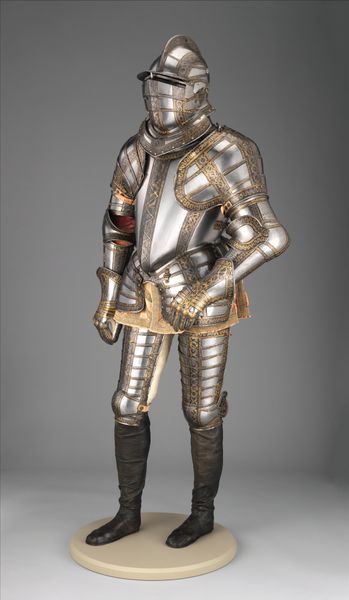
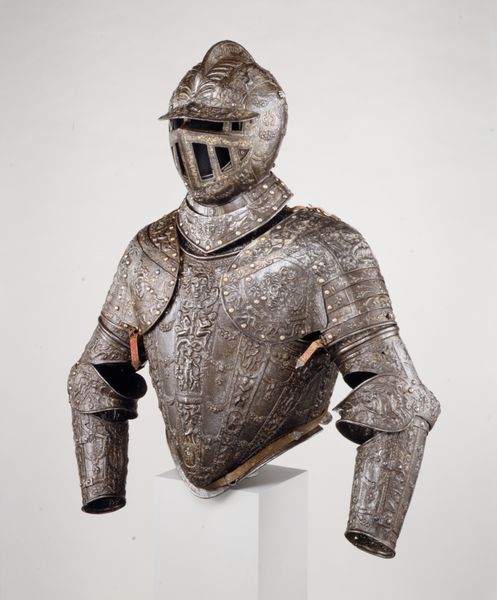
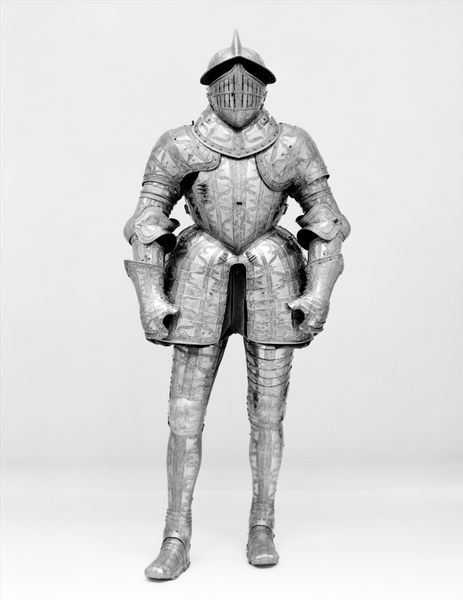
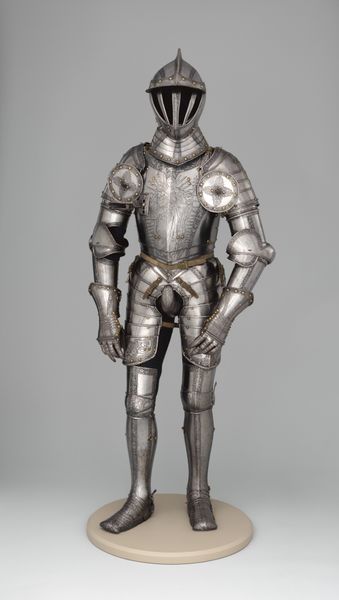
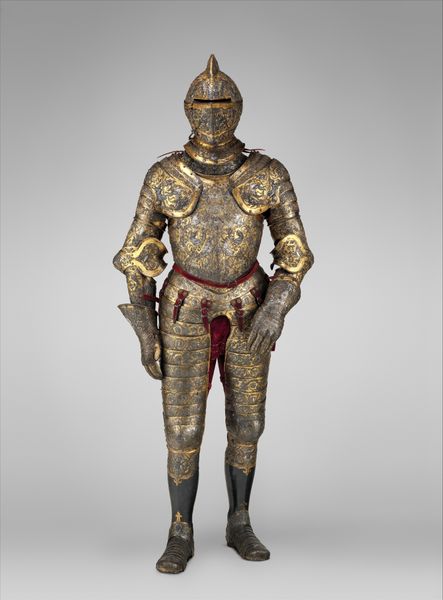
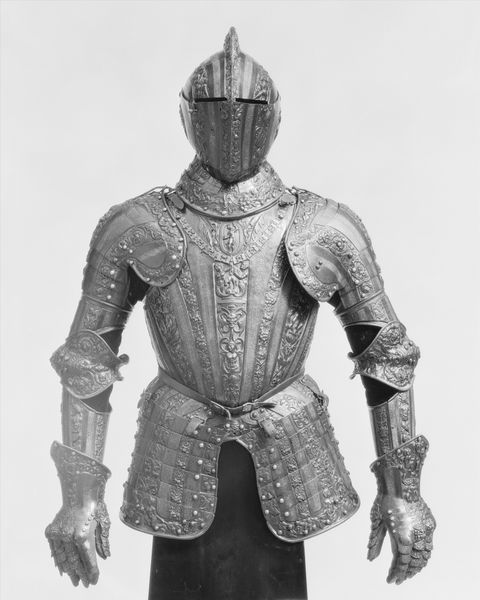
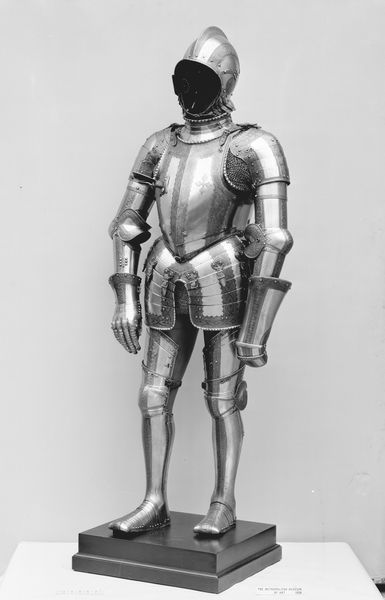
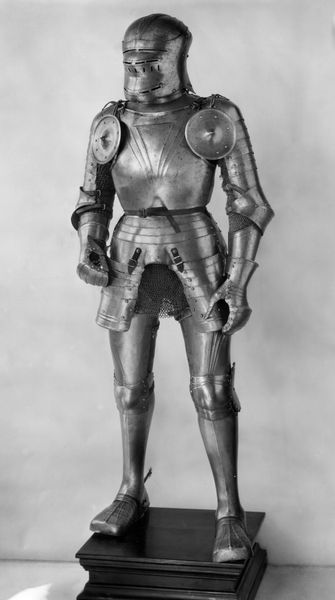
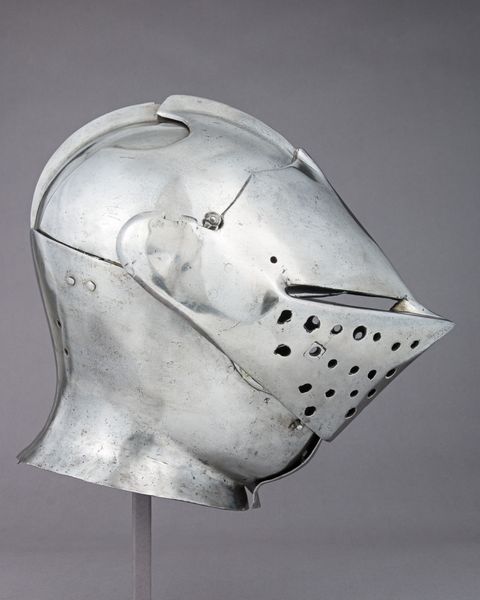
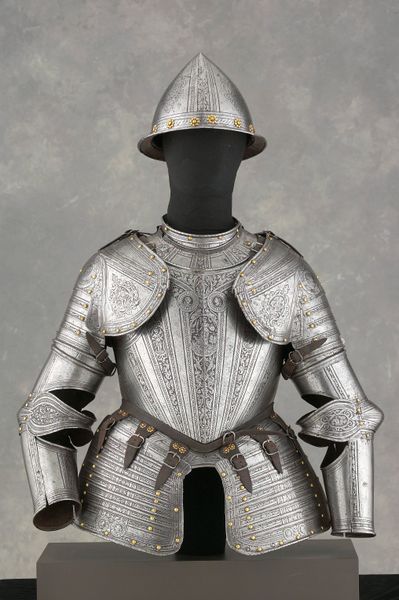
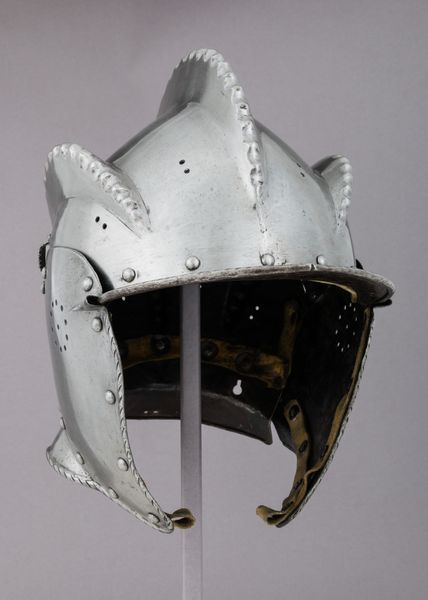
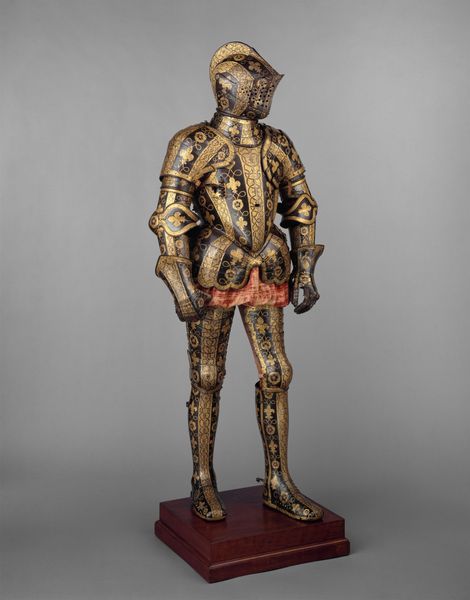
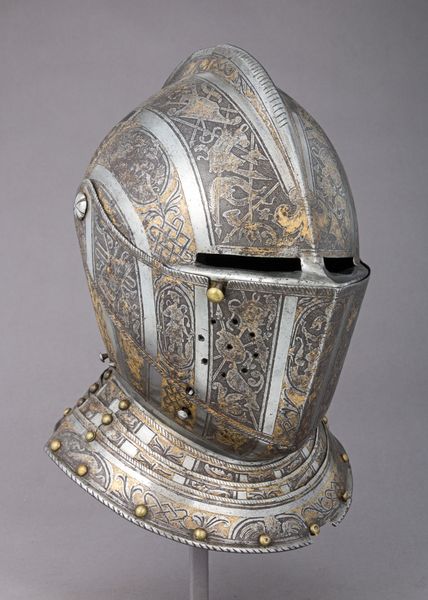
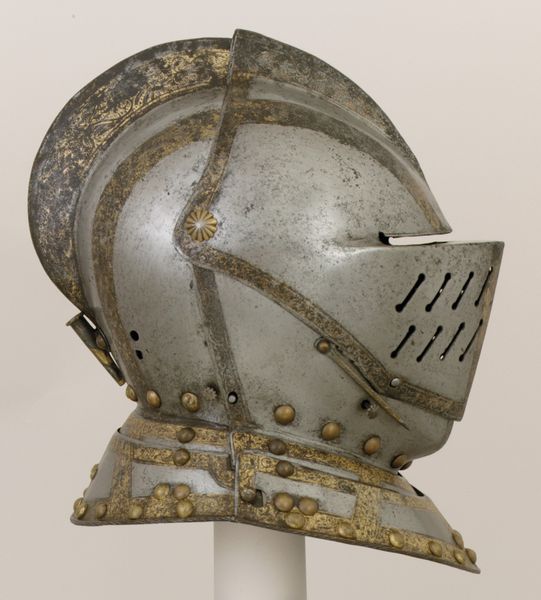
Curator: Here we have what’s believed to be the "Armour of Pankraz von Freyberg," dating approximately from 1500 to 1550. It’s quite an imposing metal sculpture, isn't it? Editor: Absolutely. There's a chilling effect in seeing the cold, metallic surface set against such a dimly lit space. The way the plates overlap, catching the light...it almost looks like a predatory reptile shedding its skin. Curator: Indeed. Armour like this wasn’t just protection; it was a powerful symbol of status. The Freyberg family, as landed gentry, used displays of martial prowess to assert authority in a volatile socio-political climate. Editor: And notice how each individual component, from the gauntlets to the helmet, is shaped for ergonomic efficiency while being segmented, clearly prioritizing flexible movement. There is an interplay between man and machine as each piece must seamlessly function with each other. Curator: Right, and the artistry behind it speaks volumes about technological advancements during that period. Consider the investment involved in crafting and owning such a suit of armour; it truly separated the elite from the masses. It's fascinating how these suits transcended mere functionality to become historical objects. Editor: But this dark coloration contributes, in my view, to its intimidating presence. With no ornamental details present to alleviate any emotional or physiological tension, viewers of its time most certainly would have trembled. Curator: Very astute. And what we may perceive now is colored by contemporary anxieties about war. Whereas for a 16th-century observer, the armour's craftsmanship likely inspired confidence in its bearer. Pankraz von Freyberg and other landed gentry like him were seen to protect. The visual symbolism reinforced the era's complex feudal power structure. Editor: So true. The contextual understanding radically changes one's perspective, especially when the pure forms of metal armor invoke themes of cold violence. It gives pause when considering not just art or aesthetic, but life and death in tandem. Curator: Absolutely. When we contemplate this artwork and historical relic, the suit stands not just as steel or a display piece. Instead, consider how much society influences our lens for historical examination through our eyes. Editor: Agreed. A reminder of how interpretation evolves as time progresses.
Comments

rijksmuseum over 2 years ago
⋮
Pankraz von Freyberg, Lord of Aschau im Chiemgau (Bavaria), probably wore this armour when he fought as a knight for Emperor Charles V. A good armour offered protection from swords, pole-arms and arrows. It weighed around 25 kilogrammes. The greatest weight was in the breast and back plates, and thus rested on the wearer’s shoulders. Hinged parts allowed soldiers wearing armour to move with relative ease.


Join the conversation
Join millions of artists and users on Artera today and experience the ultimate creative platform.
 Collect
More like this