About this artwork
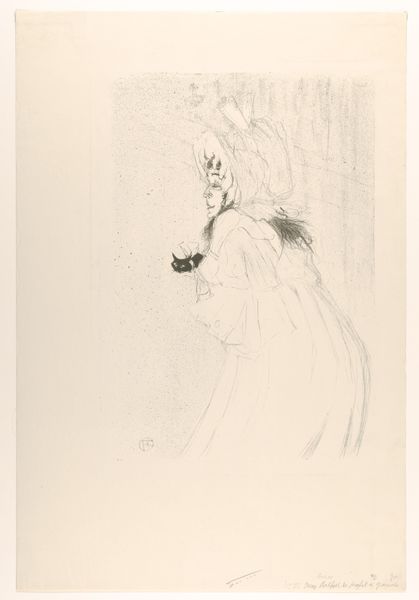
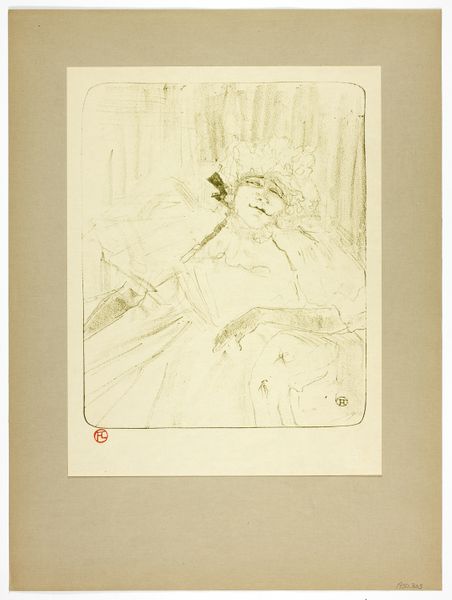
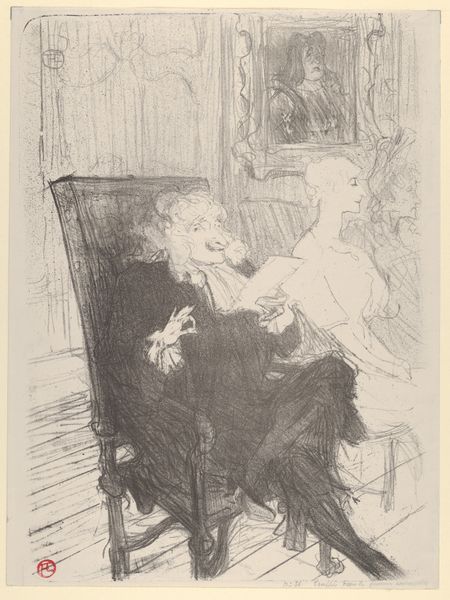
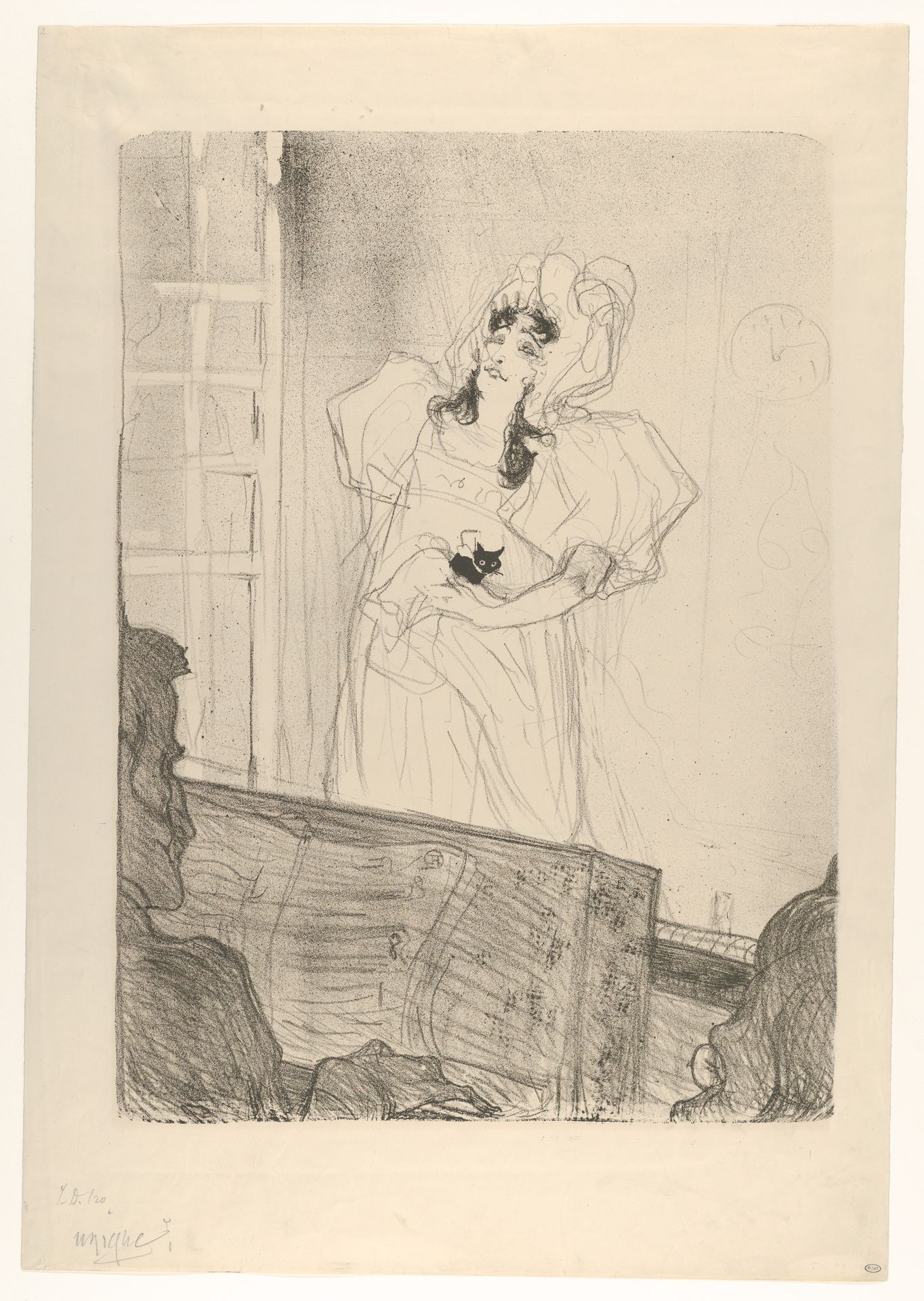
Henri de Toulouse-Lautrec created this lithograph, Miss May Belfort, using a stone matrix and greasy crayons or tusche. This was not an especially fine-art approach; lithography was often used for commercial printing. The resulting lines are soft and blurred, giving the image a sketchy, immediate feel. You can sense the artist's hand moving across the stone. Belfort, a popular Irish singer, is depicted on stage holding a black cat. Look at how the lithographic technique captures the hazy atmosphere of the music hall, with its gaslights and cigarette smoke. Lithography democratized image-making, enabling mass production and distribution. In this context, it allowed artists like Toulouse-Lautrec to engage with popular culture and capture the energy of Parisian nightlife, blurring the lines between art and commercial illustration. The image speaks to the industrialized nature of entertainment, where performers became commodities, and art served as both a reflection and a promotion of this phenomenon.
Miss May Belfort (Medium Plate)
1895

Henri de Toulouse-Lautrec
1864 - 1901
The Metropolitan Museum of Art
Metropolitan Museum of Art, New York, NYArtwork details
- Medium
- drawing, lithograph, print, pencil
- Dimensions
- Image: 17 1/8 × 12 9/16 in. (43.5 × 31.9 cm) Sheet: 21 1/4 × 14 15/16 in. (54 × 37.9 cm)
- Location
- Metropolitan Museum of Art, New York, NY
- Copyright
- Public Domain
Tags
Comments
Share your thoughts
About this artwork
Henri de Toulouse-Lautrec created this lithograph, Miss May Belfort, using a stone matrix and greasy crayons or tusche. This was not an especially fine-art approach; lithography was often used for commercial printing. The resulting lines are soft and blurred, giving the image a sketchy, immediate feel. You can sense the artist's hand moving across the stone. Belfort, a popular Irish singer, is depicted on stage holding a black cat. Look at how the lithographic technique captures the hazy atmosphere of the music hall, with its gaslights and cigarette smoke. Lithography democratized image-making, enabling mass production and distribution. In this context, it allowed artists like Toulouse-Lautrec to engage with popular culture and capture the energy of Parisian nightlife, blurring the lines between art and commercial illustration. The image speaks to the industrialized nature of entertainment, where performers became commodities, and art served as both a reflection and a promotion of this phenomenon.
Comments
Share your thoughts