About this artwork
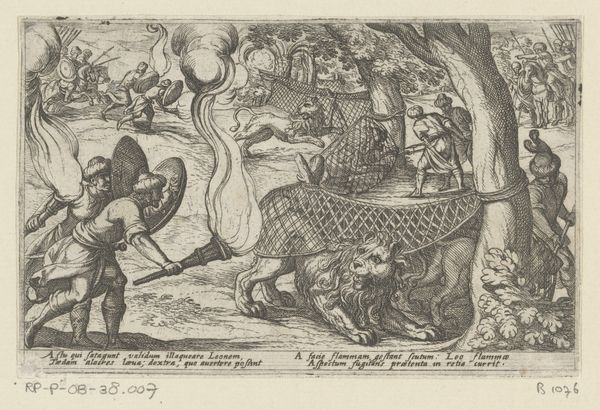
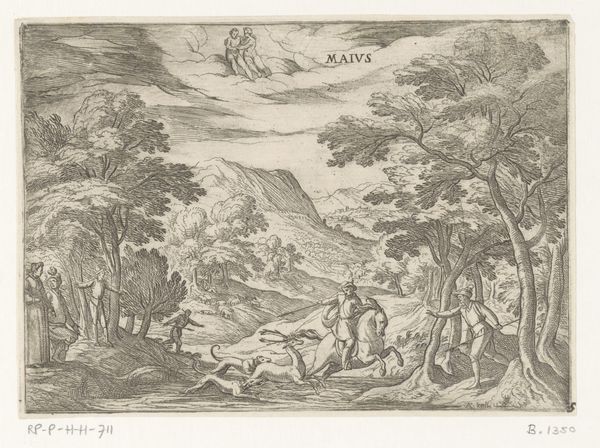
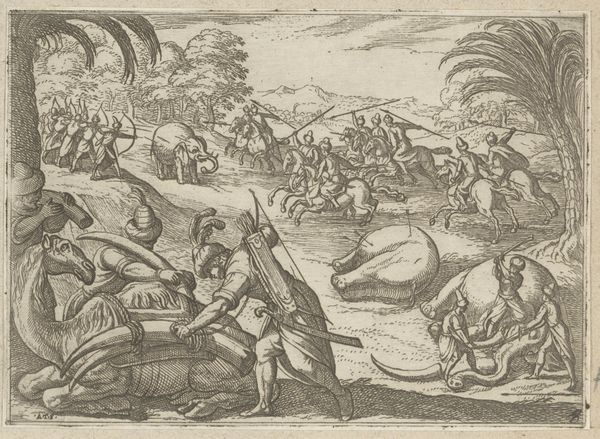
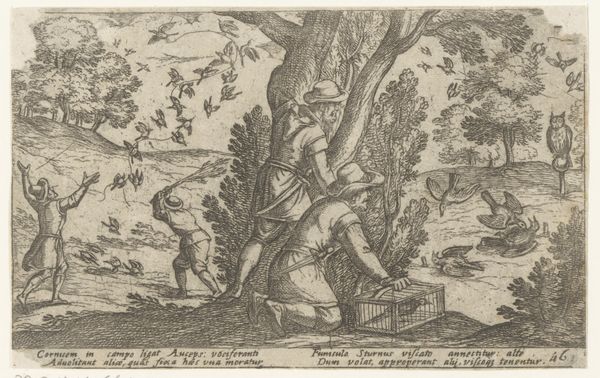
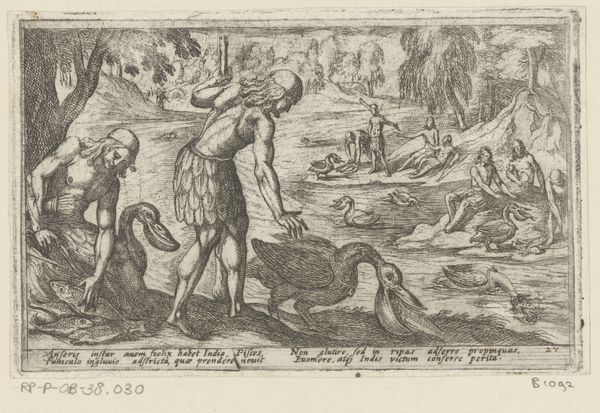
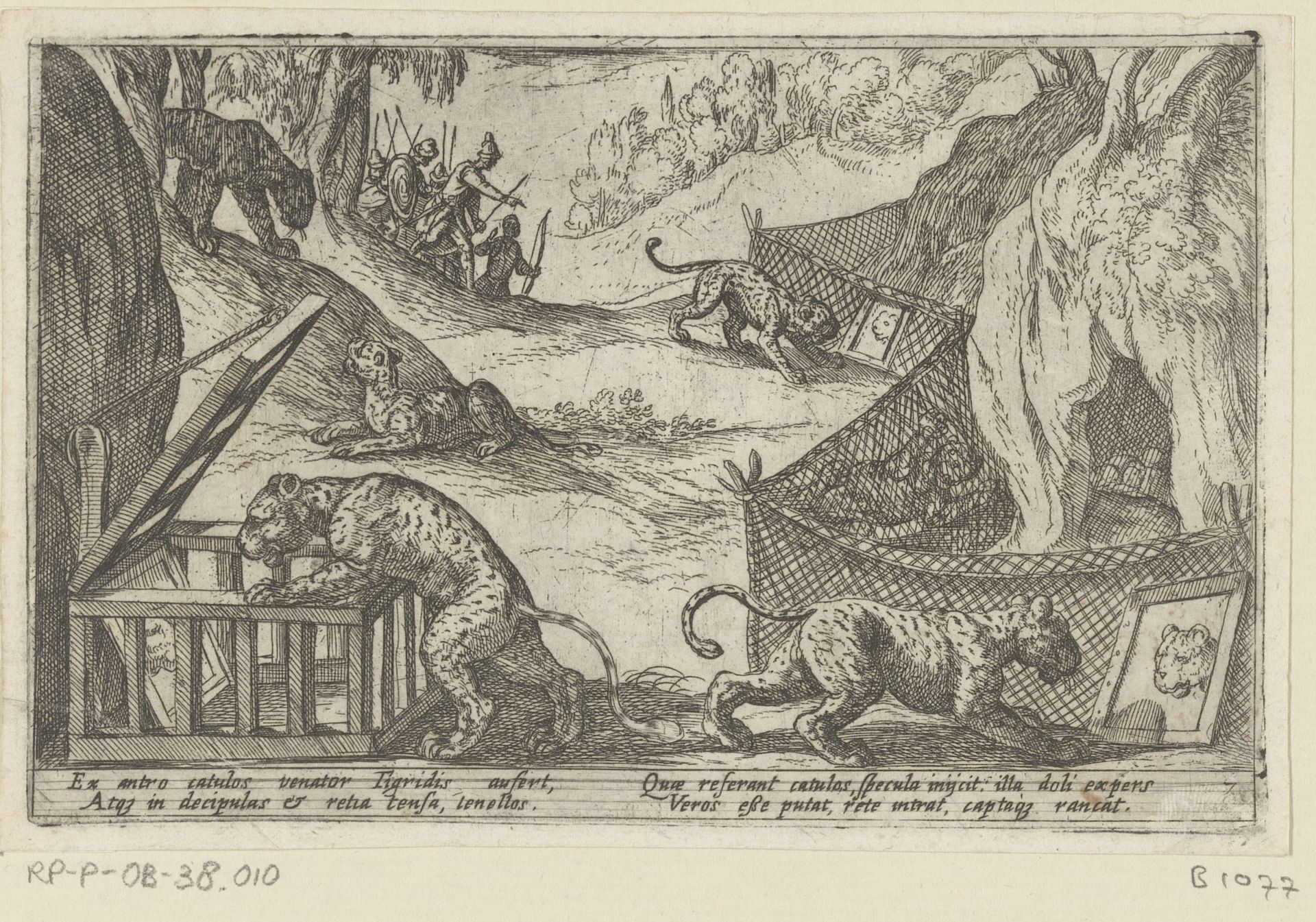
Antonio Tempesta created this print, titled 'Jagers vangen luipaarden met spiegels,' likely around the turn of the 17th century, using etching and engraving. It depicts hunters using mirrors to lure leopards into traps. This work reflects the cultural fascination of the time with exotic animals and the dominance of humans over the natural world. Notice how the hunters are actively manipulating the leopards' own reflections for their capture, preying on the leopards' social instincts and territoriality. Are the animals caught because of the hunters' actions? Or because of their own nature? In this light, the use of mirrors speaks to broader themes of vanity and self-deception. It hints at the ironies and dangers inherent in the pursuit of conquest. Ultimately, Tempesta's print serves as a commentary on human ambition and the exploitation of nature. It invites us to reflect on the complex relationship between power, desire, and the natural world. What does it say about how societies perceive and interact with those deemed 'other'?

Artwork details
- Medium
- drawing, print, etching, ink, engraving
- Dimensions
- height 94 mm, width 149 mm
- Location
- Rijksmuseum
- Copyright
- Rijks Museum: Open Domain
Tags
drawing
pen drawing
etching
landscape
mannerism
figuration
ink
genre-painting
history-painting
italian-renaissance
engraving
Comments
Be the first to share your thoughts about this work.
About this artwork
Antonio Tempesta created this print, titled 'Jagers vangen luipaarden met spiegels,' likely around the turn of the 17th century, using etching and engraving. It depicts hunters using mirrors to lure leopards into traps. This work reflects the cultural fascination of the time with exotic animals and the dominance of humans over the natural world. Notice how the hunters are actively manipulating the leopards' own reflections for their capture, preying on the leopards' social instincts and territoriality. Are the animals caught because of the hunters' actions? Or because of their own nature? In this light, the use of mirrors speaks to broader themes of vanity and self-deception. It hints at the ironies and dangers inherent in the pursuit of conquest. Ultimately, Tempesta's print serves as a commentary on human ambition and the exploitation of nature. It invites us to reflect on the complex relationship between power, desire, and the natural world. What does it say about how societies perceive and interact with those deemed 'other'?
Comments
Be the first to share your thoughts about this work.