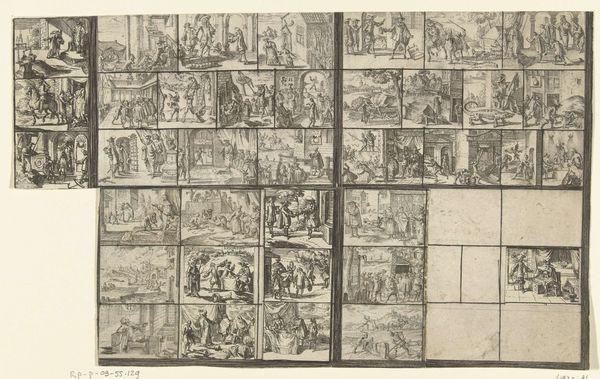
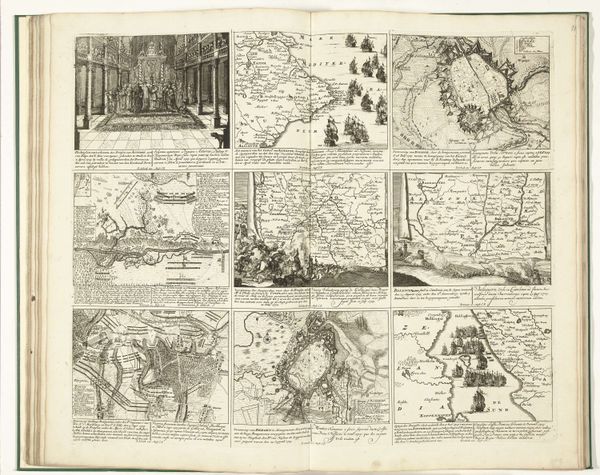
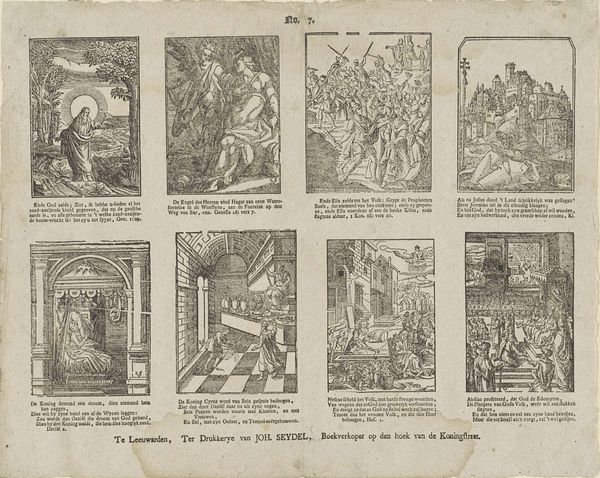
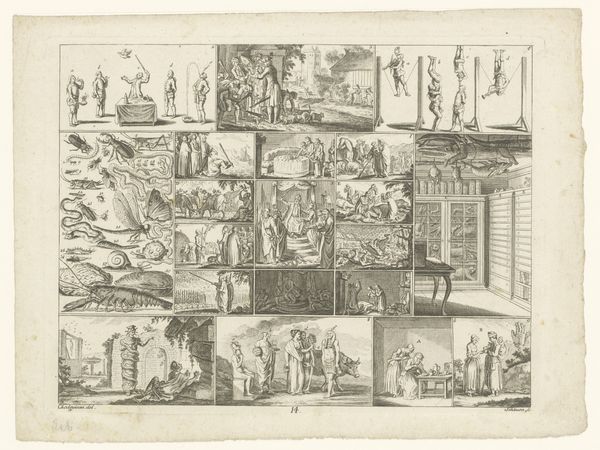
print, etching, paper, ink, engraving
#
neoclacissism
#
narrative-art
#
dutch-golden-age
# print
#
etching
#
paper
#
ink
#
history-painting
#
engraving
Dimensions: height 234 mm, width 420 mm
Copyright: Rijks Museum: Open Domain
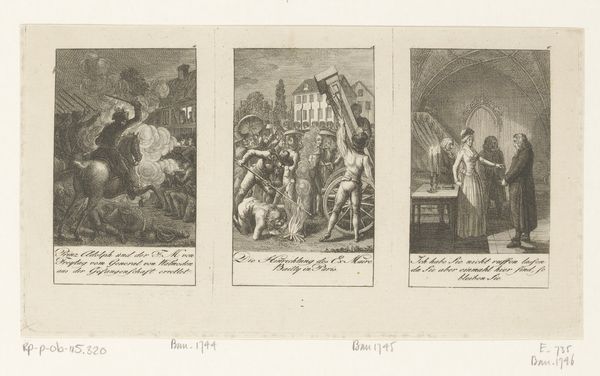
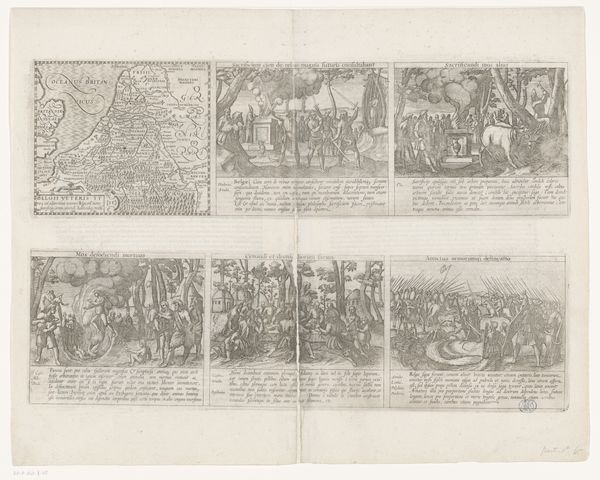
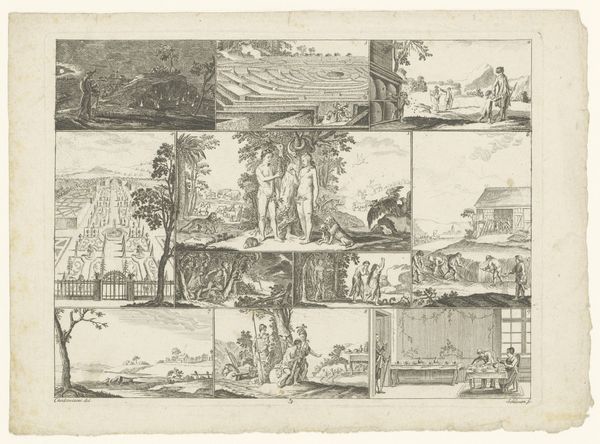
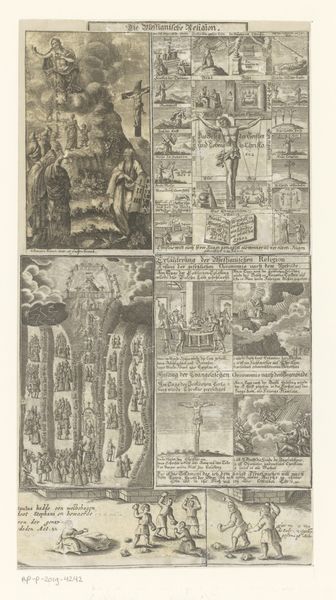
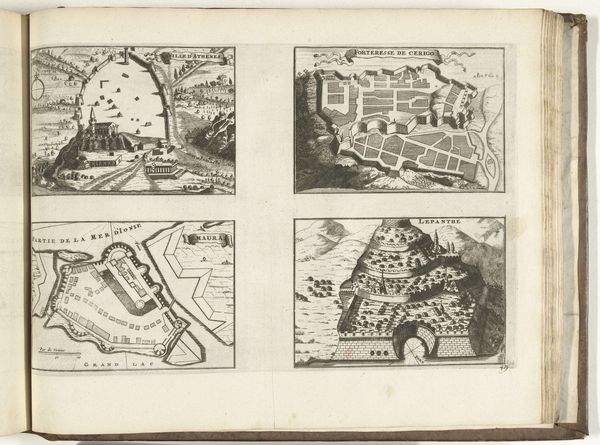
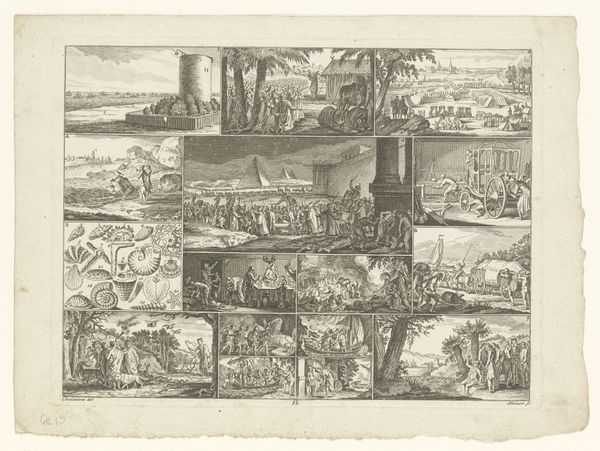
Curator: Here we have "Voorstellingen uit de vaderlandse geschiedenis," which roughly translates to "Representations from the History of the Fatherland," a print created in 1789 by Johan Christoffel Schultz. It's quite an intriguing piece of Dutch Golden Age art. Editor: It is striking—a collage of miniature narratives etched in ink! Immediately, I feel a kind of detached observation. Like watching a play through a peephole. Almost clinical, and very distant. Curator: That distance is partly intentional. Schultz, working in the Neoclassical style, was interested in presenting history as a series of clear, rational events, a kind of orderly recounting. Prints like these were incredibly important, right at a time of burgeoning Dutch nationalism. Editor: Orderly, maybe, but each vignette seems brimming with its own energy and drama, confined to this tiny space, a sense of grand things brought into a controllable narrative. Did he make them small for reasons of consumption, accessibility? Curator: Definitely. The proliferation of printed images really took off. Also it's important to note the context of its creation: this wasn't simply history; this was *patriotic* history. The purpose of showing these grand, symbolic interpretations was not only about knowledge, but about fostering civic virtues. Editor: It seems so… didactic. All those carefully posed figures and staged scenarios, as if illustrating a very serious history book. I wonder how much people then questioned his choices? What did ordinary folks feel about seeing their history so officially rendered? Curator: That's the million-dollar question, isn't it? These kinds of historical images were tools used to construct national identity, presenting the past through the lens of the present. To what extent the viewer would accept those terms...it's a space for them to become politically conscious citizens, too. Editor: Maybe looking closely it seems he allowed for enough ambiguity that these would spark those discussions. I can't help but think: History is, ultimately, stories we tell ourselves, in ink, on paper, for all time. Or at least until the paper crumbles. Curator: Precisely! So, take a good look, then take that story and find your place within it!
Comments
No comments
Be the first to comment and join the conversation on the ultimate creative platform.
 Collect
 React
React Comment
More like this