c. 1795
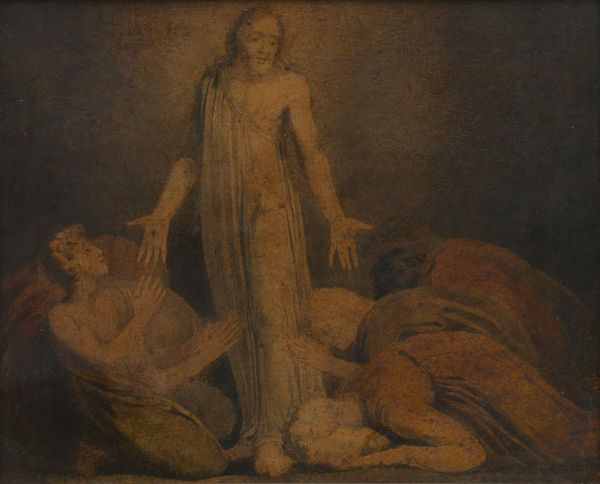
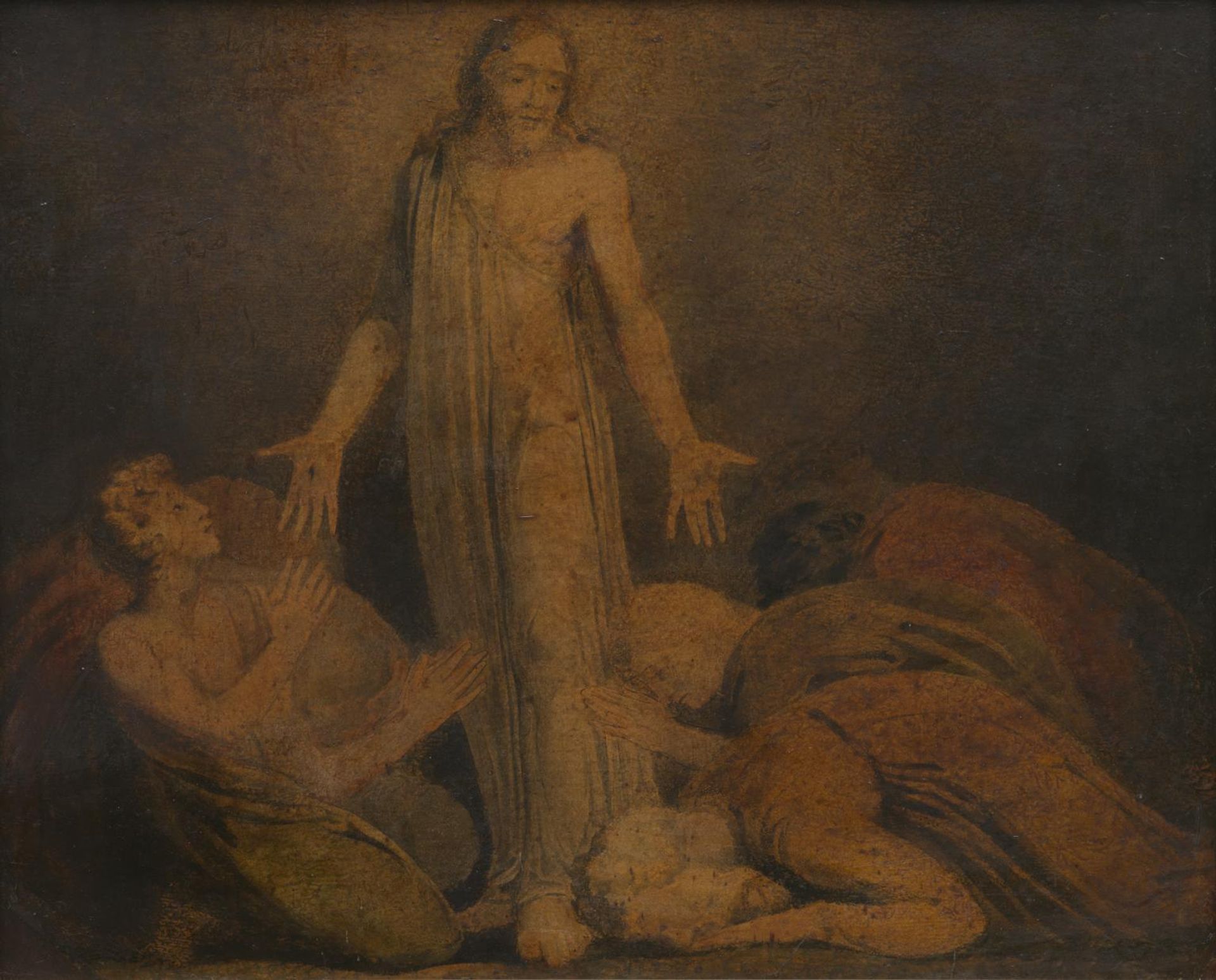
Christ Appearing to the Apostles after the Resurrection


Listen to curator's interpretation
Curatorial notes
Curator: This is William Blake’s "Christ Appearing to the Apostles after the Resurrection," part of the collection at the Tate. Editor: It has a certain ethereal quality, doesn’t it? The muted tones and indistinct forms contribute to a dreamlike atmosphere. Curator: Indeed. Blake's religious beliefs deeply influenced his artistic output, using biblical narratives to critique societal norms. The scale of the piece, roughly 40 by 50 centimeters, draws you in. Editor: The composition, though loosely rendered, directs the eye toward Christ, a towering figure amidst the supplicating apostles. Notice how the light emanates from him, emphasizing his spiritual presence. Curator: Yes, Blake was deeply invested in the power of the image to convey complex spiritual states, often rejecting academic conventions. This painting is not just a representation of a biblical scene, but a potent statement about faith and doubt in the late 18th century. Editor: It’s a remarkably ambiguous image, provoking questions about belief and the human condition. Curator: Precisely, its enduring power lies in its ability to elicit personal reflection and cultural dialogue.