print, engraving
#
portrait
#
baroque
# print
#
engraving
Dimensions: height 298 mm, width 195 mm
Copyright: Rijks Museum: Open Domain
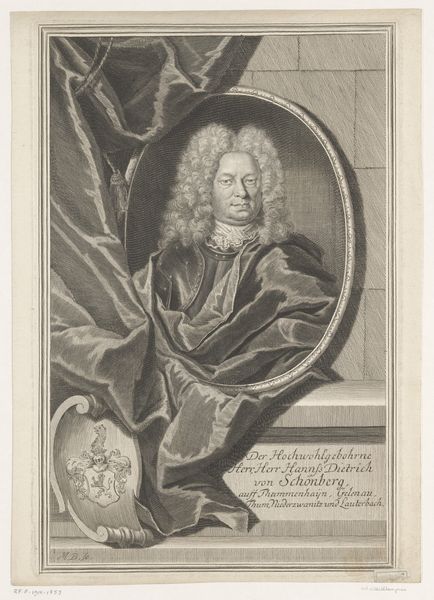
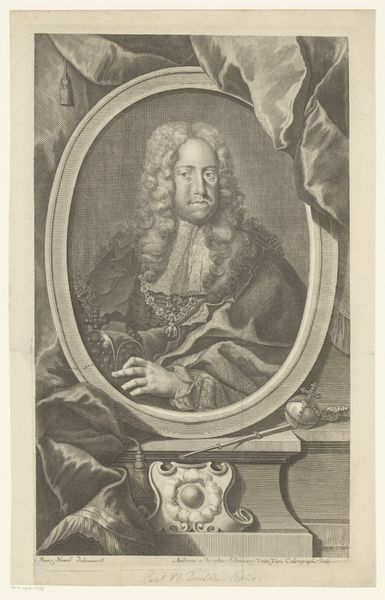
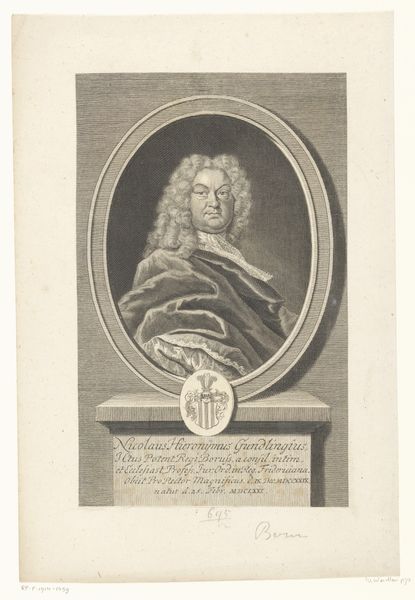
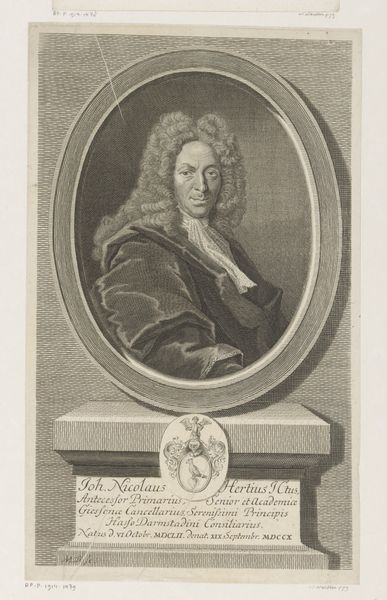
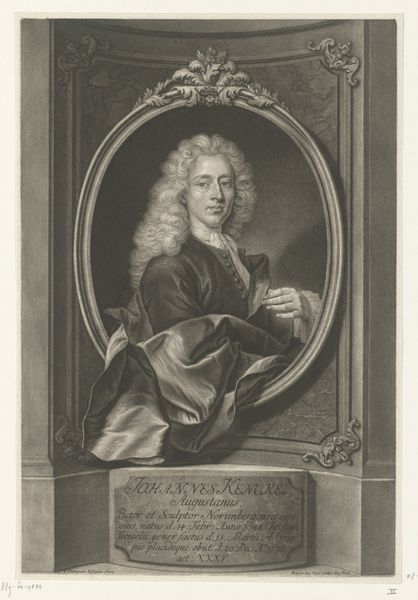
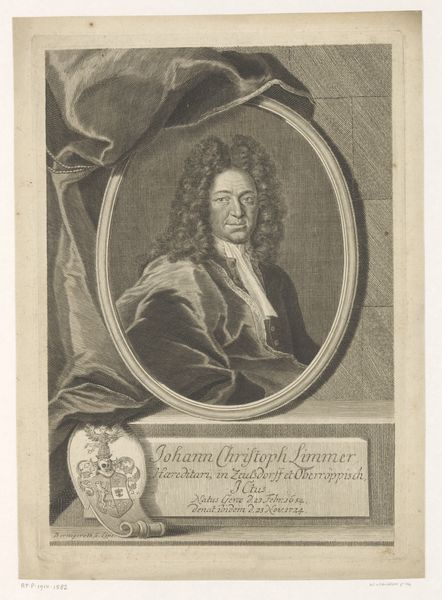
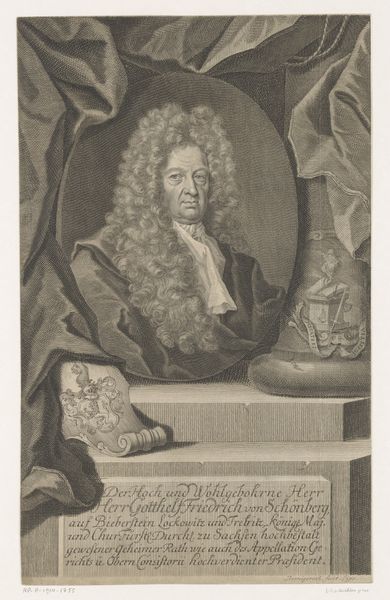
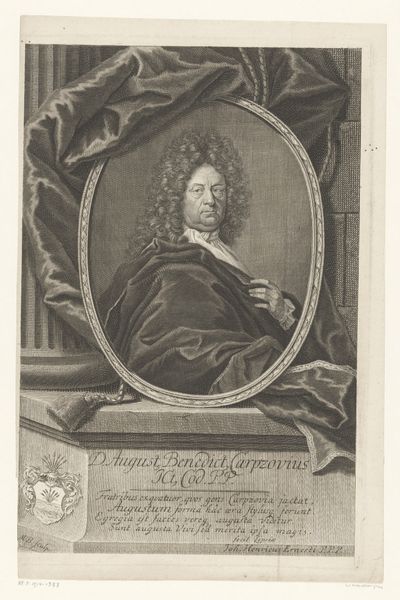
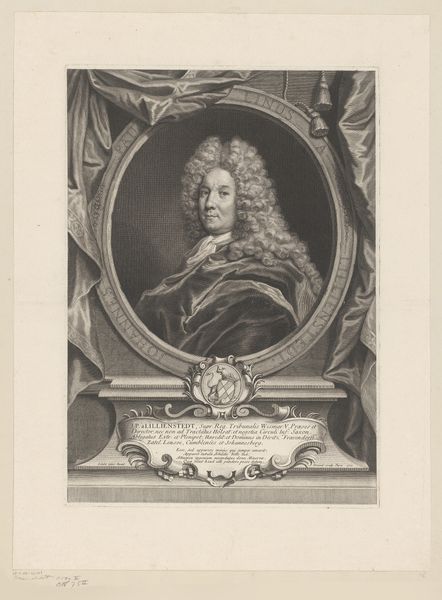
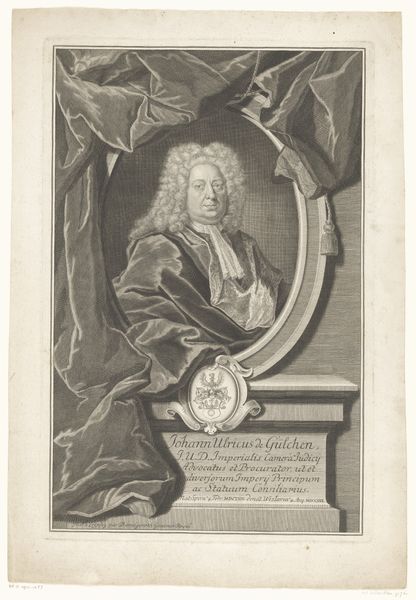
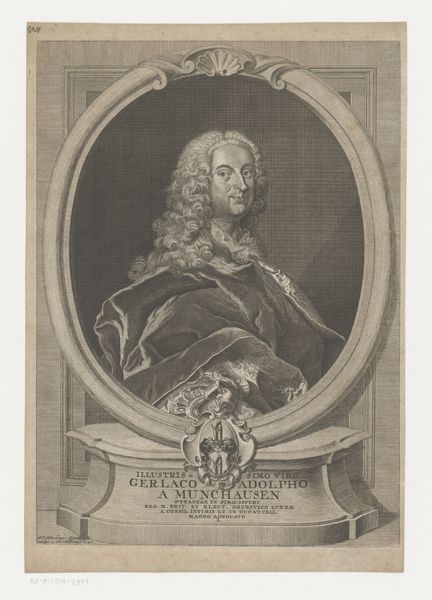
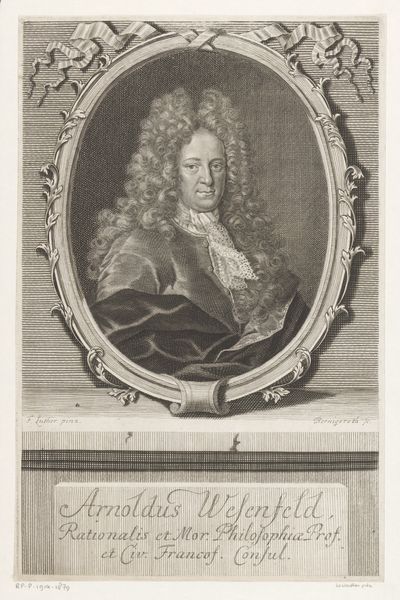
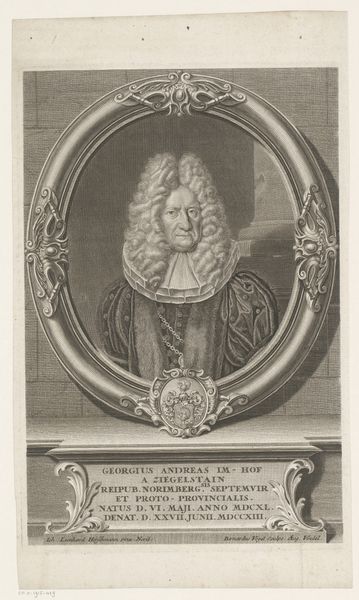
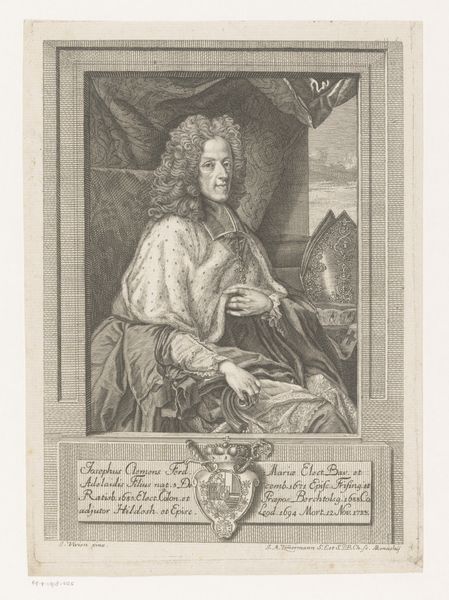
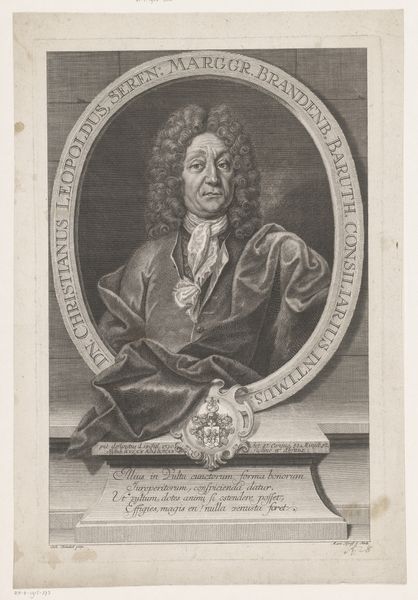
Editor: This is a portrait of Johann Gottlob Platz, an engraving made by Martin Bernigeroth sometime between 1731 and 1733. It's quite formal and imposing, even a bit severe. What layers of meaning can you unpack from this representation? Curator: Absolutely. The severe formality speaks volumes about the sitter’s position within a hierarchical society. Platz held titles tied to Polish royalty and was a legal counselor and Upper Lusatia chancellor. Consider the visual language being employed: the oval frame, the drapery, the inscribed tablet below—these are all performative elements that function to legitimize power. How do you think this image operates in shaping identity? Editor: It's like a carefully constructed presentation of authority and status. Almost a branding exercise, but centuries before brands as we know them! Curator: Exactly! And within that “brand,” think about the implications. This image isn't just a likeness; it’s a statement of Platz's unwavering commitment to the existing power structures. These images reinforced class and social hierarchies of the time, making figures like Platz seem not just powerful, but almost divinely ordained in their roles. Do you think portraiture like this can ever serve as a form of subtle social control? Editor: That's a compelling idea! The engraving technique itself, so precise and reproducible, seems to solidify the permanence of his status. The volume of his wig feels like another symbol of status and position! Curator: Indeed! Even the choice of engraving as a medium connects to ideas of permanence and wider dissemination. The printing press meant these messages could be distributed, reinforcing dominant narratives. So what do you take away from situating this artwork within a broader context of power dynamics? Editor: I see now that it's more than just a portrait. It's an active participant in the politics and social structures of its time. A perfect snapshot of how those with authority worked hard to cement their image, which I suppose still happens today, too! Curator: Precisely! It reveals that images can be tools used in shaping perceptions and reinforcing systems. Art is rarely ever neutral!
Comments
No comments
Be the first to comment and join the conversation on the ultimate creative platform.
 Collect
 React
React Comment
More like this