c. 1622 - 1642
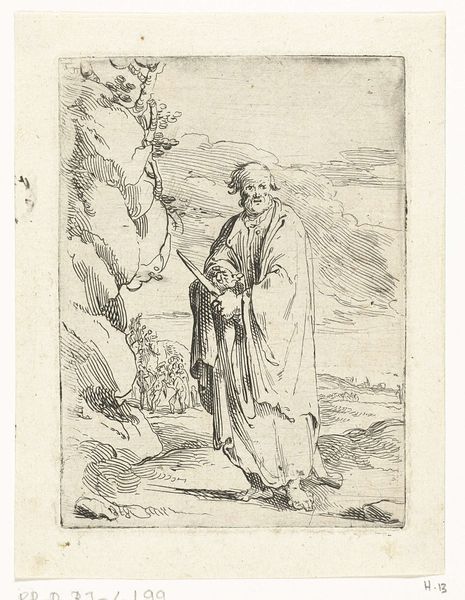
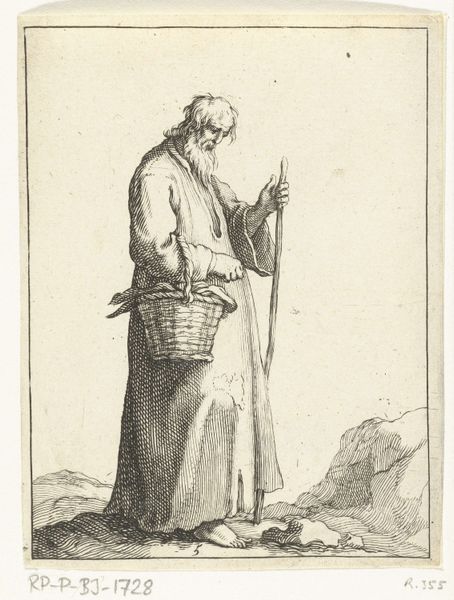
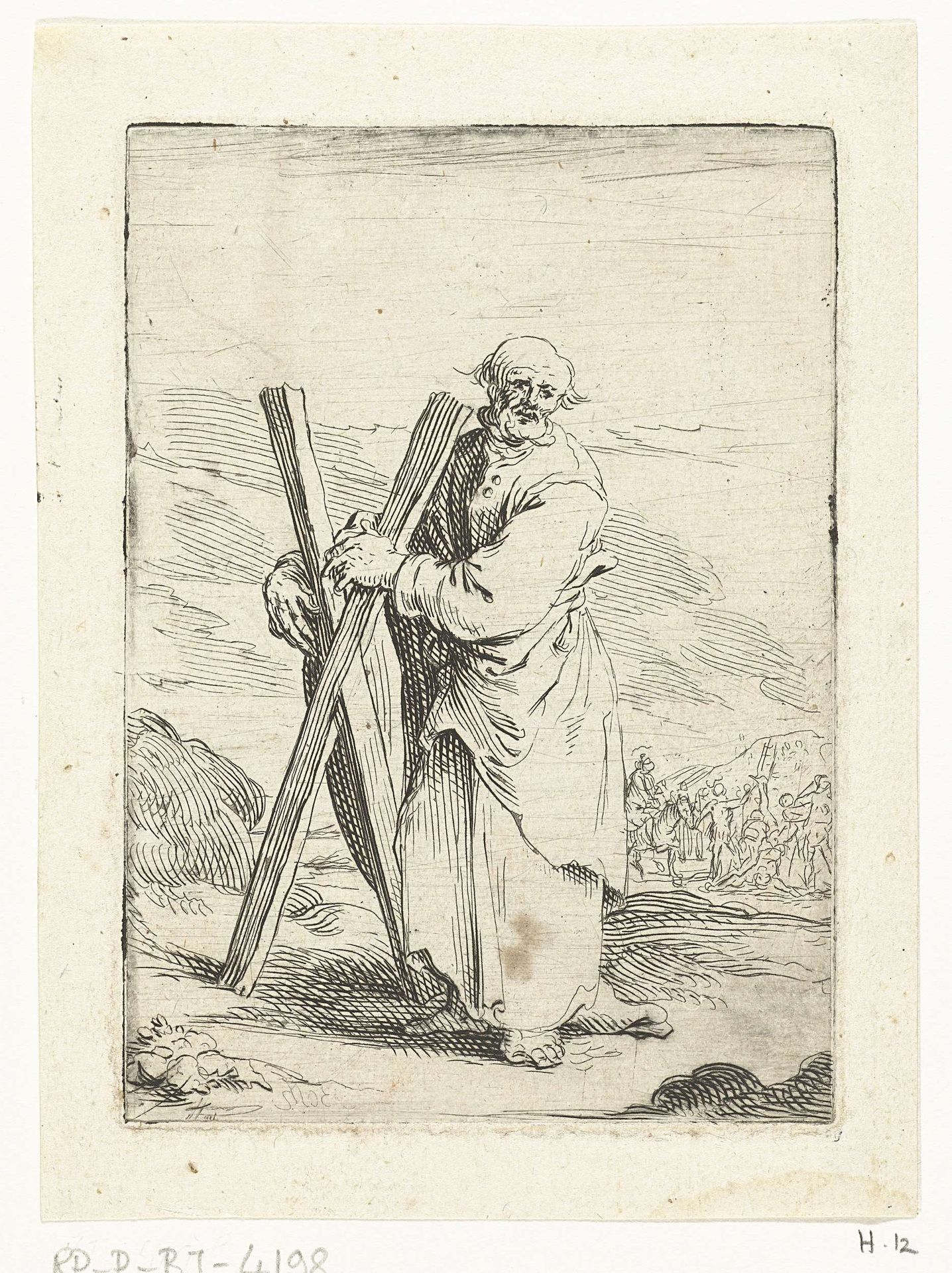
Andreas

Andries Both
1612 - 1641Location
RijksmuseumListen to curator's interpretation
Curatorial notes
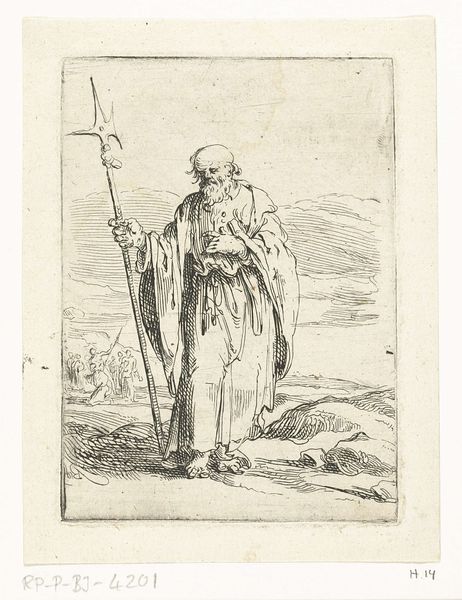
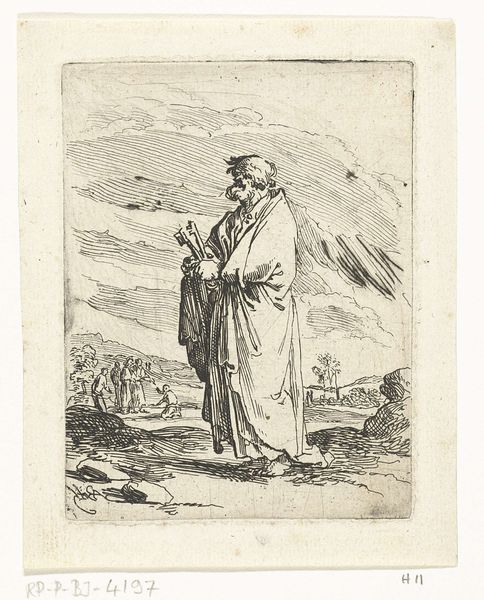
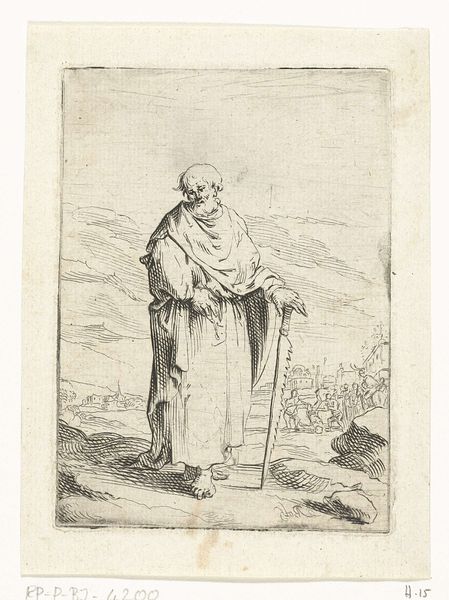
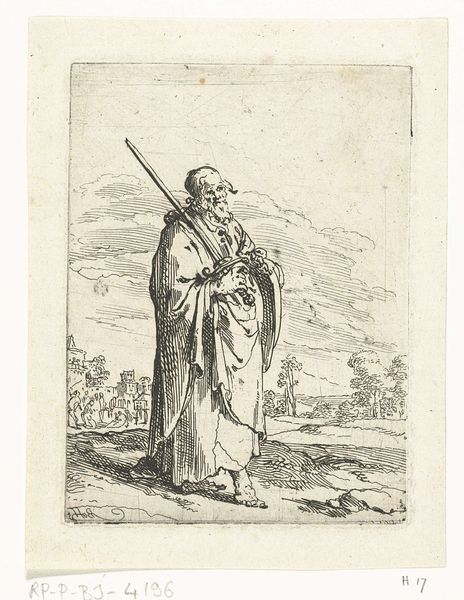
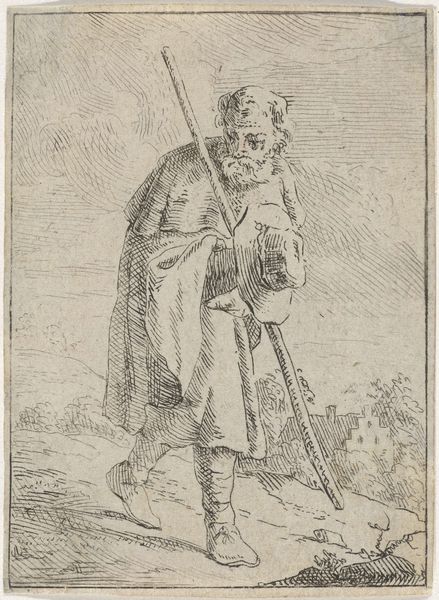
This image, “Andreas,” was made by Andries Both, likely in the 1630s, using a printmaking technique called etching. This detailed work on paper begins with a metal plate, likely copper. The artist would have coated the plate with a waxy, acid-resistant ground, then used a sharp needle to scratch away the coating, exposing the metal. Next, the plate was submerged in acid, which bit into the exposed lines, creating grooves. These grooves hold the ink. The plate is then cleaned, inked, and pressed onto paper, transferring the image. Both’s skill is evident in the fine lines and details he achieved. Notice how the cross-hatching creates a sense of depth and shadow, particularly in the figure's robes. It is a relatively indirect process, yet it has a graphic directness and a gritty feel. The print is not just an image, but a product of labor, skill, and material interaction, bridging the gap between fine art and craft.