About this artwork
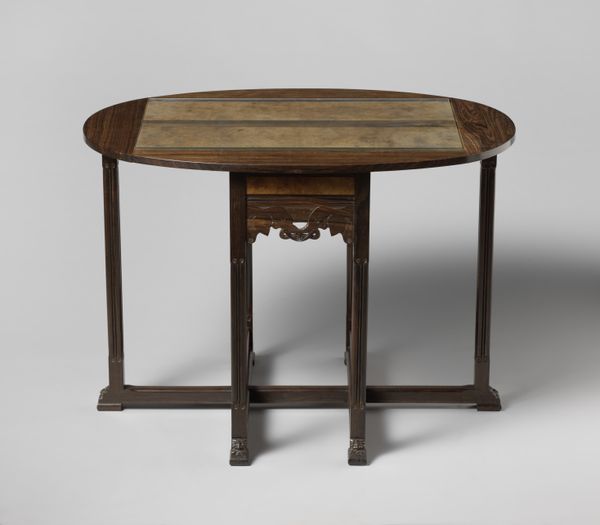
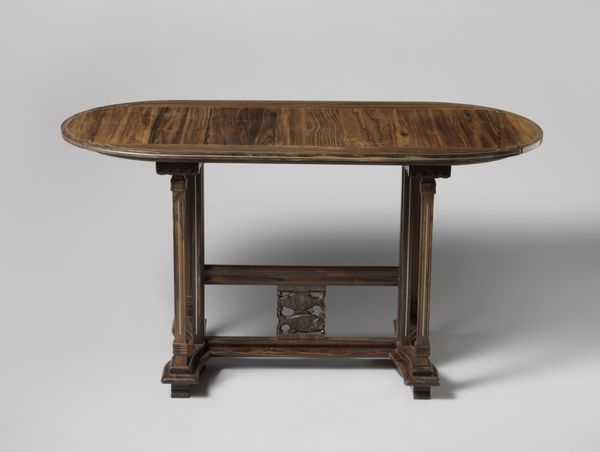
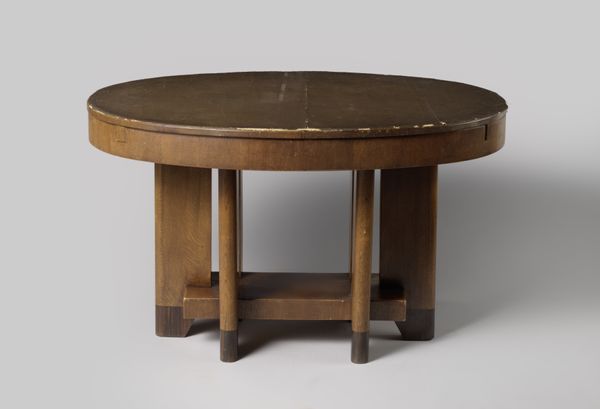
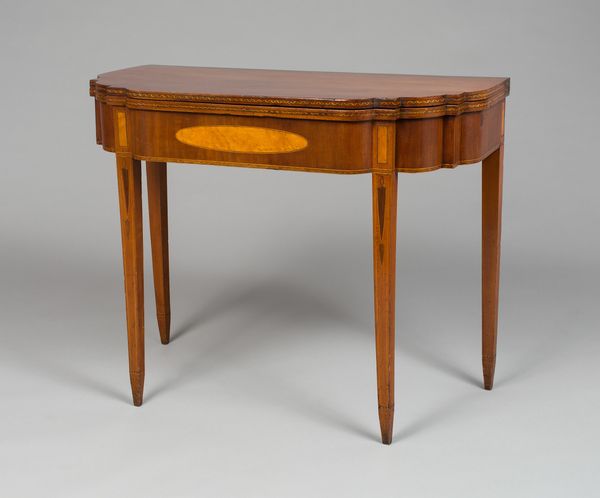
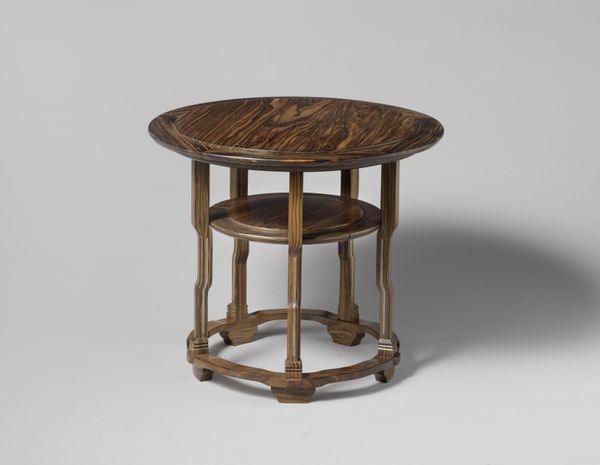
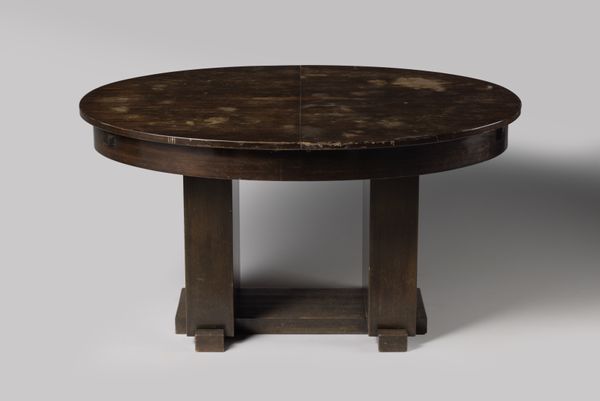
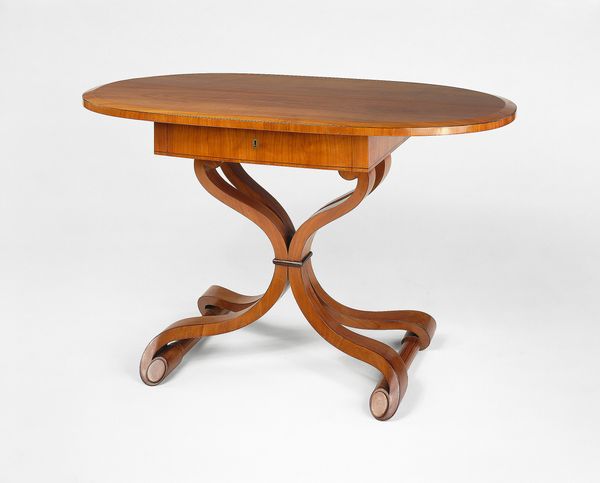
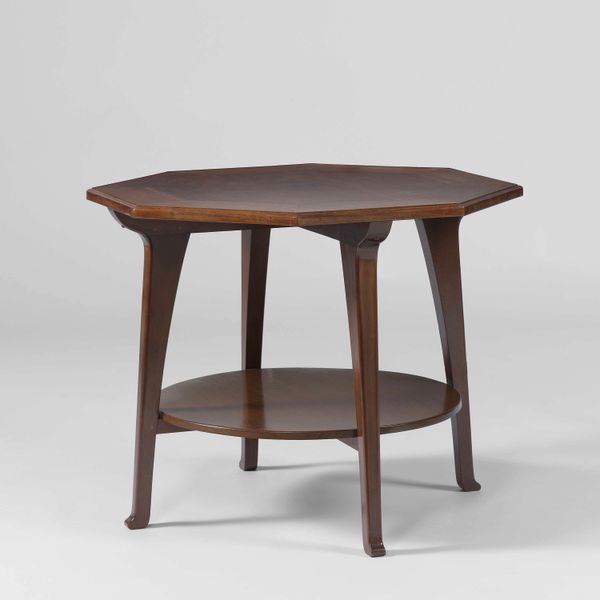
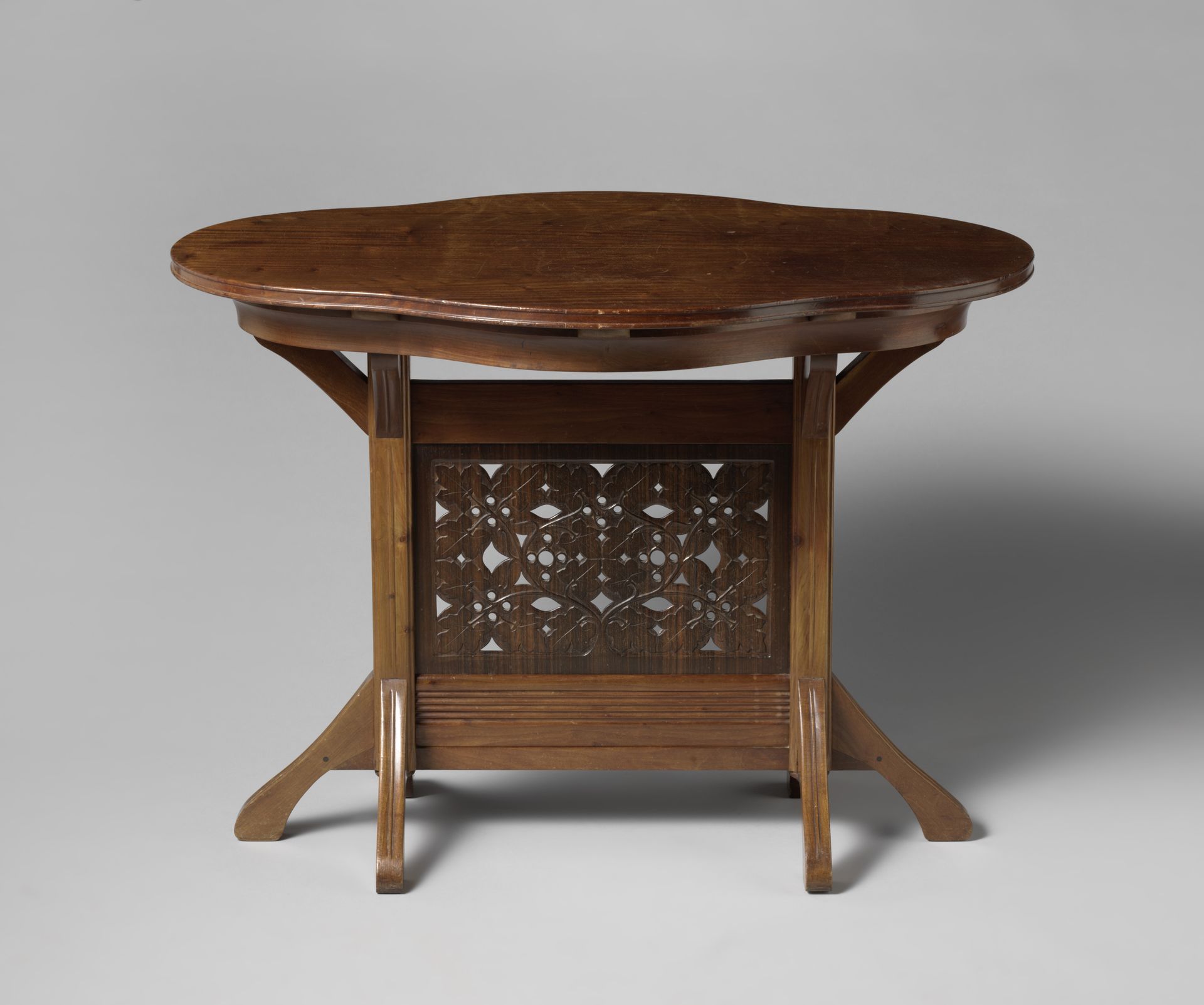
This oval table with an openwork leaf pattern was designed by Theo Nieuwenhuis, likely in the early 20th century. Its aesthetic is rooted in the Arts and Crafts movement, which championed handcrafted objects and celebrated the beauty of natural materials. The table's design reflects a broader cultural shift away from mass-produced, industrial goods, as designers sought to revive traditional craftsmanship. Made in the Netherlands, it embodies the Dutch variant of Art Nouveau known as "Nieuwe Kunst". It was a conscious effort to create a unique national style, distinct from French and Belgian Art Nouveau. The Rijksmuseum, where this table is housed, plays a crucial role in preserving and presenting objects that reflect Dutch cultural identity. Analyzing archival documents, design journals, and exhibition catalogs can provide further insight into Nieuwenhuis's artistic practice, and the cultural values that shaped this table's creation. By examining the table through the lens of social and institutional history, we gain a deeper understanding of its significance as a cultural artifact.
Tafel in een ovale vorm met een opengewerkt bladmotief
c. 1900

Theo Nieuwenhuis
1866 - 1951Location
RijksmuseumArtwork details
- Medium
- carving, wood
- Dimensions
- height 75.0 cm, width 103.0 cm, depth 71.0 cm, weight 19 kg
- Location
- Rijksmuseum
- Copyright
- Rijks Museum: Open Domain
Tags
Comments
Share your thoughts
About this artwork
This oval table with an openwork leaf pattern was designed by Theo Nieuwenhuis, likely in the early 20th century. Its aesthetic is rooted in the Arts and Crafts movement, which championed handcrafted objects and celebrated the beauty of natural materials. The table's design reflects a broader cultural shift away from mass-produced, industrial goods, as designers sought to revive traditional craftsmanship. Made in the Netherlands, it embodies the Dutch variant of Art Nouveau known as "Nieuwe Kunst". It was a conscious effort to create a unique national style, distinct from French and Belgian Art Nouveau. The Rijksmuseum, where this table is housed, plays a crucial role in preserving and presenting objects that reflect Dutch cultural identity. Analyzing archival documents, design journals, and exhibition catalogs can provide further insight into Nieuwenhuis's artistic practice, and the cultural values that shaped this table's creation. By examining the table through the lens of social and institutional history, we gain a deeper understanding of its significance as a cultural artifact.
Comments
Share your thoughts