


Curatorial notes
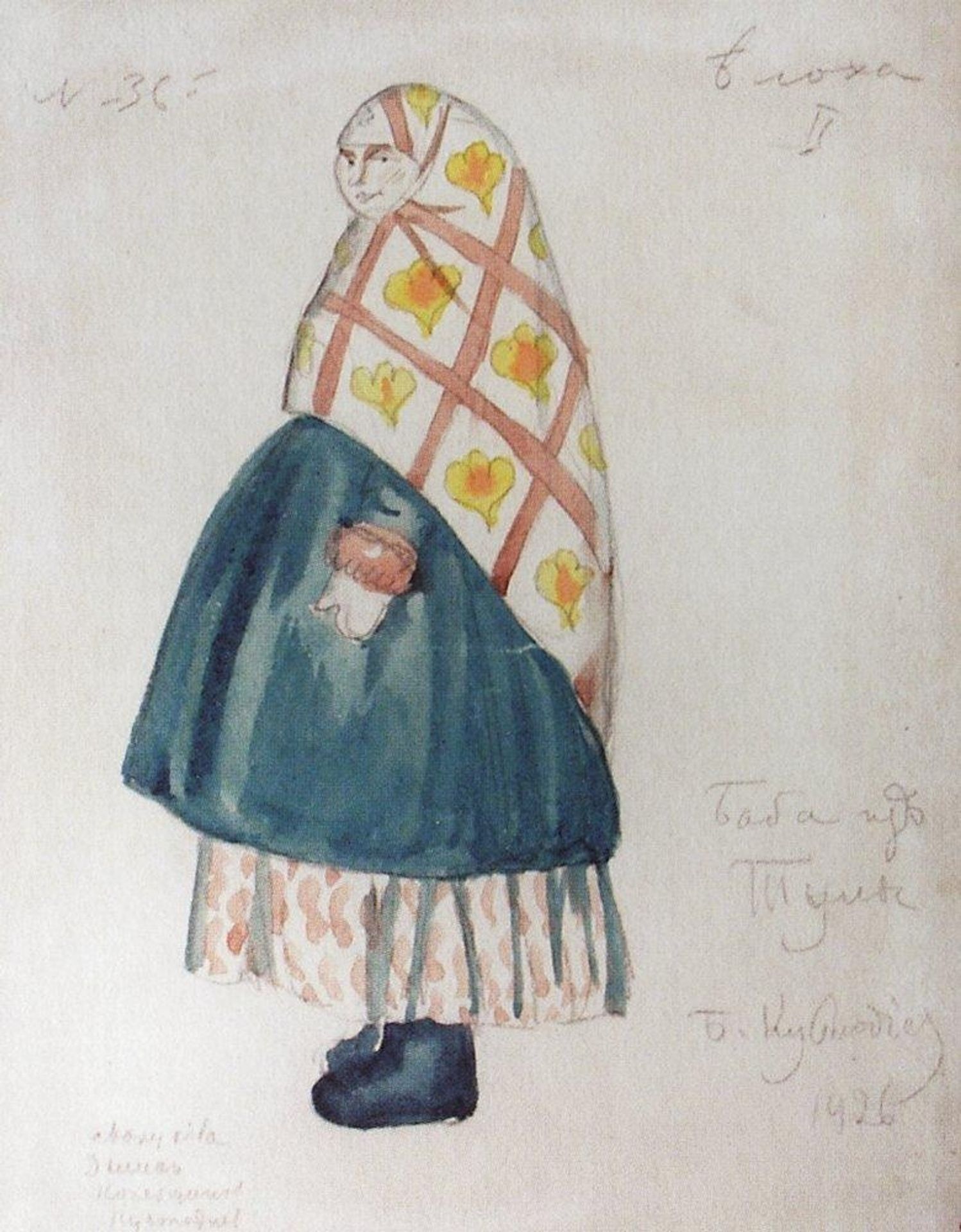
Editor: This is Boris Kustodiev's "Woman from Tula," a watercolor and coloured pencil drawing from 1926. The way the artist captures the figure’s bulk with such delicate strokes is striking. What are your initial thoughts on this piece? Curator: The immediate formal concern is the relationship between the planar surface of the paper and the illusion of three-dimensionality achieved through watercolor washes and line work. Consider how Kustodiev uses a limited palette to define form and texture. The shawl, for instance, features a rhythmic pattern, a geometric scaffolding draped over the organic curvature of the woman's body. Do you notice how the restricted colour scheme contributes to the artwork’s overall sense of restraint, or perhaps, melancholy? Editor: I do see how the limited color palette contributes to that feeling! It's almost muted, making the woman seem very self-contained. So you're saying the key to the image is how the artist balanced the flat picture plane with the attempt to render three dimensions through a delicate but structured patterning and coloring? Curator: Precisely. The drawing maintains a crucial tension between surface and depth. Note also how the figure's form occupies the majority of the pictorial space, which directs focus to the textural contrast. Do you agree that it may reveal his engagement with Russian avant-garde? Editor: I hadn’t thought about that, but now that you mention it, I can totally see the connection between those basic geometric elements of Russian Avant Garde and the patterned headscarf. This piece is far more complex than I initially realized! Curator: Yes. Through such structural considerations, we can glean a richer understanding of the artist's intent and the piece's place within its broader artistic context. It allows us to see how artistic techniques serve to communicate a deeper meaning within this cultural image.