About this artwork
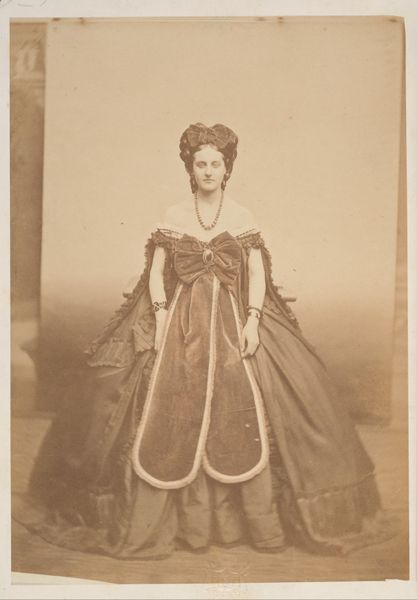
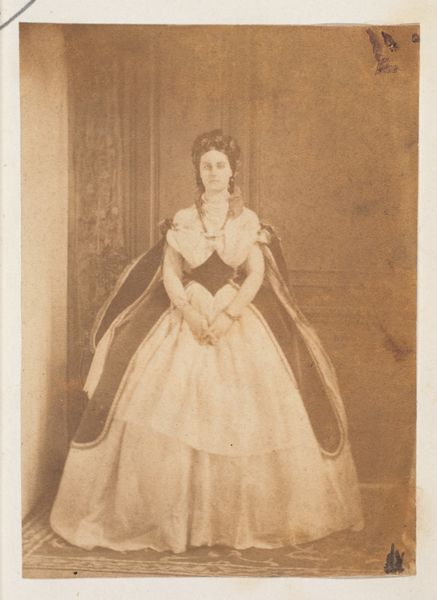
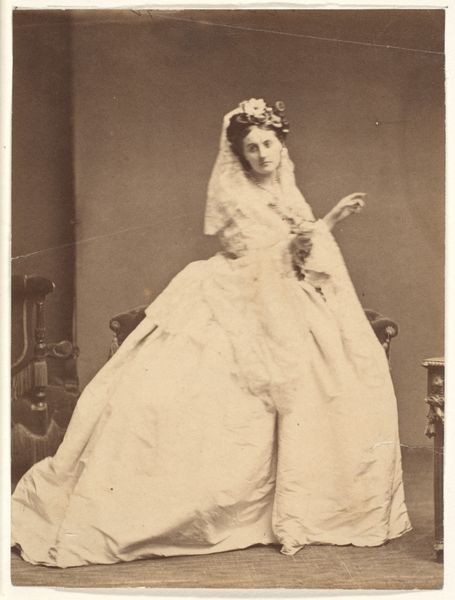
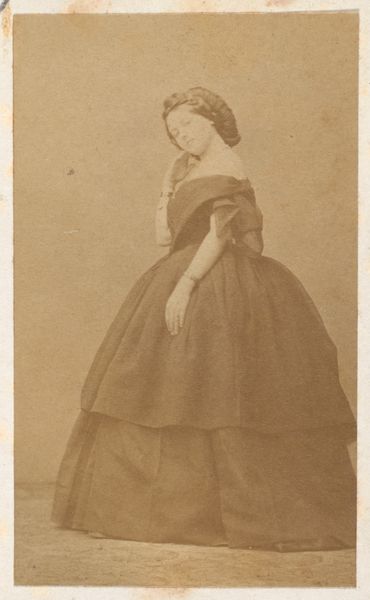
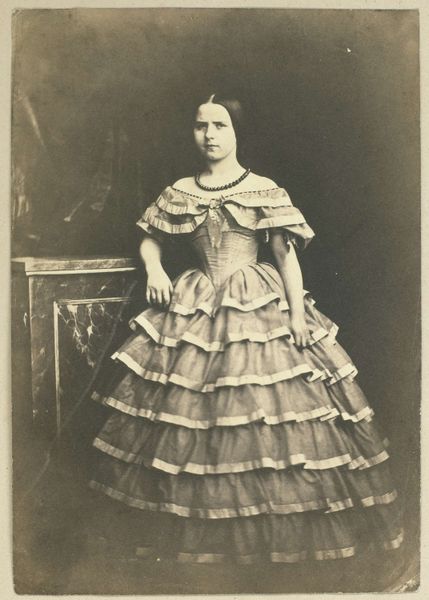
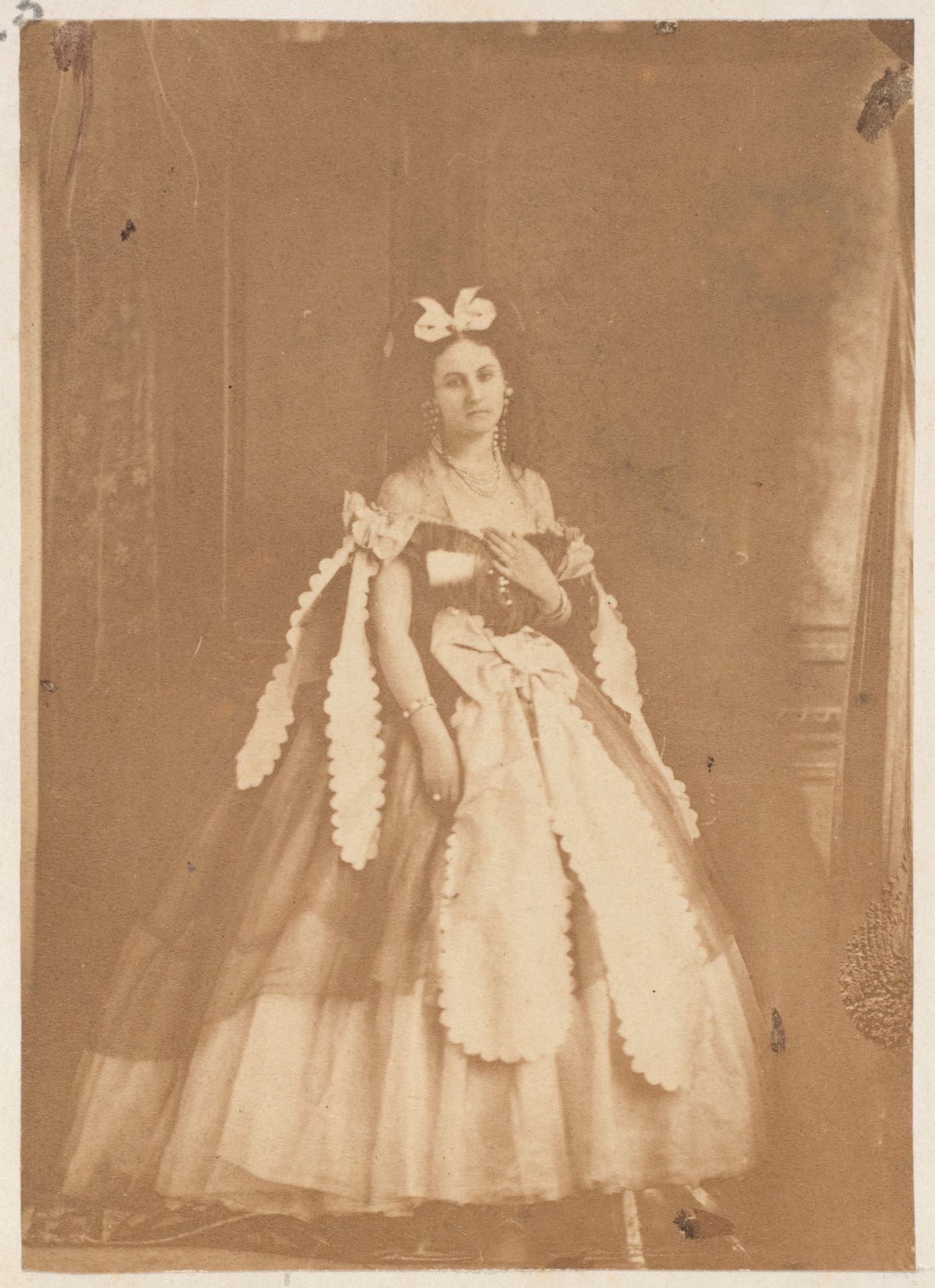
This photograph, "Les rubans découpés" by Pierre-Louis Pierson, captures a poised woman in elaborate attire. The sepia tones and the composition draw us into a world of 19th-century elegance. Pierson employs a formal arrangement, positioning the subject centrally, her gaze meeting ours, which invites a direct engagement. The dress is a study in contrasts: structured bodice, a full skirt adorned with meticulously cut ribbons. These elements create layers of texture, playing with light and shadow. The ribbons, precisely shaped, add depth, giving the image a sculptural quality. Pierson's work challenges conventional portraiture, using costume and setting to explore themes of identity and representation. The photograph’s composition and detail are not merely decorative but form a complex visual language. The photograph invites us to consider how meaning is constructed through artifice and how the surface of an image can reveal deeper cultural narratives. It's a testament to photography's power to not just reflect reality but to interpret and transform it.
Les rubans découpé
1860s

Pierre-Louis Pierson
1822 - 1913
The Metropolitan Museum of Art
Metropolitan Museum of Art, New York, NYArtwork details
- Dimensions
- 6.7 x 9.5 cm. (2 5/8 x 3 3/4 in.)
- Location
- Metropolitan Museum of Art, New York, NY
- Copyright
- Public Domain
Comments
Share your thoughts
About this artwork
This photograph, "Les rubans découpés" by Pierre-Louis Pierson, captures a poised woman in elaborate attire. The sepia tones and the composition draw us into a world of 19th-century elegance. Pierson employs a formal arrangement, positioning the subject centrally, her gaze meeting ours, which invites a direct engagement. The dress is a study in contrasts: structured bodice, a full skirt adorned with meticulously cut ribbons. These elements create layers of texture, playing with light and shadow. The ribbons, precisely shaped, add depth, giving the image a sculptural quality. Pierson's work challenges conventional portraiture, using costume and setting to explore themes of identity and representation. The photograph’s composition and detail are not merely decorative but form a complex visual language. The photograph invites us to consider how meaning is constructed through artifice and how the surface of an image can reveal deeper cultural narratives. It's a testament to photography's power to not just reflect reality but to interpret and transform it.
Comments
Share your thoughts