drawing, lithograph, print, paper, ink
#
drawing
#
aged paper
#
narrative-art
#
dutch-golden-age
#
lithograph
# print
#
sketch book
#
traditional media
#
landscape
#
paper
#
personal sketchbook
#
ink
#
sketchwork
#
journal
#
orientalism
#
sketchbook drawing
#
cityscape
#
watercolour illustration
#
genre-painting
#
storyboard and sketchbook work
#
sketchbook art
Dimensions: height 381 mm, width 454 mm
Copyright: Rijks Museum: Open Domain
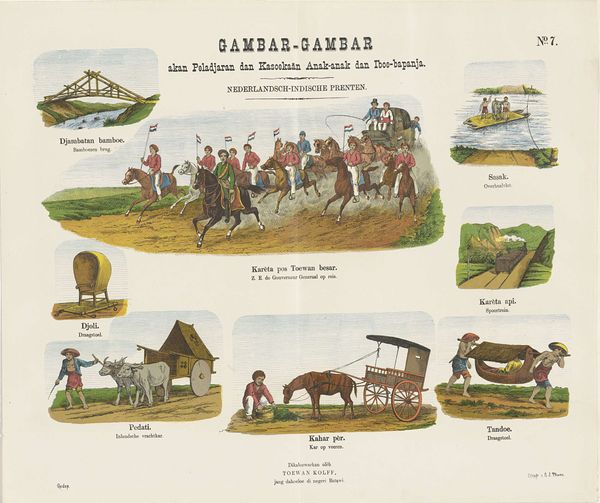
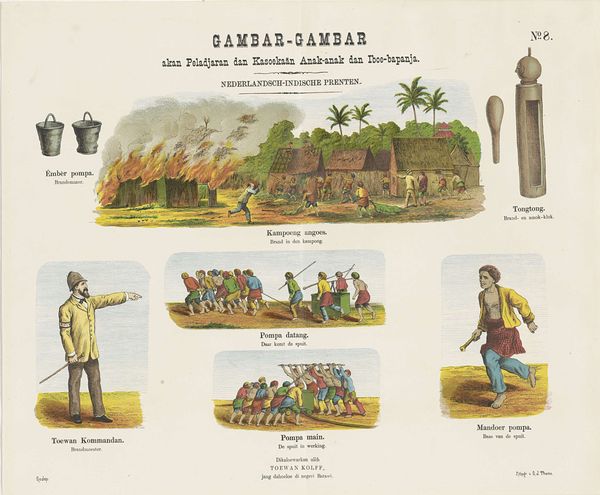
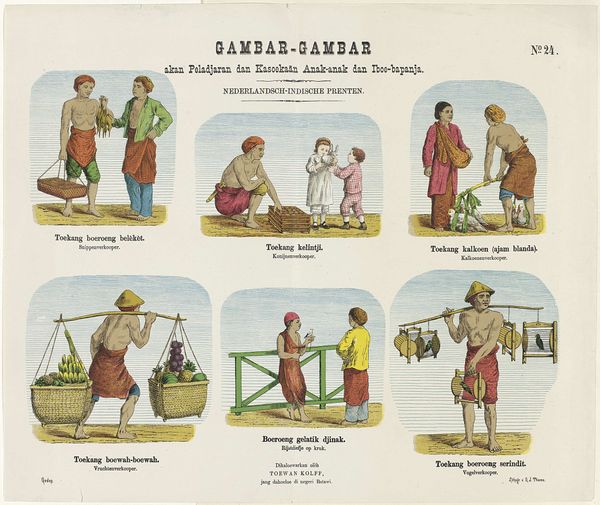
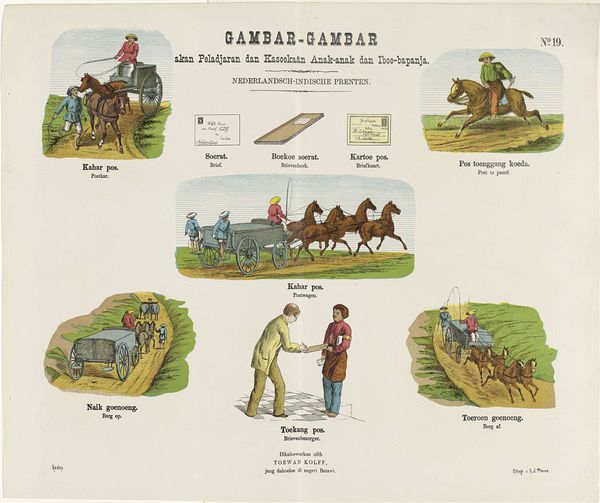
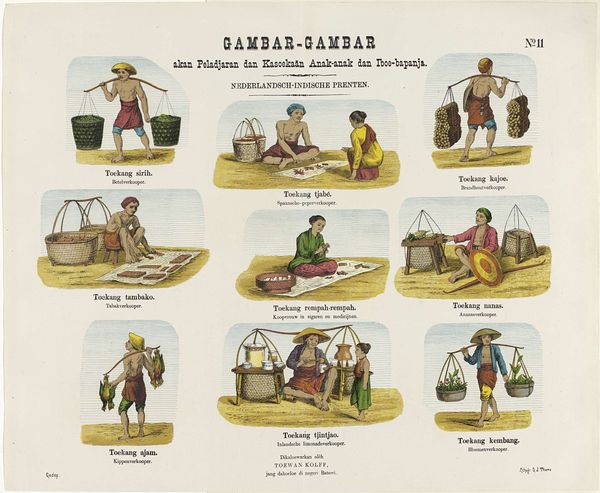
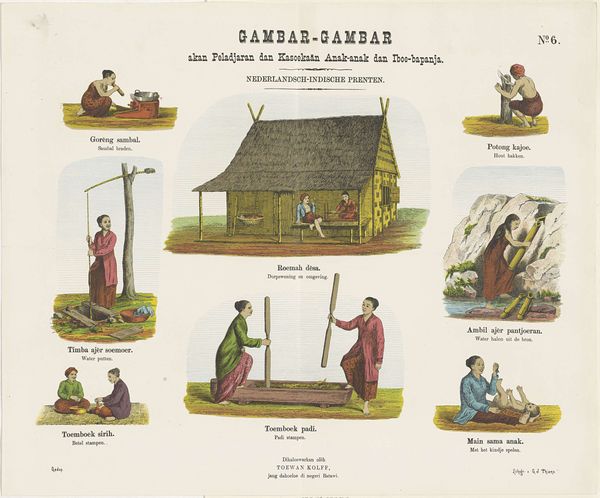
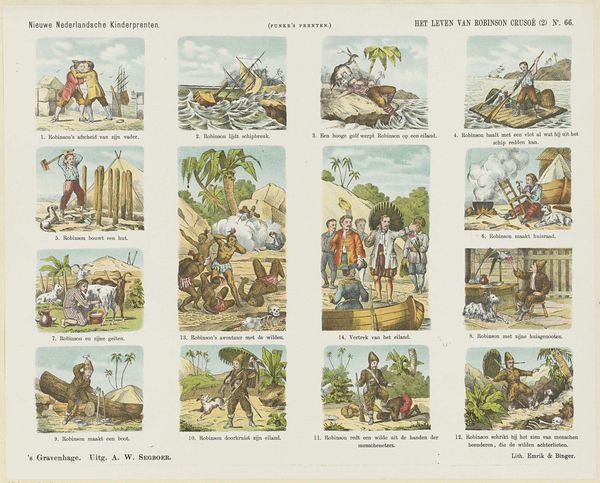
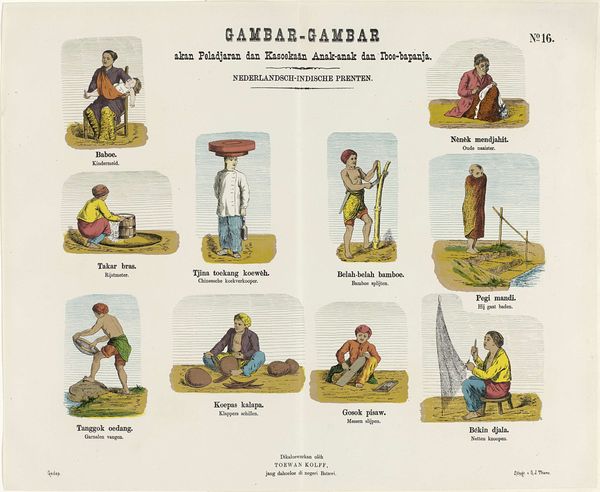
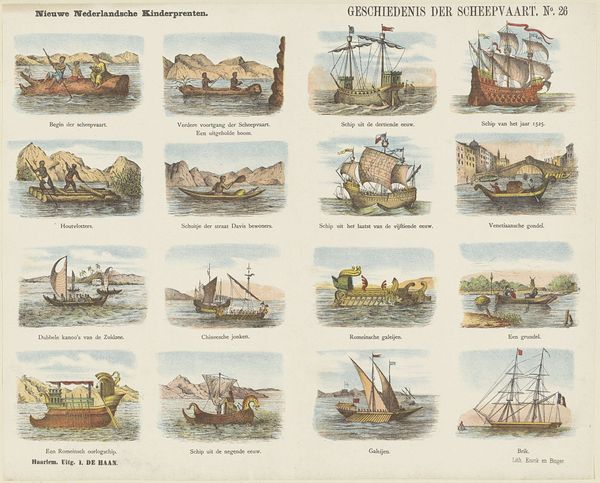
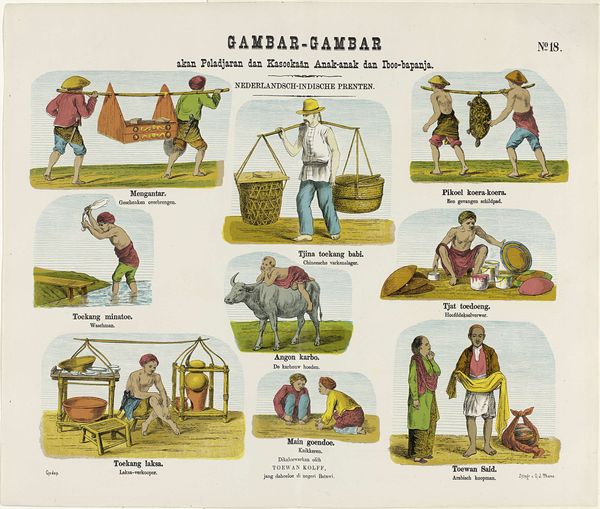
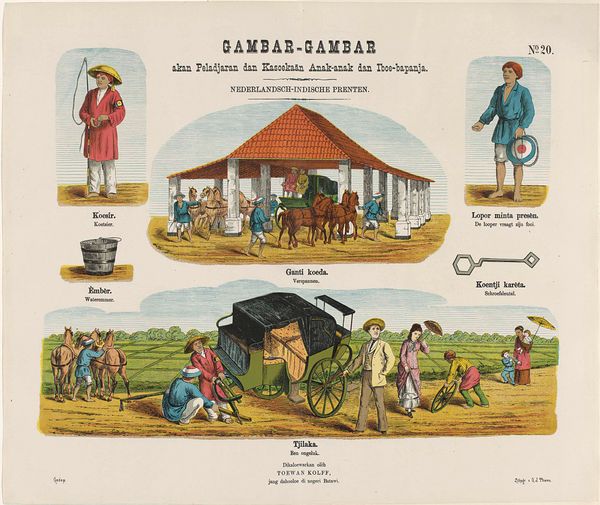
Curator: This lithograph, printed between 1868 and 1881, is titled "Vervoersmiddelen," which translates to "Means of Transport." The artist is Gualtherus Kolff. Editor: It strikes me as almost a visual dictionary, laid out in neat vignettes. Each small illustration is a little window into a different mode of transport. It's charming in its directness. Curator: Indeed, this print likely served an educational purpose, showcasing various forms of transportation used in the Dutch East Indies. Notice the horse-drawn carriage, various types of boats – from small canoes to larger sailing vessels – and even a steam-powered boat. It's a study in contrast. Editor: The selection of imagery speaks volumes. Horses evoke a sense of tradition, but steam-powered vessels suggest a push toward progress, the march of industrialization even in these distant colonial holdings. I am particularly drawn to the indigenous watercraft here; it presents an interesting juxtaposition between them and the imposing steamboat in the lower right corner. Curator: That contrast underscores the colonial project itself – the interplay between indigenous methods and imposed modernizations. The work presents not just transportation, but social dynamics. What seems quaint is really revealing broader patterns. Editor: Right. The artist probably included the Javanese boats—the prahoe—not just for ethnographical reasons but also to emphasize their crucial role in inter-island connectivity. Also note, how the fishing scene is carefully juxtaposed, depicting indigenous lifestyles adjacent to modes of colonial transportation, an echo from cultural memory… Curator: That tension, between documentation and underlying power dynamics, makes this more than just a series of sketches; it’s a layered historical document ripe for deeper consideration of Dutch influence abroad during the 19th century. Editor: I see what you mean now, after all this insightful exchange, that it reflects not only what was available but whose ingenuity and innovation was valued at that specific time. It has indeed served its original educational purpose today—revealing a fascinating portrait of colonial-era transport, in its myriad and contrasting forms.
Comments
No comments
Be the first to comment and join the conversation on the ultimate creative platform.
 Collect
 React
React Comment
More like this