

1862
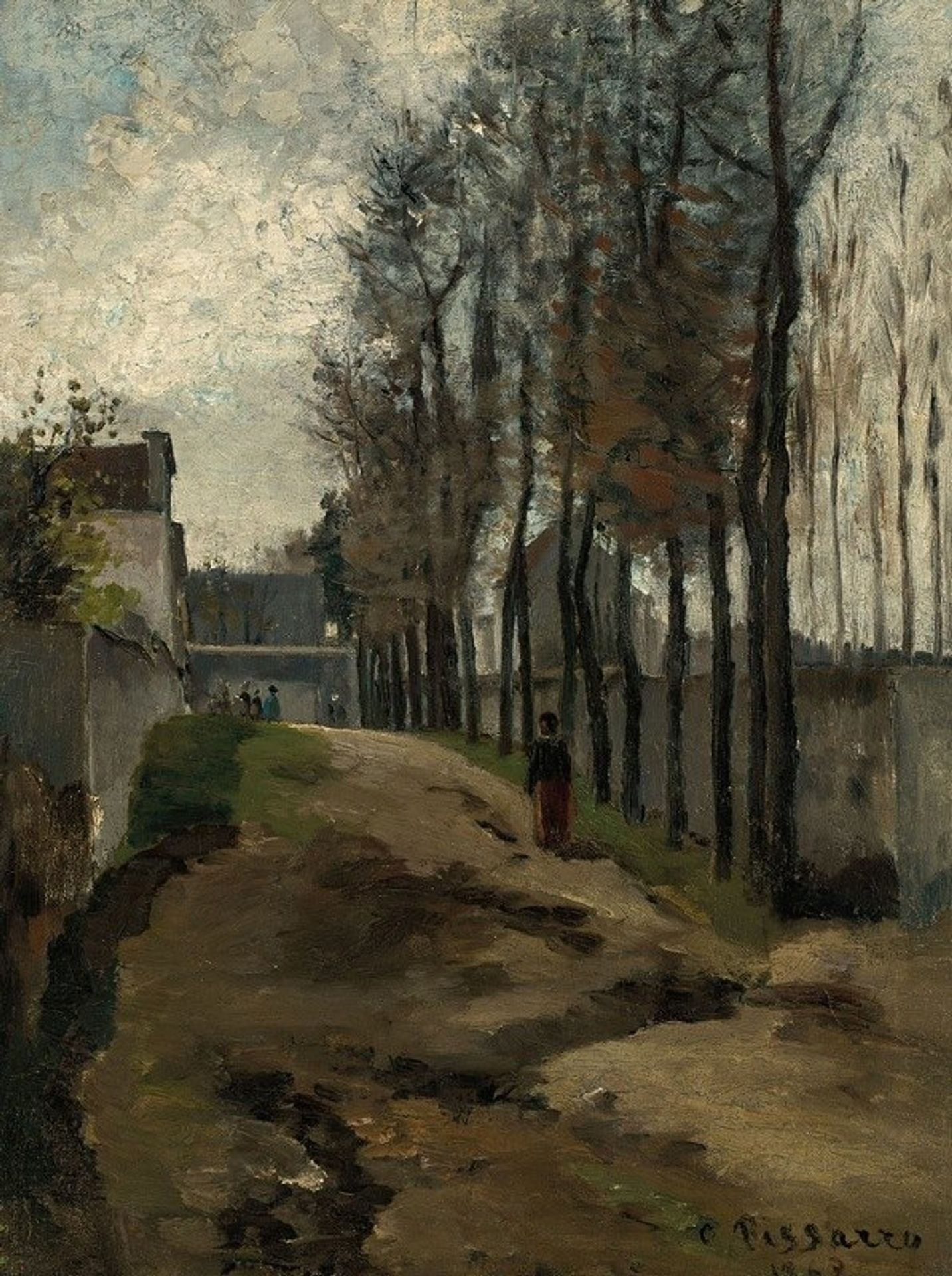
Le Chemin, paysage hivernal

Listen to curator's interpretation
Curatorial notes
Editor:"Le Chemin, paysage hivernal," or "The Road, Winter Landscape," painted by Camille Pissarro in 1862. It's an oil painting, and something about the bare trees and muted colors creates a very solitary feeling. What strikes you when you look at this painting? Curator:It's fascinating how Pissarro uses the "plein-air" technique here, bringing the rawness of everyday life directly onto the canvas. Think about the social context: the rise of industrialization, people moving from rural areas to cities. Do you see how this painting, while seemingly a simple landscape, is documenting a changing world? Editor:Yes, the road itself seems to symbolize that movement and change. Was painting scenes like this considered radical at the time? Curator:Absolutely. The Realists and early Impressionists were challenging the art establishment, which favored historical or mythological scenes. By painting ordinary life, Pissarro was democratizing art, saying that even a humble road in winter is worthy of our attention. The question is, who was art for at this moment, and how did Pissarro shift those conversations through imagery? Editor:I see that now, how choosing this subject matter itself was a political act. Curator:Precisely. And consider the role of museums and galleries: How did they – or didn't they – support artists like Pissarro in his early career? It's all part of the story. Editor:That's a perspective I hadn't considered before. Thanks! Curator:Indeed. This work reveals how even seemingly quiet landscape paintings are products of their time, shaped by social forces.