1840
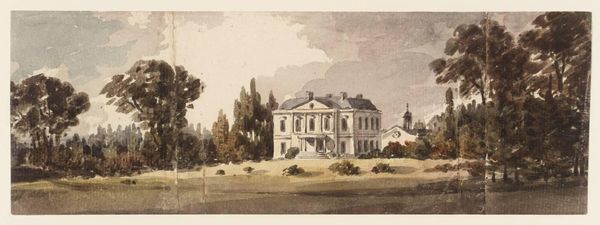
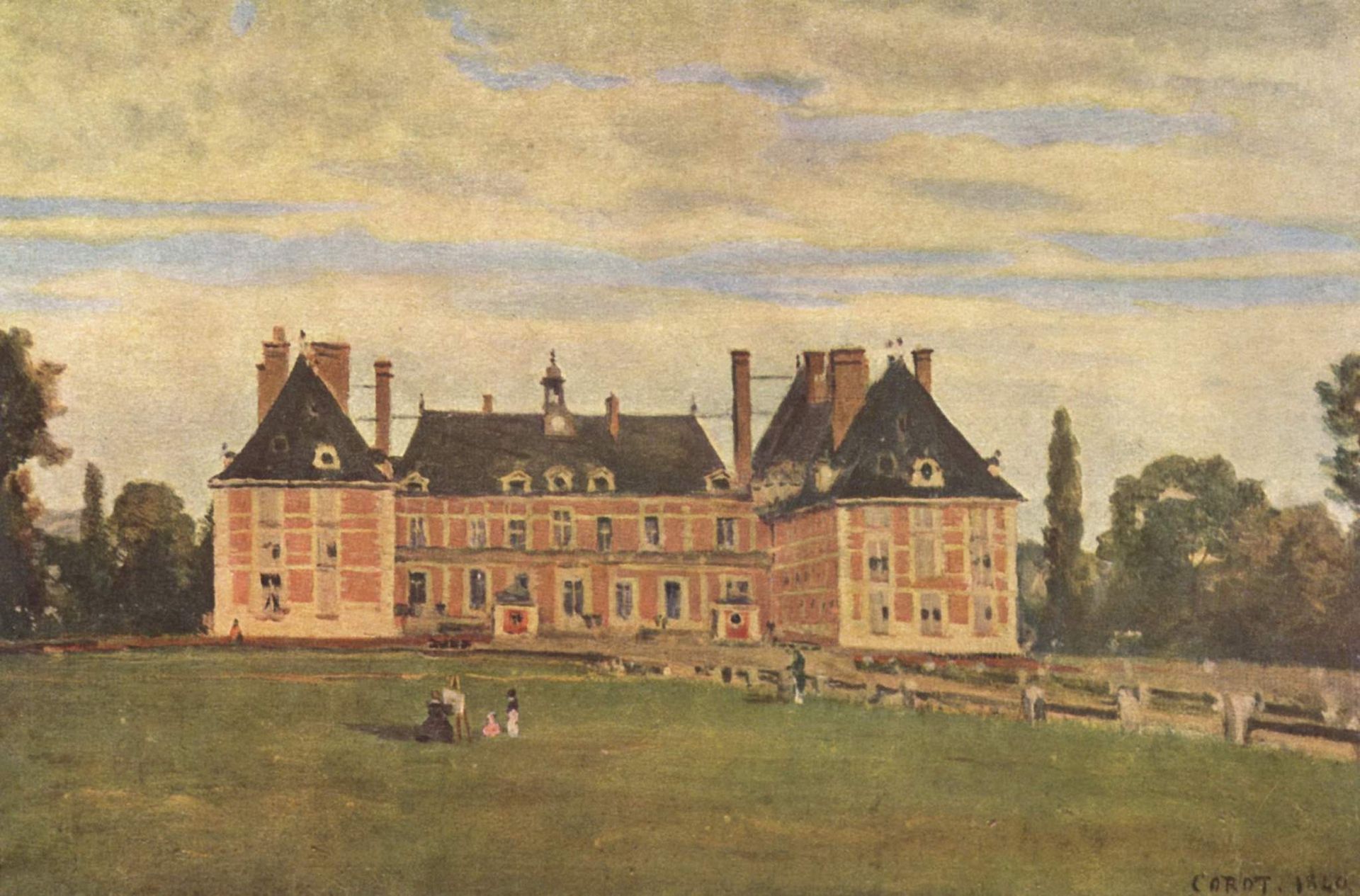
Château de Rosny


Listen to curator's interpretation
Curatorial notes
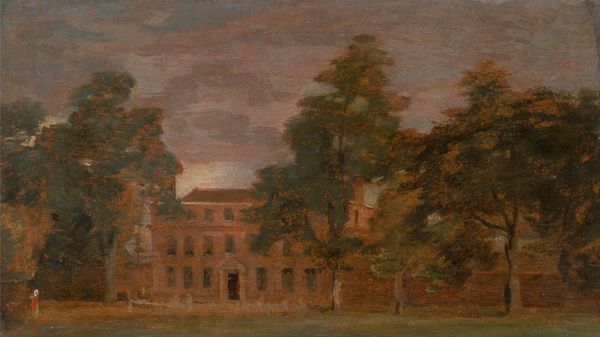
Editor: Here we have Camille Corot's "Château de Rosny," an oil on canvas created around 1840. It feels quite serene and classically composed. What strikes you about this piece? Curator: I see an idealized vision of the French countryside, steeped in symbols of stability and tradition. Notice how the chateau, solid and symmetrical, anchors the composition. It isn’t just a building, it is a signifier of French history, power, and perhaps a longing for a simpler time amidst the rapidly changing industrial landscape of the 19th century. What does the presence of figures in the landscape suggest to you? Editor: They seem to emphasize the idyllic nature of the scene, almost a timeless snapshot of leisure and family. Curator: Precisely. Corot is using a very conventional language that romanticizes this relationship between people and architecture. Are we seeing pure objective reality? No. We are seeing a vision steeped in cultural memory. The subdued color palette also adds to this sense of nostalgic harmony. What effect do you think the light has? Editor: The soft, diffused light enhances the gentle atmosphere, there's not harsh contrast, it gives a mellow vibe, contributing to the sense of harmony that we feel. Curator: Indeed, the light gently unifies the scene. The Château de Rosny isn't merely a structure; it's a vessel carrying symbolic weight, echoing the French artistic tradition that favored idealized landscapes, similar to Claude Lorrain, right? Editor: Right. I never thought about landscape having this much narrative capacity. I thought they were just nice backgrounds. Curator: Exactly, understanding visual language and symbolic traditions unlocks further understanding of the artist. Editor: Well, I’ve certainly learned a new way to view landscapes today! Thanks for opening my eyes to the visual and cultural layers.