About this artwork
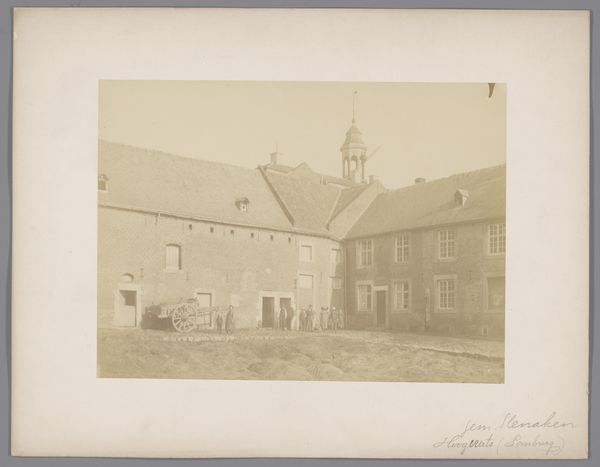
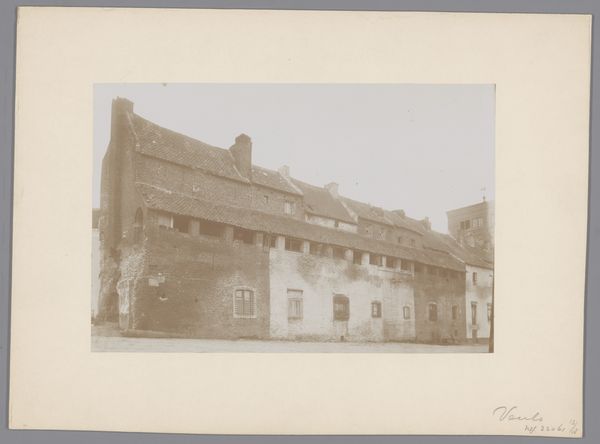
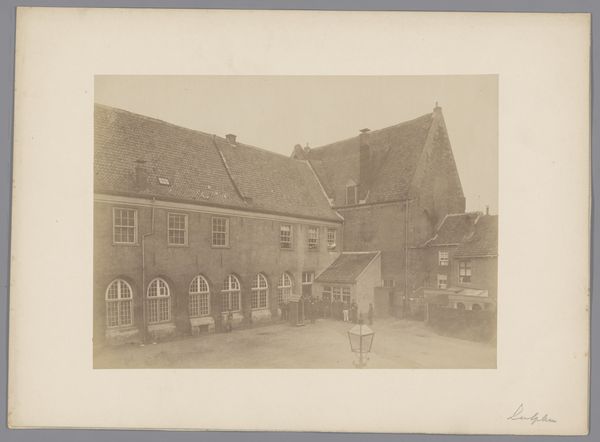
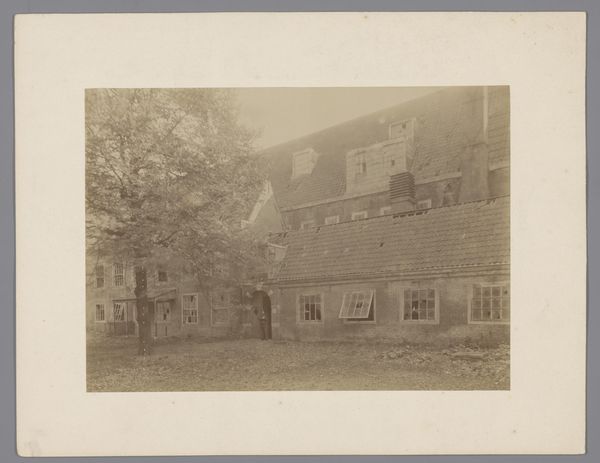
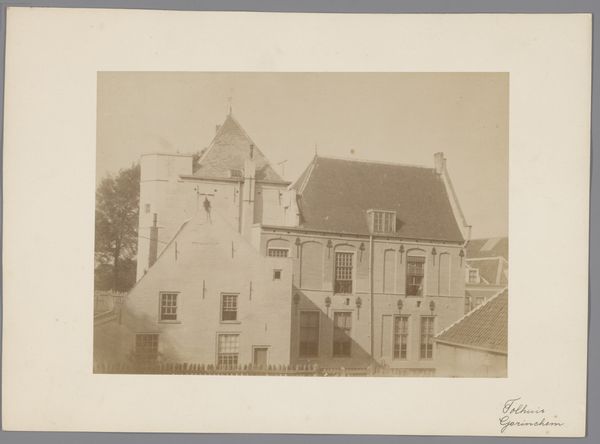
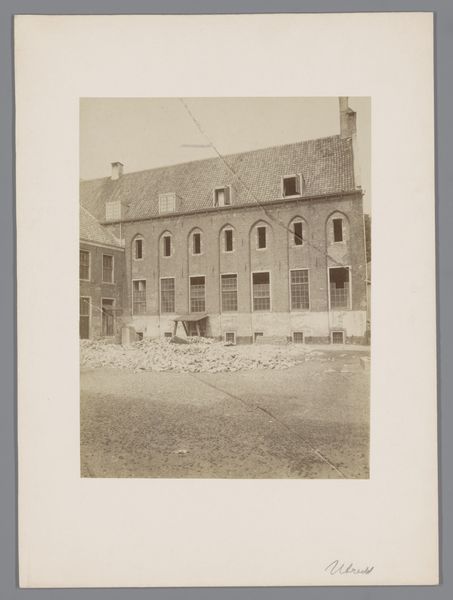
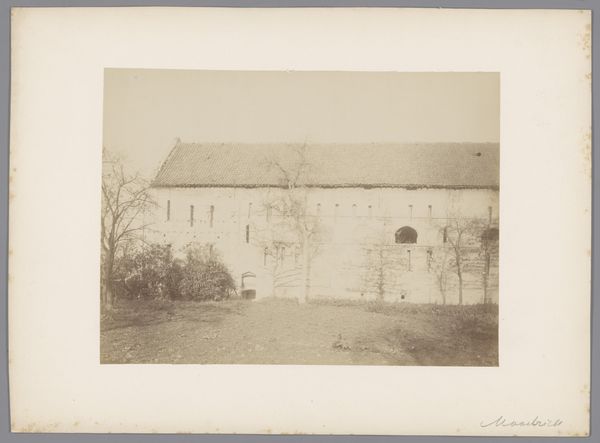
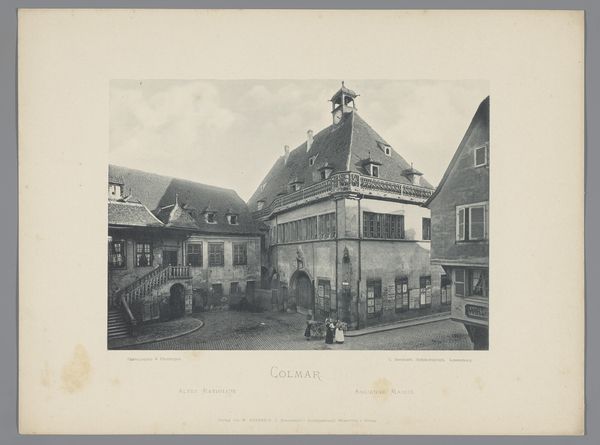
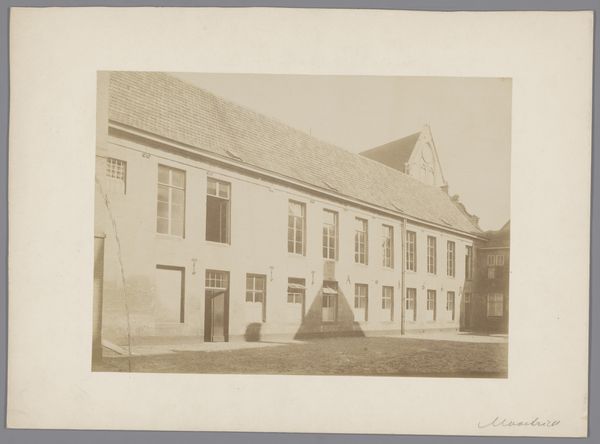
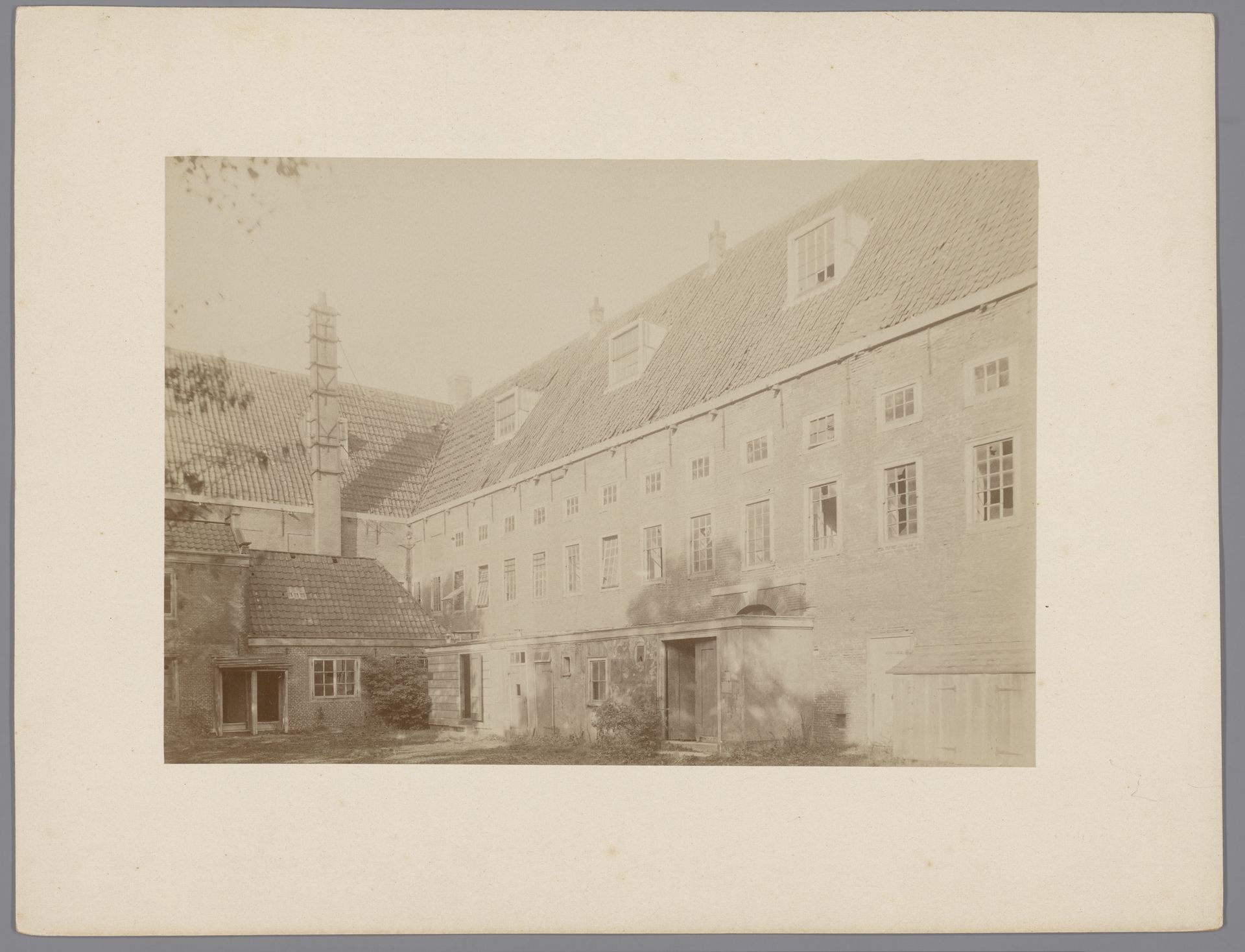
This photograph, "Binnenplaats van het Buitengasthuis te Amsterdam," by an anonymous photographer from Monumentenzorg, presents a study in geometric forms and subtle tonal gradations. The composition is dominated by the angular lines of the buildings, where the interplay of horizontal rooflines and vertical window placements creates a grid-like structure. The photograph's restrained palette invites us to consider how light and shadow articulate space and form. The rough texture of the buildings contrasts with the smoothness of the surrounding walls, which challenges our perception of depth. The photographer manipulates perspective to flatten the scene, minimizing depth to emphasize surface textures and patterns. This flattening effect destabilizes traditional notions of architectural photography, encouraging a reading of the image as a study of abstract forms rather than a documentation of space. The photograph thus functions as a site of complex interpretation, where geometric structure and surface details invite an ongoing dialogue between the viewer and the artwork.
Binnenplaats van het Buitengasthuis te Amsterdam
1900

Artwork details
- Dimensions
- height 161 mm, width 231 mm
- Copyright
- Rijks Museum: Open Domain
Comments
Share your thoughts
About this artwork
This photograph, "Binnenplaats van het Buitengasthuis te Amsterdam," by an anonymous photographer from Monumentenzorg, presents a study in geometric forms and subtle tonal gradations. The composition is dominated by the angular lines of the buildings, where the interplay of horizontal rooflines and vertical window placements creates a grid-like structure. The photograph's restrained palette invites us to consider how light and shadow articulate space and form. The rough texture of the buildings contrasts with the smoothness of the surrounding walls, which challenges our perception of depth. The photographer manipulates perspective to flatten the scene, minimizing depth to emphasize surface textures and patterns. This flattening effect destabilizes traditional notions of architectural photography, encouraging a reading of the image as a study of abstract forms rather than a documentation of space. The photograph thus functions as a site of complex interpretation, where geometric structure and surface details invite an ongoing dialogue between the viewer and the artwork.
Comments
Share your thoughts