c. 1939
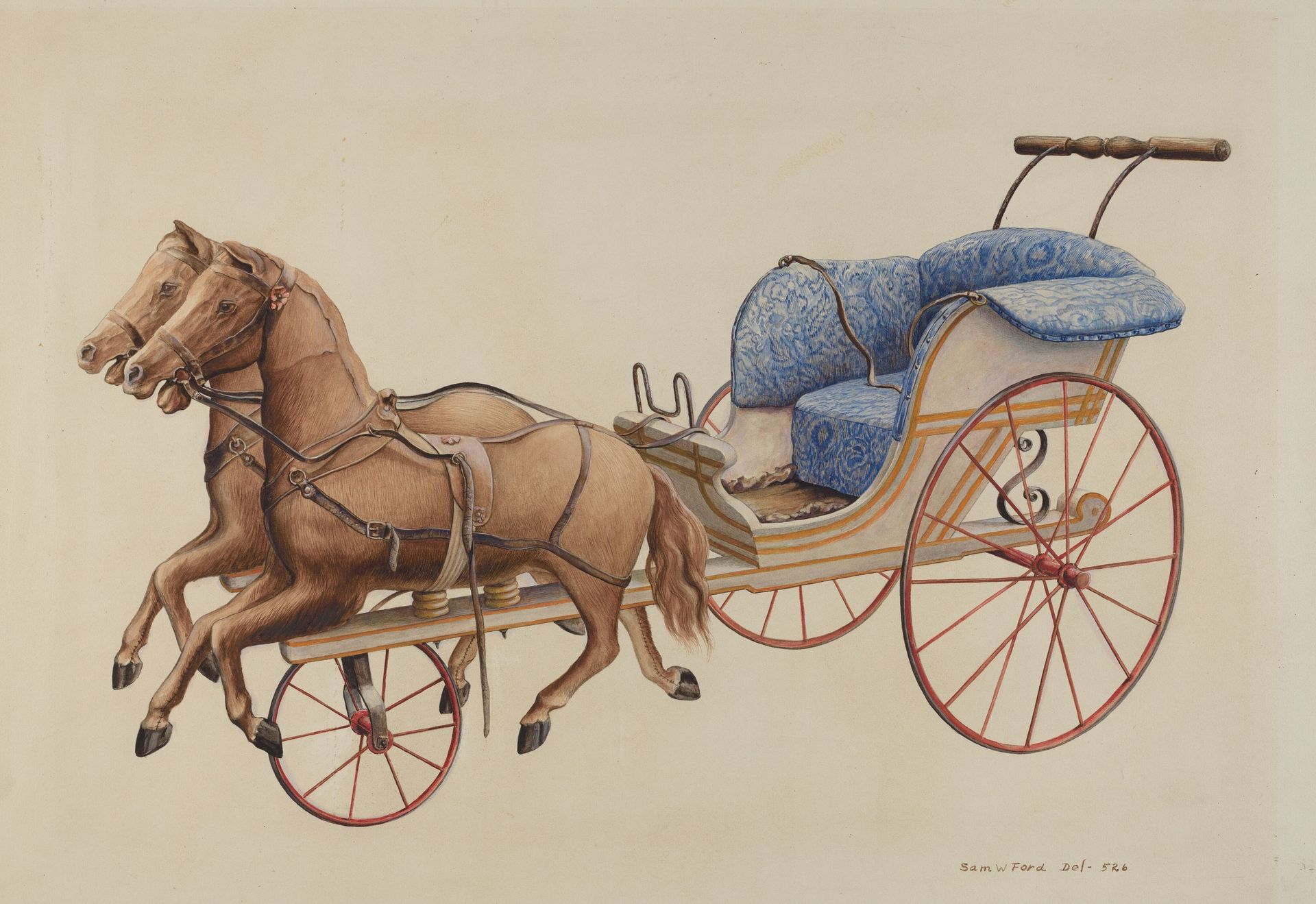
Doll Carriage


Listen to curator's interpretation
Curatorial notes
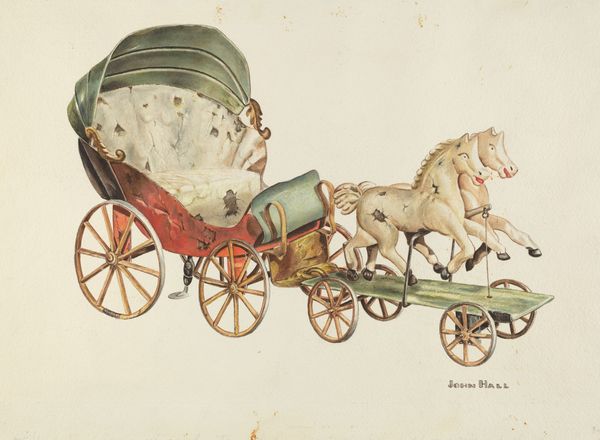
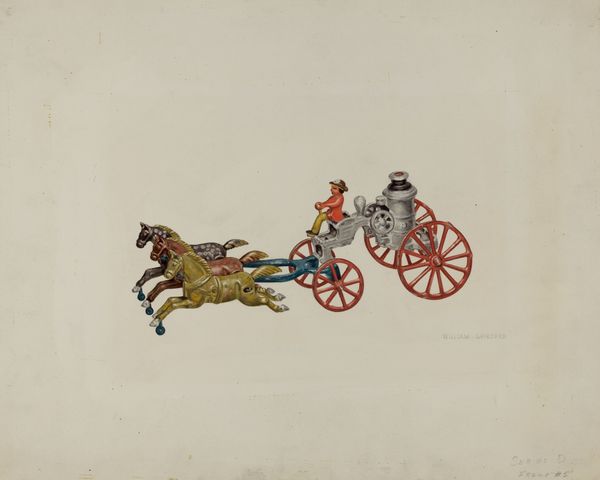
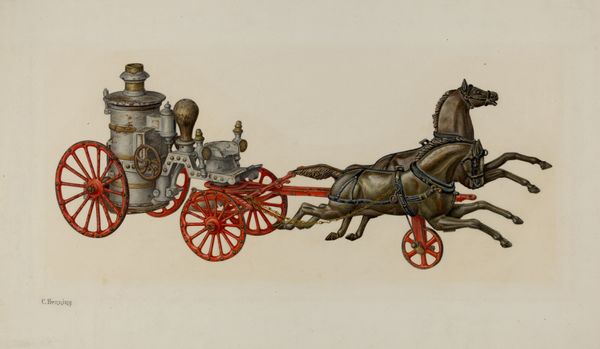
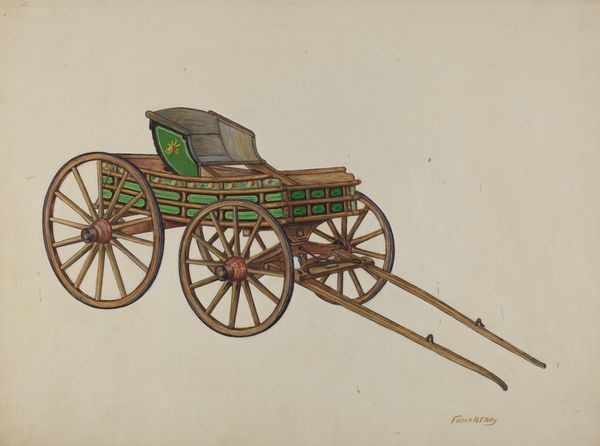
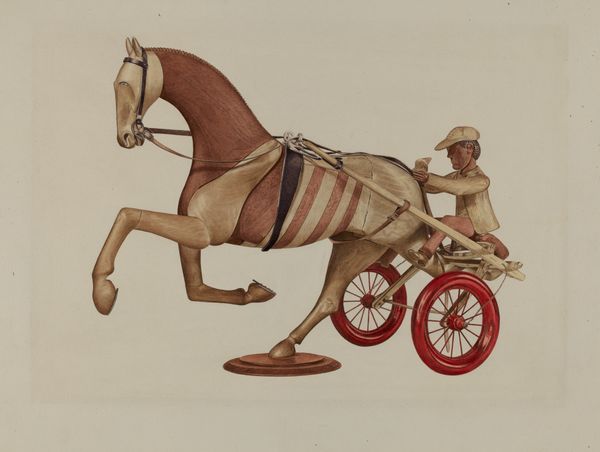
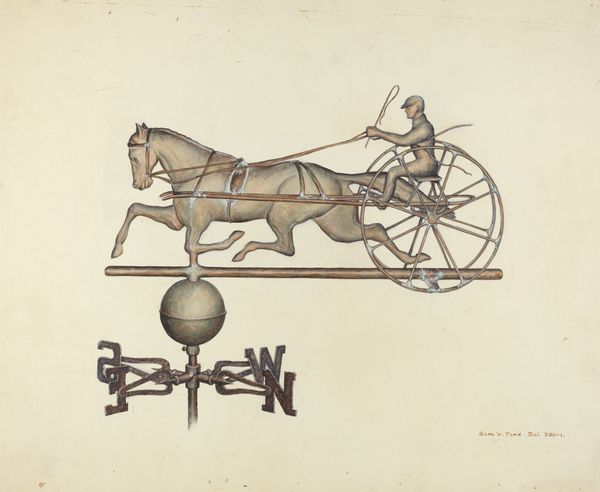
Curator: What a whimsical contraption. At first blush, it reminds me of a confectionery dream. Editor: Well said! Indeed, it's hard not to feel some youthful wonder when you lock eyes with Samuel W. Ford's circa 1939 colored-pencil and watercolor drawing, "Doll Carriage". The composition invites immediate engagement with the dynamics between object and representation. Curator: It's intriguing how the meticulous execution contrasts with the fanciful subject matter. The linear precision, the tonal gradations—everything points toward a detailed analysis of form. Semiotically, the drawing functions as a signifier for childhood, transportation, and class, all at once. What resonates with you the most as the artist? Editor: The palpable tension between the regal nature of the carriage and the obvious truth that it's a toy, a small thing! You almost feel sorry for the child, a tiny tyrant perched upon that elegant conveyance. Also, that cobalt blue, it suggests vanished memories, nostalgia tinged with melancholic resonance. I find it deeply affecting, a glimpse into a bygone world viewed through a hazy lens of yearning and introspection. The texture of the drawing itself reinforces this sentiment, those delicate marks. Curator: Yes, there's a discernible dialectic at play. Note the careful construction, which paradoxically calls attention to its inherent artificiality; that is, it's not simply a toy carriage but a _representation_ of a toy carriage, laden with Ford's commentary, as such. Also, there's a dialogue with genre happening; consider its affinities to landscape painting by how space and distance are articulated within the piece. Editor: Exactly. The drawing exists not just to depict but to evoke and, maybe, to haunt. Each line feels like a delicate invitation to revisit my own ghosts of Christmases long past, to reflect on how simple things, observed with intense clarity, can morph into complex emotional repositories. Curator: Indeed, it provides much insight into the artist’s subjective position as regards themes of luxury, nostalgia and, perhaps most interestingly, the illusion of mastery represented by such opulent childhood playthings. Editor: Samuel Ford gave us more than just a picture of a doll carriage. He offers a glimpse into something much deeper. And perhaps reminds us, as the poets keep telling us, that joy and melancholy often make the most tender, unlikely friends.