About this artwork
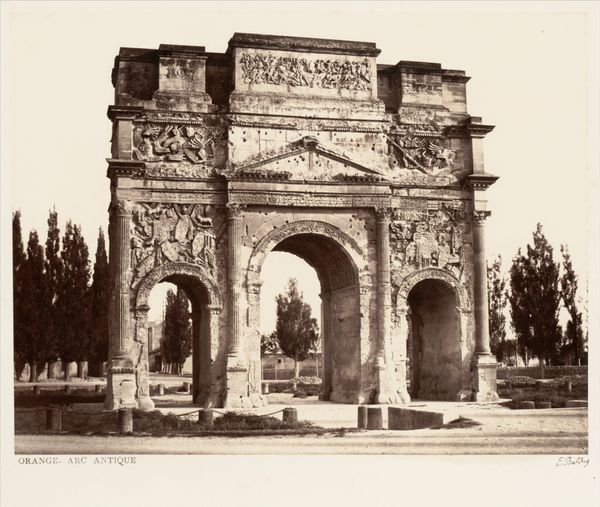
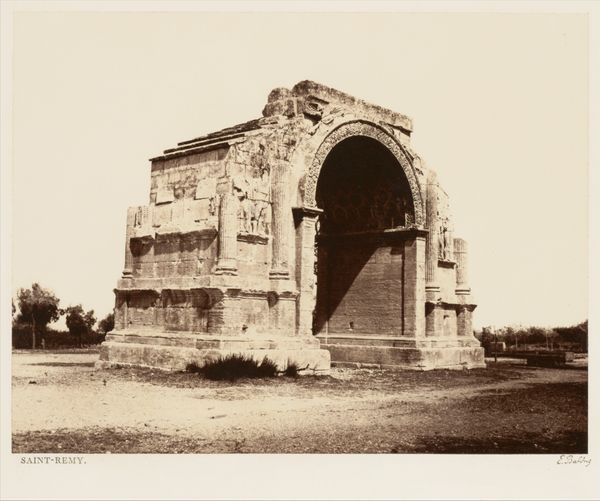
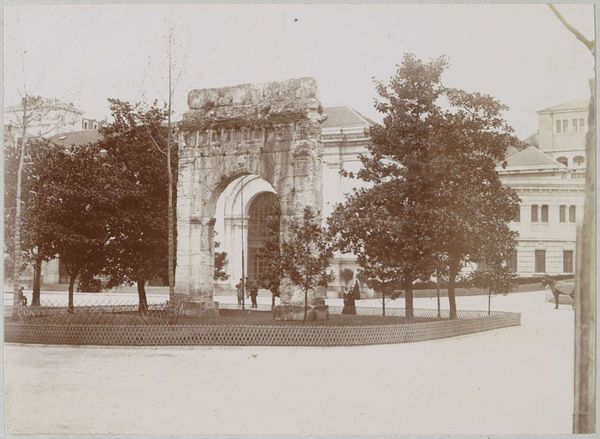
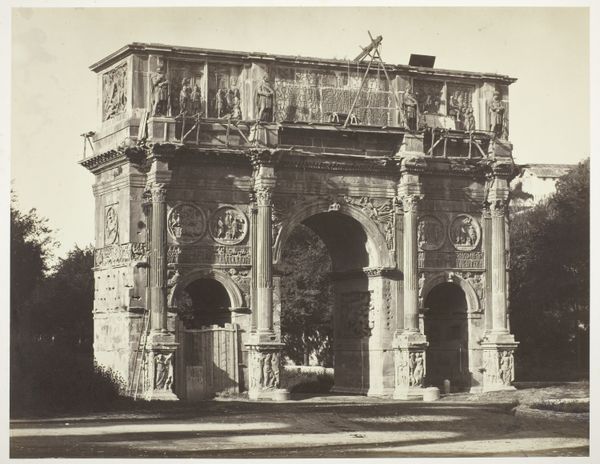
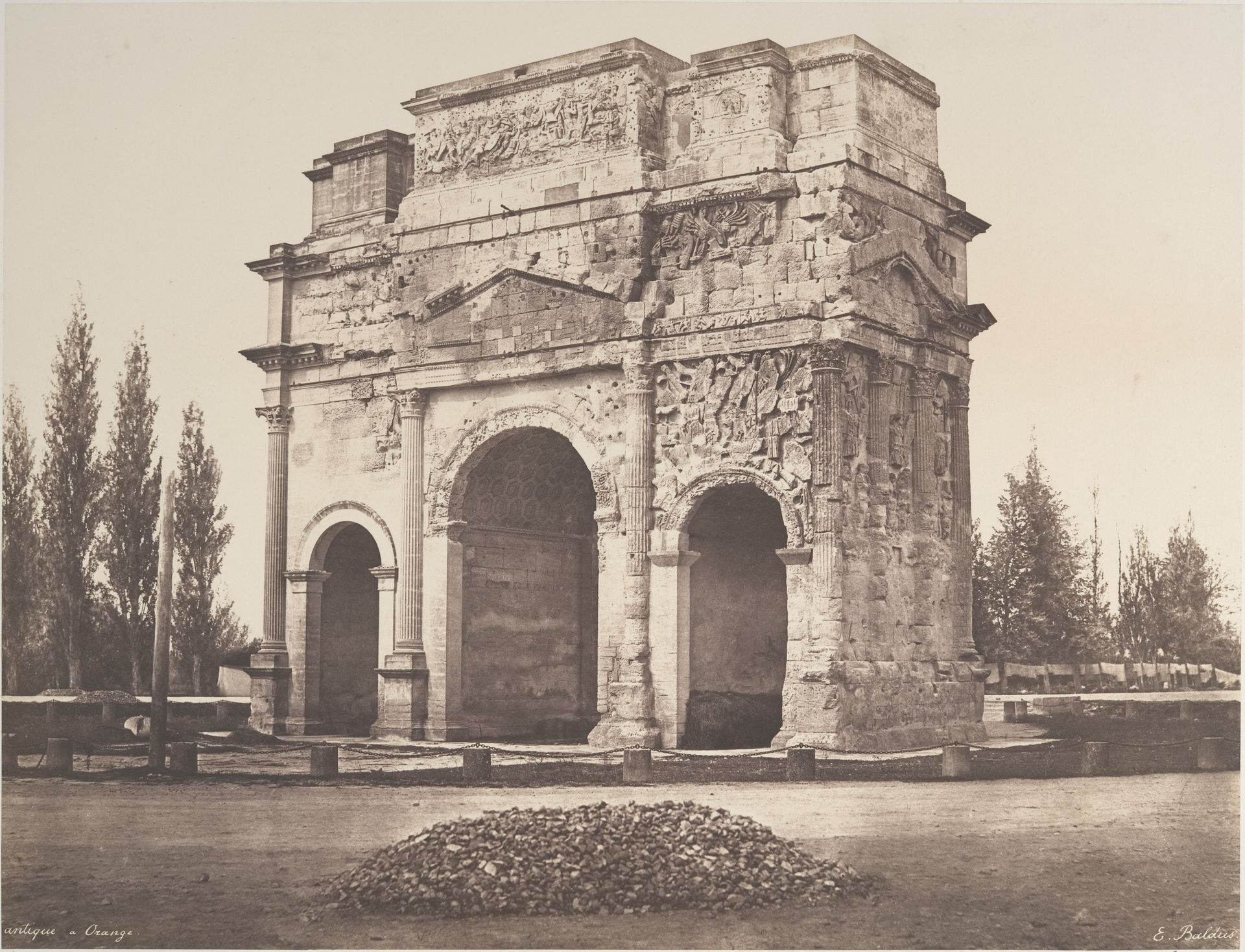
Edouard Baldus created this photograph, "Arc antique à Orange," in the 19th century, a striking study in tones and textures. The monumental Roman arch dominates the composition, its stone surface rendered in rich detail. Baldus expertly uses light to emphasize the arch's structure. Notice how the varying shades of gray articulate the depth of the carvings and the rough texture of the ancient stones. The arch acts as a semiotic marker, a signifier of Roman power and architectural prowess, which, in its weathered state, invites us to reflect on time, memory, and the layers of history embedded within the physical landscape. In this way, Baldus transforms a historical document into a complex meditation on time and cultural meaning. The composition is carefully balanced, and the subtle tonal range underscores the photograph's intrinsic qualities.
Arc antique à Orange
1853


Artwork details
- Dimensions
- Image: 32.4 x 42.4 cm (12 3/4 x 16 11/16 in.) Mount: 48.6 x 63.5 cm (19 1/8 x 25 in.)
- Location
- Metropolitan Museum of Art, New York, NY
- Copyright
- Public Domain
Comments
Share your thoughts
About this artwork
Edouard Baldus created this photograph, "Arc antique à Orange," in the 19th century, a striking study in tones and textures. The monumental Roman arch dominates the composition, its stone surface rendered in rich detail. Baldus expertly uses light to emphasize the arch's structure. Notice how the varying shades of gray articulate the depth of the carvings and the rough texture of the ancient stones. The arch acts as a semiotic marker, a signifier of Roman power and architectural prowess, which, in its weathered state, invites us to reflect on time, memory, and the layers of history embedded within the physical landscape. In this way, Baldus transforms a historical document into a complex meditation on time and cultural meaning. The composition is carefully balanced, and the subtle tonal range underscores the photograph's intrinsic qualities.
Comments
Share your thoughts