Possibly 1843
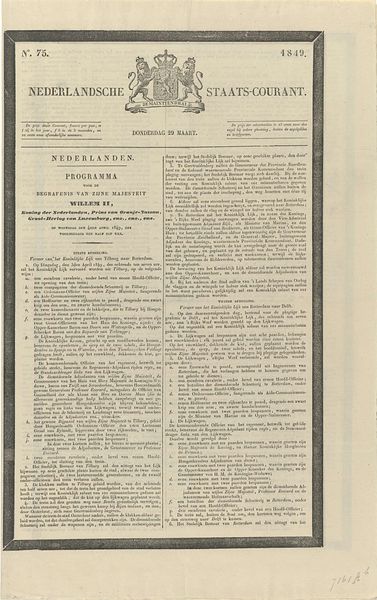
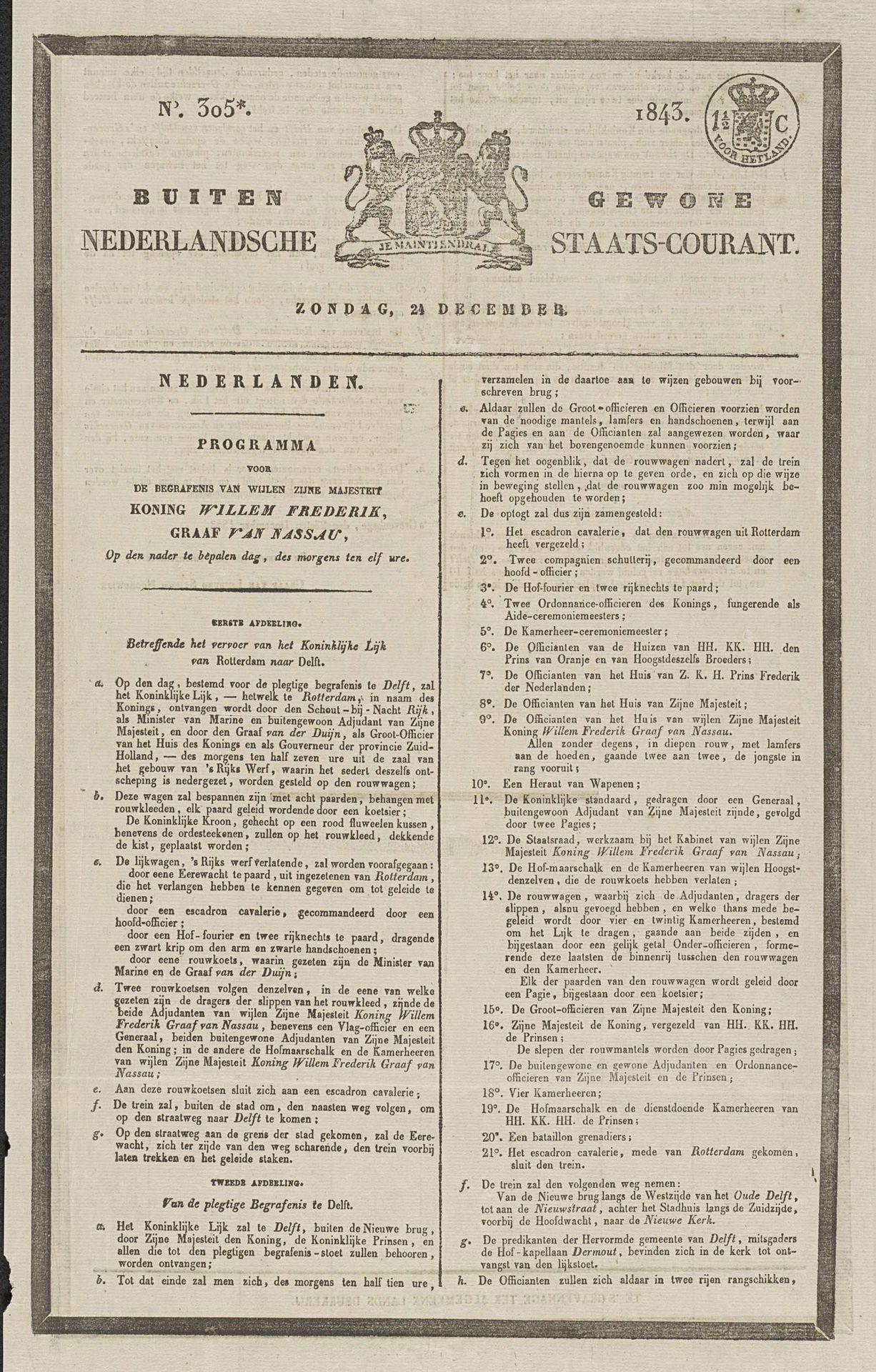
Buitengewone Nederlandsche Staats-Courant. Zondag, 24 December. No. 305*. 1843

Algemeene Landsdrukkerij
@algemeenelandsdrukkerijLocation
RijksmuseumListen to curator's interpretation
Curatorial notes
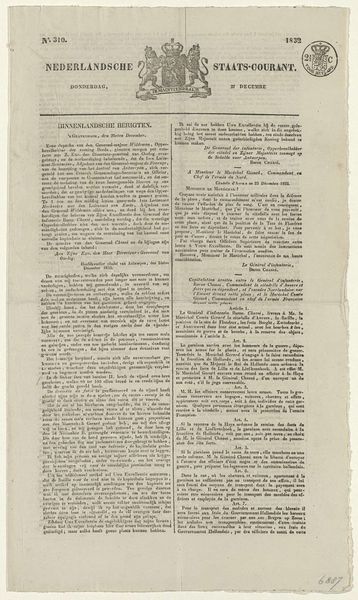
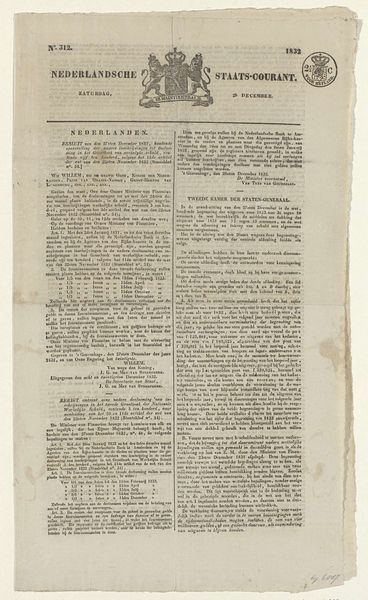
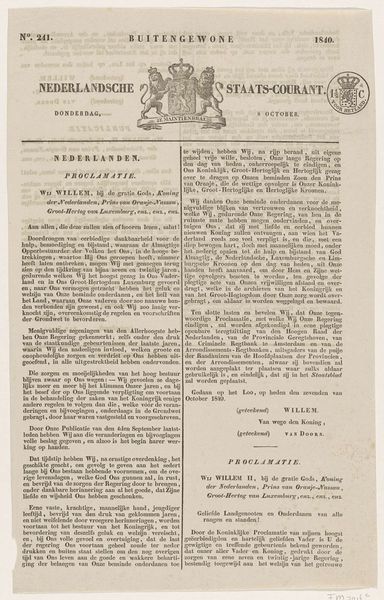
Curator: Here we have an intriguing print from possibly 1843, "Buitengewone Nederlandsche Staats-Courant," essentially a special edition of the Dutch official gazette, printed by the Algemeene Landsdrukkerij and held at the Rijksmuseum. What strikes you first about this, our ghostly announcement? Editor: It’s the sheer density, all those words pressed together! It feels so official, a bit foreboding. Like reading a proclamation about a very serious, historical matter. And the paper itself looks aged and fragile like a forgotten message. Curator: Spot on. It details the program for the funeral of King Willem Frederik, also known as William I, Prince of Orange-Nassau, mapping out the events for the day. You notice the typography and layout; these were carefully crafted for impact. Editor: Absolutely. The crown and heraldic lions up top – classic symbols of power and lineage. But what I find interesting is the numbered list below. It feels like a meticulous inventory, each action weighed with symbolic significance. A very organized ritual. Curator: It truly is. This special gazette serves not just as a public announcement but as a sort of stage direction for national mourning. The location for display would have been strategically important to both control and broadcast information. Editor: So it's about controlling the narrative. The newspaper then becomes a physical symbol, laden with intent – each font choice, each line break adding to the overall somber effect. We now interpret historical memory visually. Curator: Precisely. This is about solidifying legacy and continuing cultural narrative, and ensuring future stability and allegiance. How fascinating to consider the symbolic role even typography can play. Editor: It's made me think about how a simple announcement—designed for everyday consumption—can become so powerfully charged with historical weight. Even in what is unsaid, the meaning still remains.