1687 - 1743
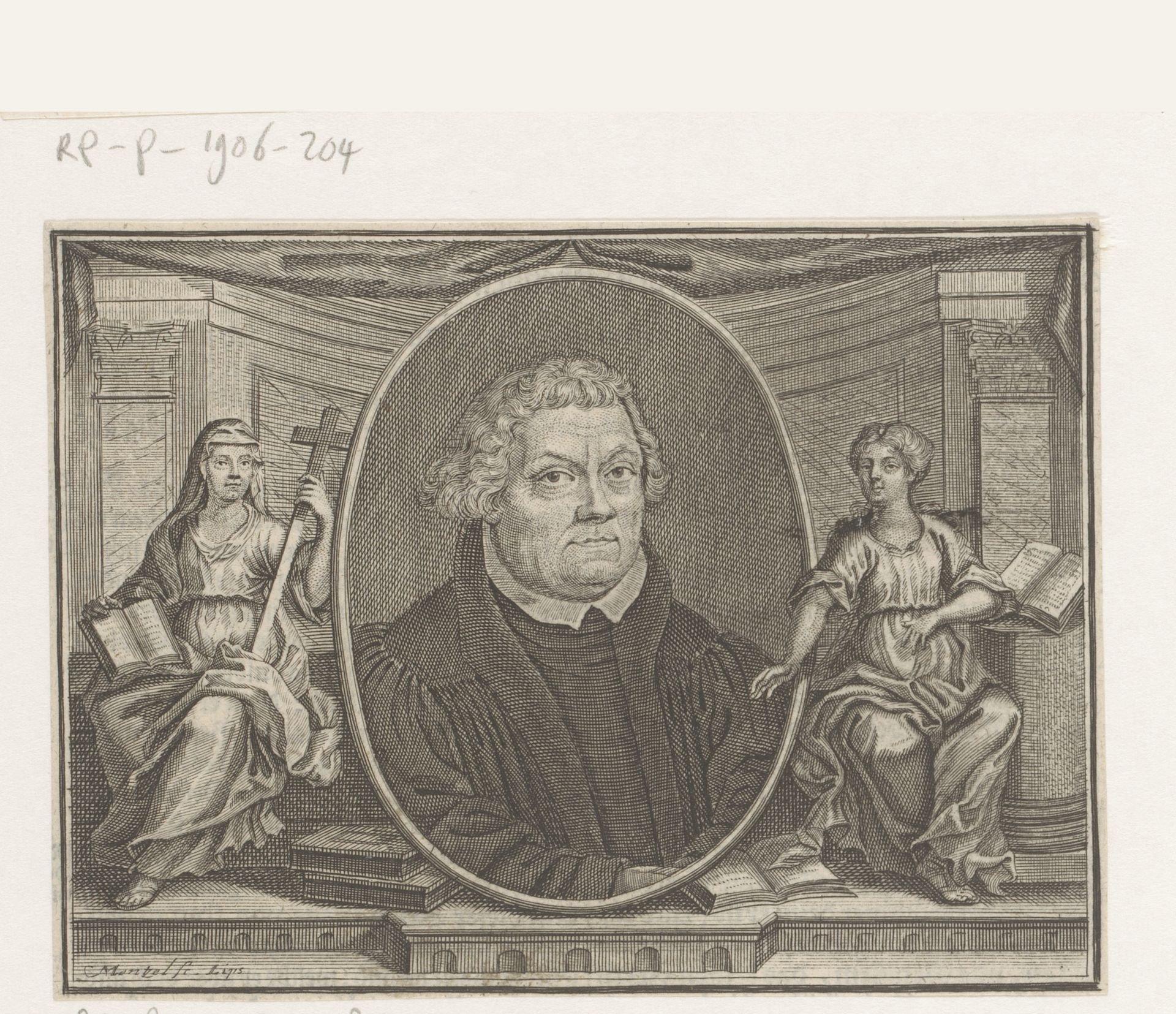
Portret van Martin Luther

Listen to curator's interpretation
Curatorial notes
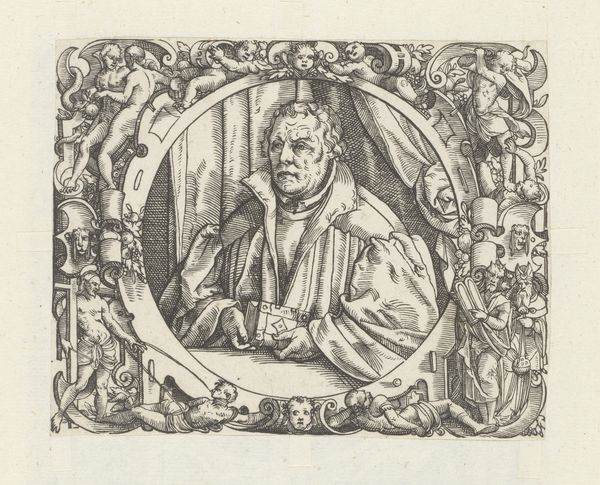
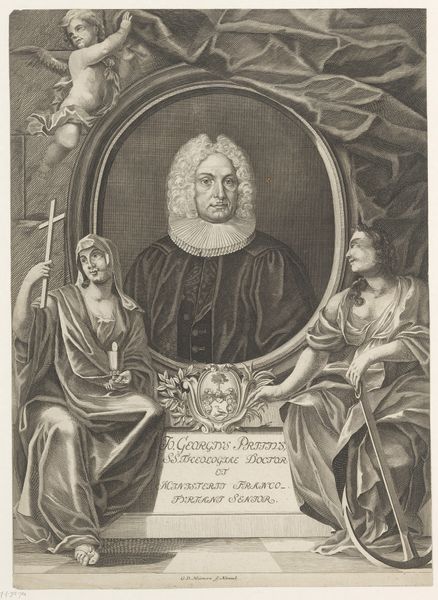
Editor: This is Johann Georg Mentzel’s "Portret van Martin Luther," an engraving that was produced sometime between 1687 and 1743. It's interesting how Luther's portrait is framed almost like a relic, set amidst classical figures and architecture. What symbols are at play here? Curator: Precisely. Observe how the flanking figures embody contrasting elements: law and grace, perhaps? One clutches a cross, symbol of salvation, while the other has a book. They sit on opposed sides. Note the direction of their gazes; what continuities and discontinuities might those tell us? These aren't merely decorative elements. They invoke a complex theological landscape. Editor: So the contrast highlights different facets of religious life and understanding? The juxtaposition almost feels argumentative, not in a confrontational way, but one encouraging a discourse. Curator: Discourse is at the heart of this piece. Look closer at Luther’s gaze – it’s direct, unwavering. Mentzel deliberately places the books centrally. They act as foundational cornerstones. How do these details alter the initial mood or your interpretation? Editor: The books anchor the composition, suggesting learning and scripture are foundational. It adds depth, showing Luther as not just a reformer but a scholar. His stare conveys strength and intellect, furthering the importance of what he's achieved. Curator: A memory made visual and given physical form. Engravings, as replicable objects, democratized knowledge and images. Consider then the potency of imbuing Luther with these potent visual signifiers – how this image might have moved hearts and minds during a time of both devotion and reform. Editor: I hadn’t considered the role of engravings in spreading ideas and images. Seeing Luther as more than a historical figure but a symbol reproduced and circulated widely really changes my perspective. Curator: Exactly, it allows us to reflect on cultural memory and how visual symbols continuously inform, and even shape, history.