print, engraving
#
animal
# print
#
old engraving style
#
landscape
#
figuration
#
personal sketchbook
#
sketchbook drawing
#
northern-renaissance
#
sketchbook art
#
engraving
Dimensions: height 102 mm, width 126 mm
Copyright: Rijks Museum: Open Domain
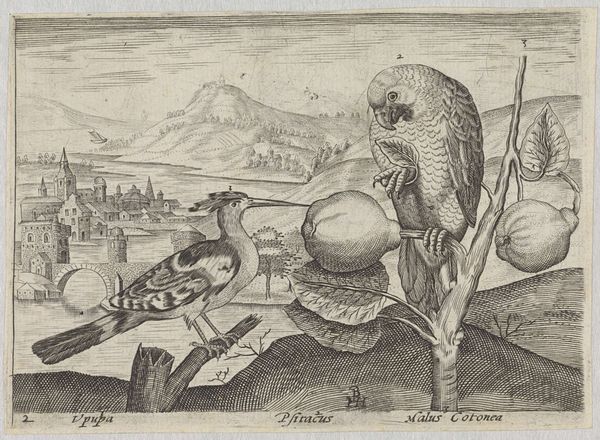
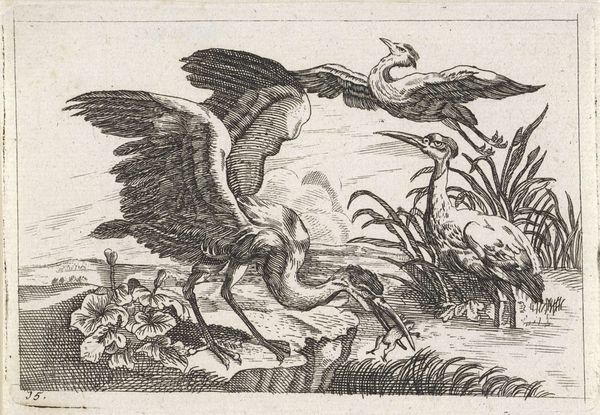
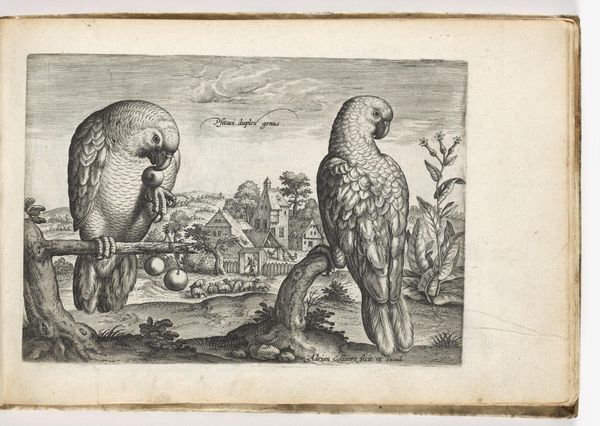
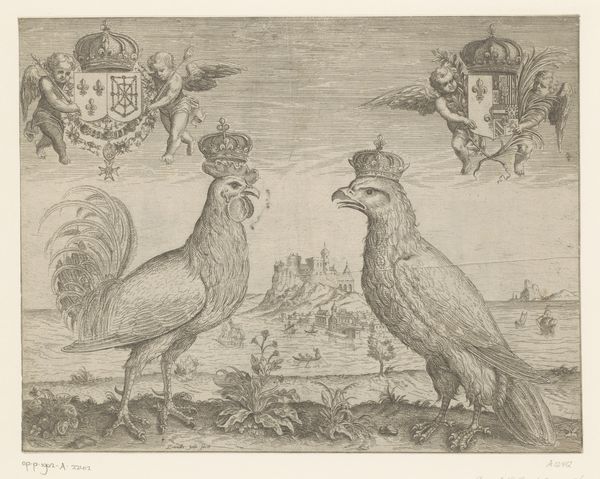
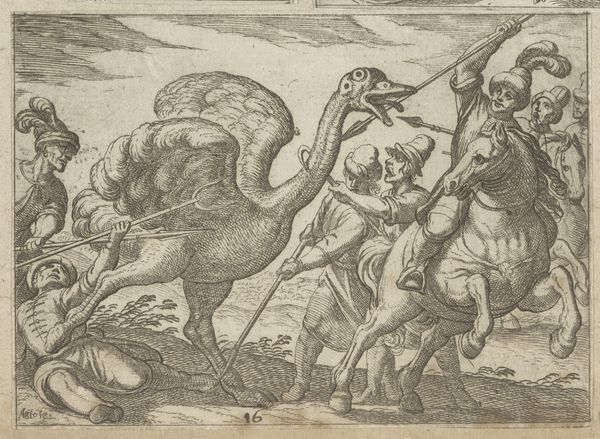
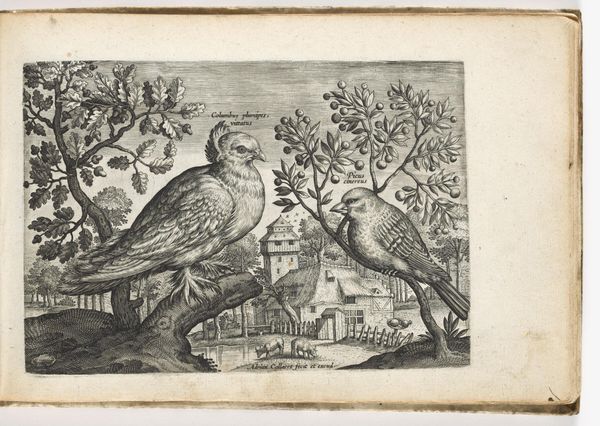
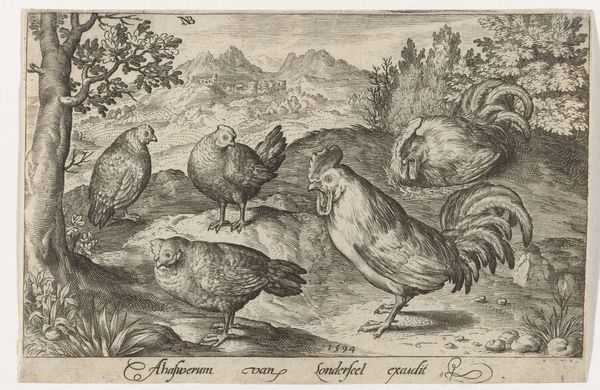
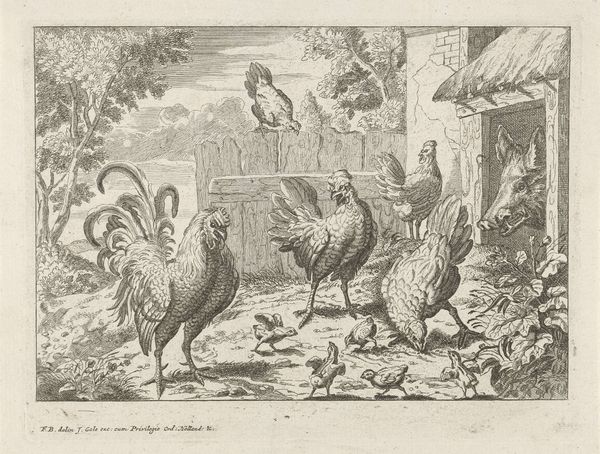
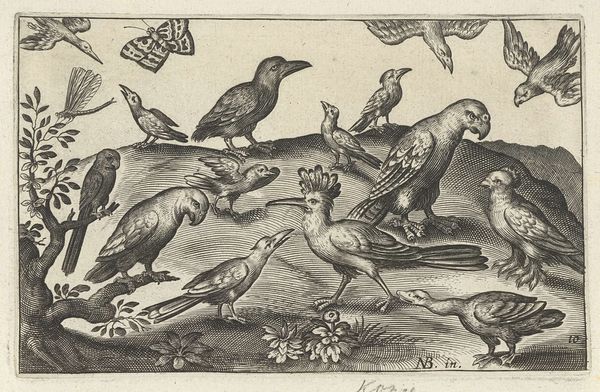
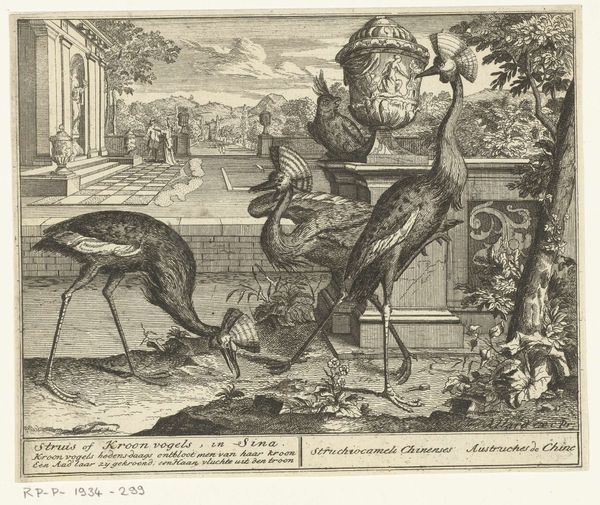
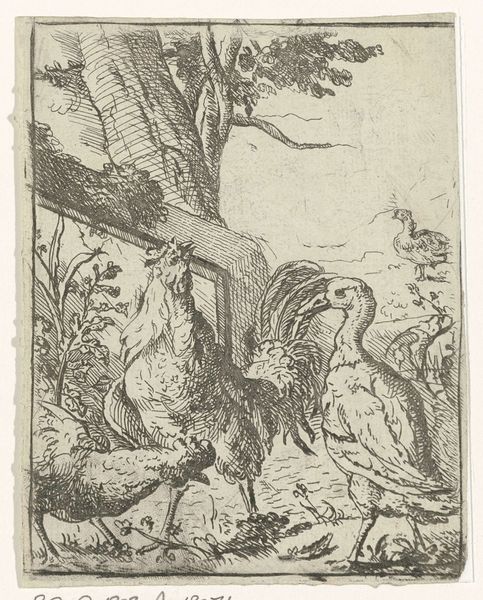
This print, made by Johann Hogenberg around the turn of the 17th century, depicts a landscape populated by flora and fauna, rendered with the precision characteristic of the Northern Renaissance. Consider the symbolic weight carried by each element. Here an eagle—a symbol of power—towers over its prey in a harsh assertion of dominance. The eagle is framed by the calendula and Malus Punica (pomegranate), elements often associated with themes of healing and fertility. Set against the backdrop of a quaint village, these symbols create a fascinating tension. Hogenberg invites us to reflect on the complex interplay between nature and culture. In a society governed by strict hierarchies, such images served not only as scientific records but also as moral allegories, reinforcing prevailing ideas about social order and divine will. How do you feel about the use of nature as a mirror for society's values and power structures?
Comments

rijksmuseum over 2 years ago
⋮
In making his representations of flowers and animals Hogenberg borrowed freely from prints by other artists. Some combinations are endearing, others slightly bizarre. What does a polar bear have to do with artichokes? It is precisely the series’ mixture of originality and naiveté that is so appealing to modern eyes.


Join the conversation
Join millions of artists and users on Artera today and experience the ultimate creative platform.
 Collect
More like this