About this artwork
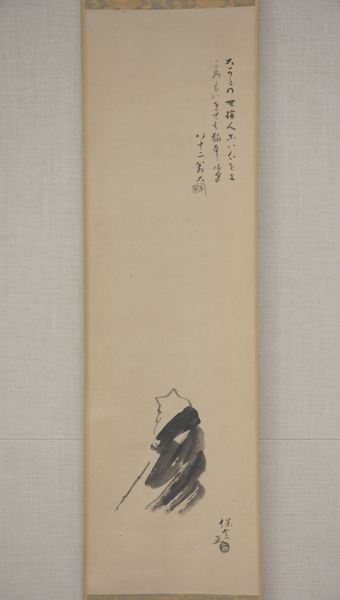
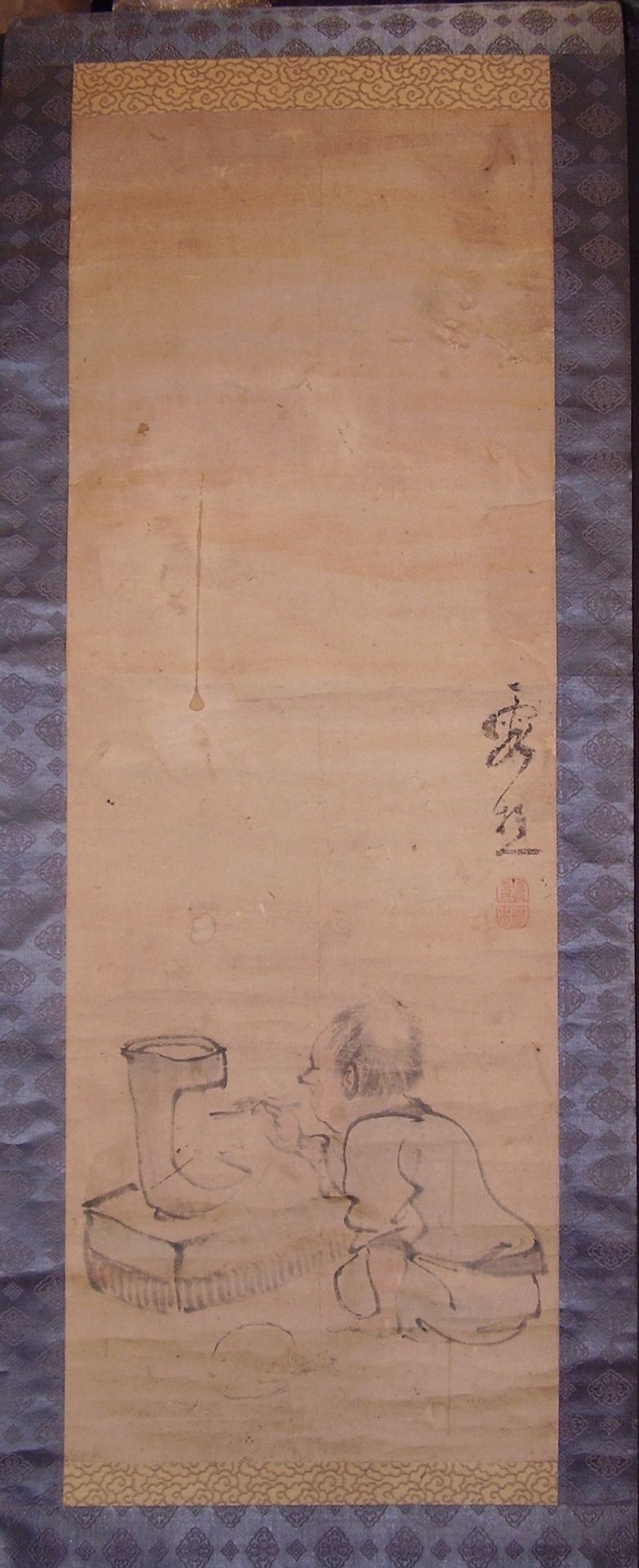
Ike no Taiga likely created this ink on paper work, titled *Lighting a charcoal brazier*, sometime in the mid-18th century. Taiga, a prominent figure in the Bunjinga movement, sought to express the spirit of Chinese literati painting, focusing on personal expression. This sketch offers an intimate look at the rituals of tea culture, reflecting a broader cultural interest in simplicity and harmony. We see a figure hunched over a brazier, possibly in preparation for a tea ceremony, a practice deeply rooted in Japanese aesthetics and social etiquette. The monochrome ink wash emphasizes the artist’s focus on capturing the essence of the moment. The tea ceremony transcends mere functionality; it embodies spiritual and social dimensions, and cultivates mindfulness. Taiga, through this work, seems to invite us to participate in an intimate and human experience, deeply embedded in the traditional mores of Japanese society.
Lighting a charcoal brazier (possibly in preparation for a tea ceremony?) 1776

Artwork details
- Medium
- drawing, paper, watercolor, ink
- Copyright
- Public domain
Tags
drawing
water colours
asian-art
landscape
ukiyo-e
figuration
paper
watercolor
ink
genre-painting
watercolor
Comments
No comments
About this artwork
Ike no Taiga likely created this ink on paper work, titled *Lighting a charcoal brazier*, sometime in the mid-18th century. Taiga, a prominent figure in the Bunjinga movement, sought to express the spirit of Chinese literati painting, focusing on personal expression. This sketch offers an intimate look at the rituals of tea culture, reflecting a broader cultural interest in simplicity and harmony. We see a figure hunched over a brazier, possibly in preparation for a tea ceremony, a practice deeply rooted in Japanese aesthetics and social etiquette. The monochrome ink wash emphasizes the artist’s focus on capturing the essence of the moment. The tea ceremony transcends mere functionality; it embodies spiritual and social dimensions, and cultivates mindfulness. Taiga, through this work, seems to invite us to participate in an intimate and human experience, deeply embedded in the traditional mores of Japanese society.
Comments
No comments