About this artwork
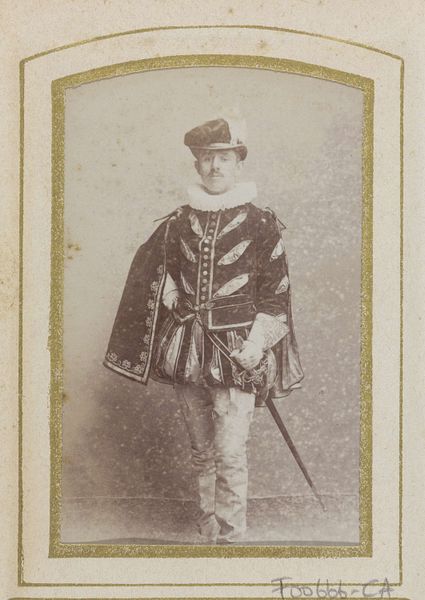
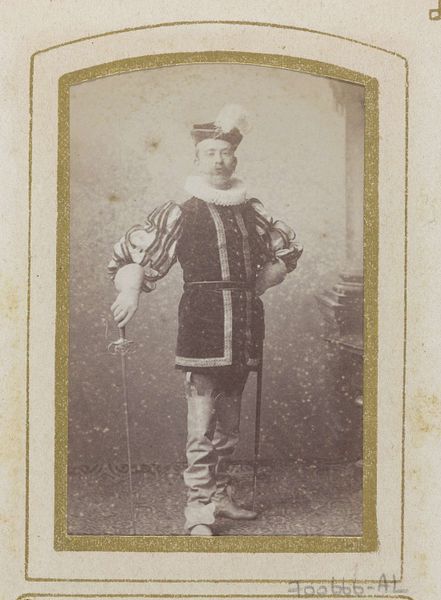
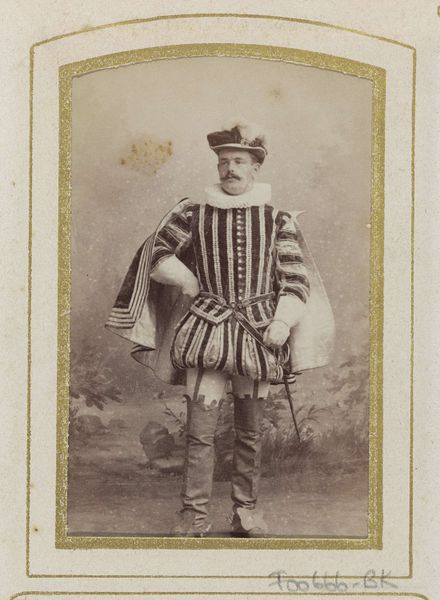
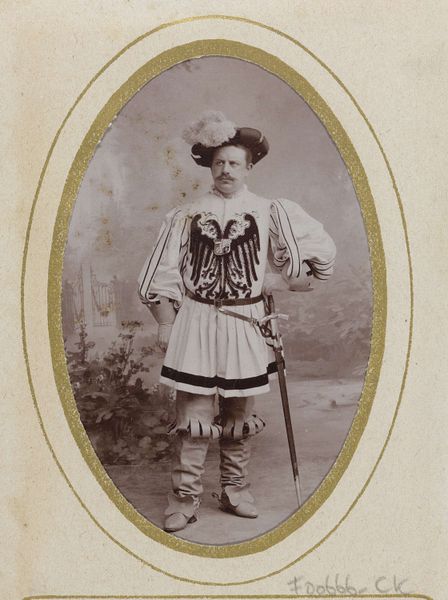
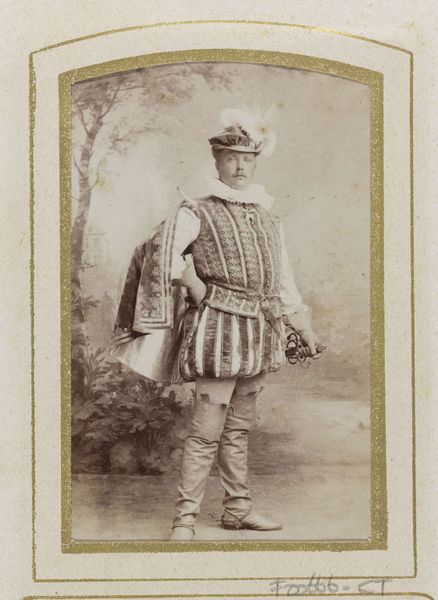
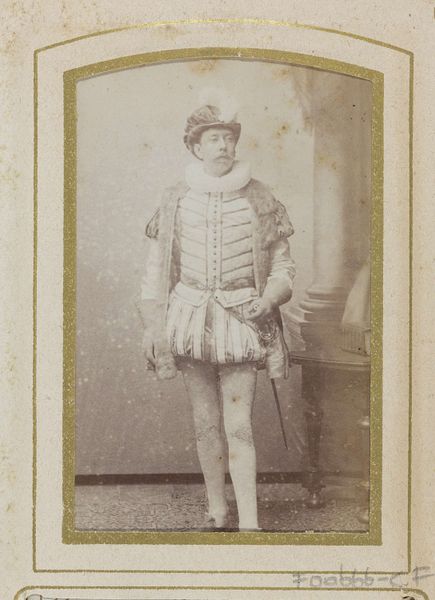
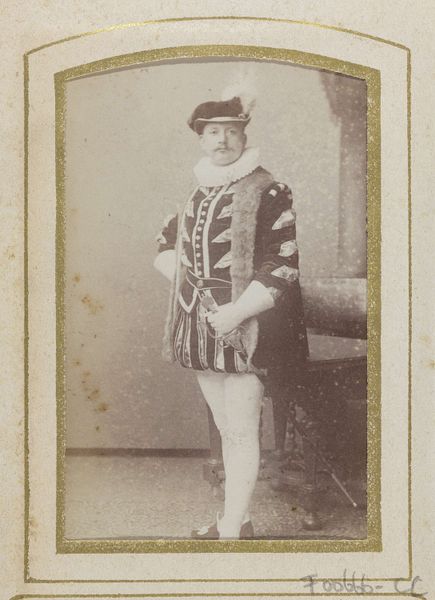
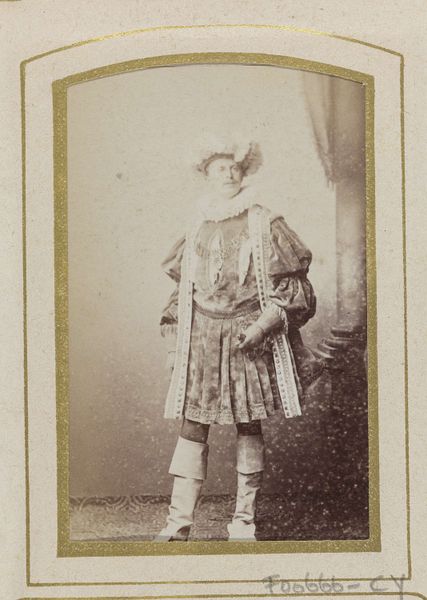
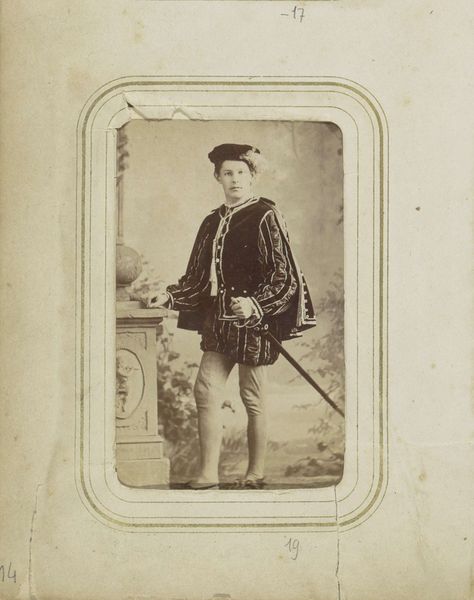
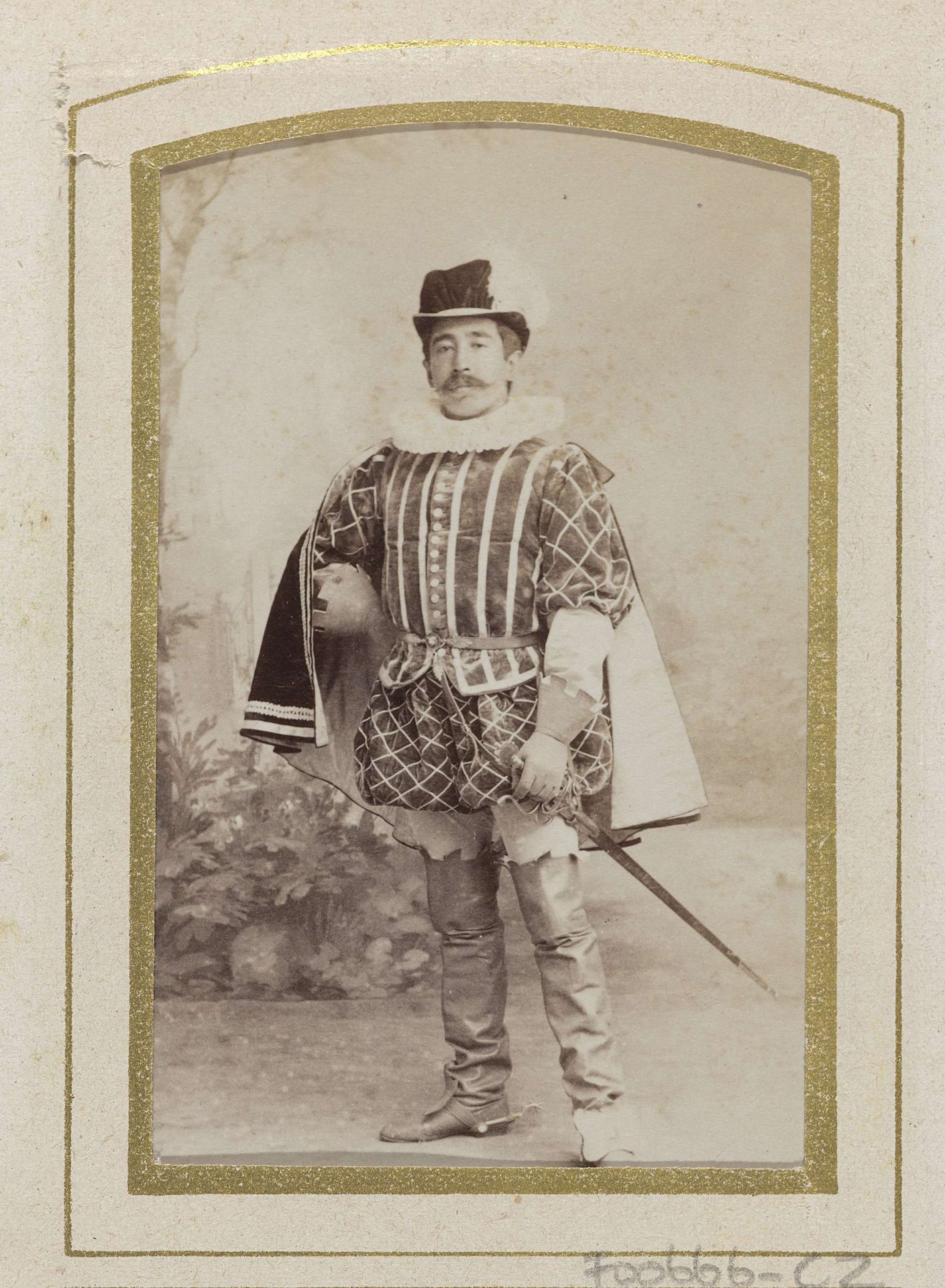
This is Antonius Joannes van der Stok's "Portret van een jonge man in kostuum met zwaard, aangeduid als W. Birnie", a diminutive photograph residing in the Rijksmuseum. Observe how the subject is rigidly posed, his elaborate costume a study in contrasting vertical stripes and diamond patterns. The artist deploys a muted palette, the sepia tones softened to create a sense of distance. The composition is bisected by the sword, its diagonal line cutting through the frame, creating a subtle tension. This photograph plays with the semiotics of identity. The costume—a collection of historical references—acts as a signifier, yet its meaning remains ambiguous. Is it a theatrical costume, or does it signify something deeper about the sitter’s identity or aspirations? The use of costume and prop destabilizes any straightforward reading. Consider how the photograph’s materiality—its small scale and aged surface—affects its reception. It becomes an object of curiosity, inviting us to ponder the relationship between representation, identity, and the passage of time. The photograph remains not a fixed representation but a site of continuous questioning.
Portret van een jonge man in kostuum met zwaard, aangeduid als W. Birnie
Possibly 1887 - 1899

Antonius Joannes van der Stok
1862 - 1941Location
RijksmuseumArtwork details
- Medium
- photography
- Dimensions
- height 83 mm, width 52 mm
- Location
- Rijksmuseum
- Copyright
- Rijks Museum: Open Domain
Tags
Comments
Share your thoughts
About this artwork
This is Antonius Joannes van der Stok's "Portret van een jonge man in kostuum met zwaard, aangeduid als W. Birnie", a diminutive photograph residing in the Rijksmuseum. Observe how the subject is rigidly posed, his elaborate costume a study in contrasting vertical stripes and diamond patterns. The artist deploys a muted palette, the sepia tones softened to create a sense of distance. The composition is bisected by the sword, its diagonal line cutting through the frame, creating a subtle tension. This photograph plays with the semiotics of identity. The costume—a collection of historical references—acts as a signifier, yet its meaning remains ambiguous. Is it a theatrical costume, or does it signify something deeper about the sitter’s identity or aspirations? The use of costume and prop destabilizes any straightforward reading. Consider how the photograph’s materiality—its small scale and aged surface—affects its reception. It becomes an object of curiosity, inviting us to ponder the relationship between representation, identity, and the passage of time. The photograph remains not a fixed representation but a site of continuous questioning.
Comments
Share your thoughts