1946
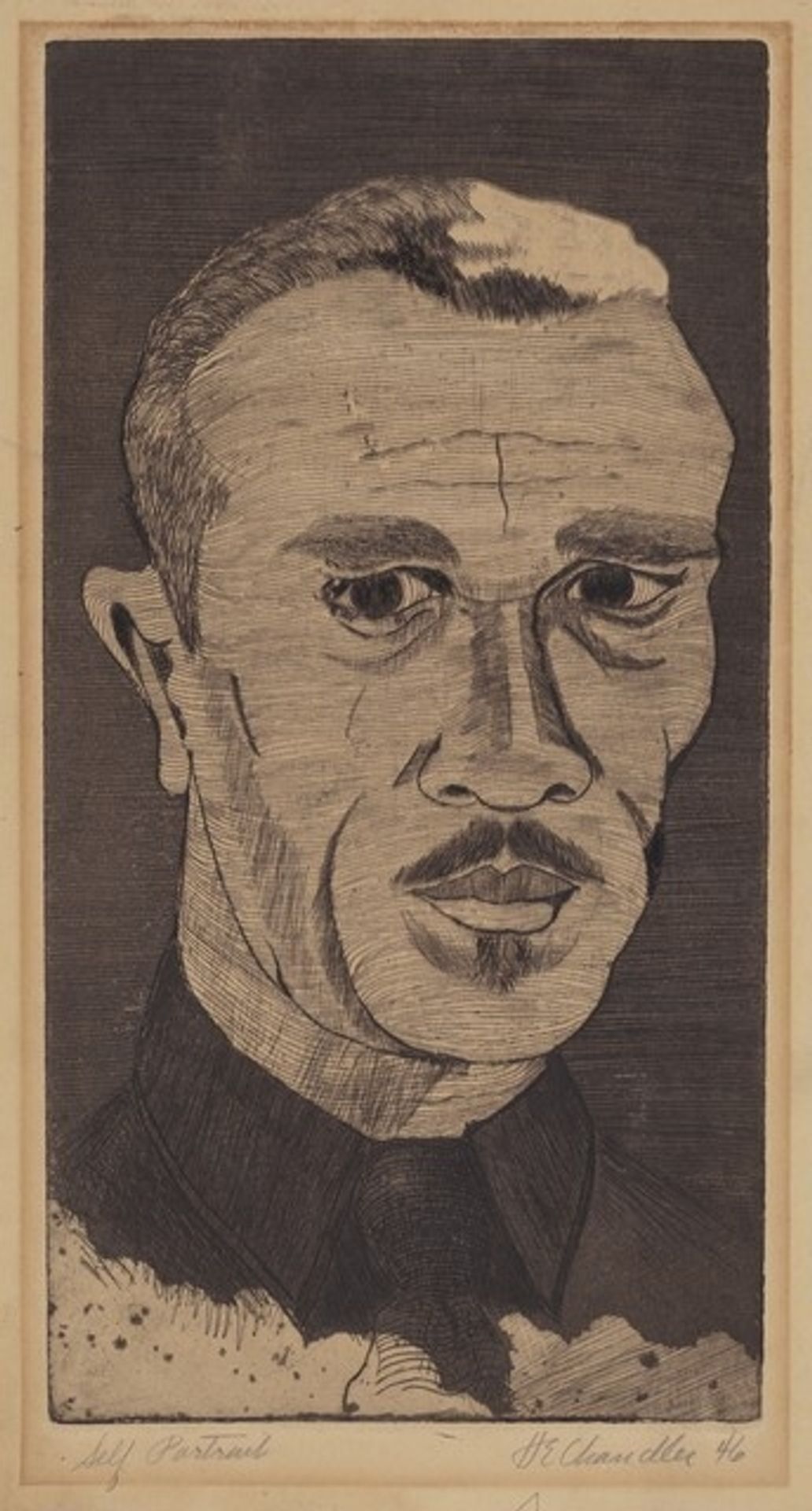
Self-Portrait


Listen to curator's interpretation
Curatorial notes
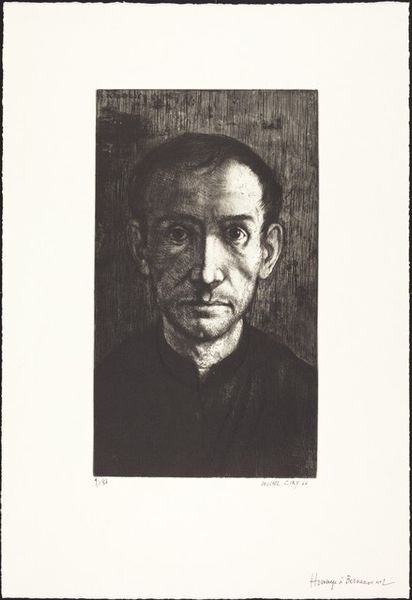
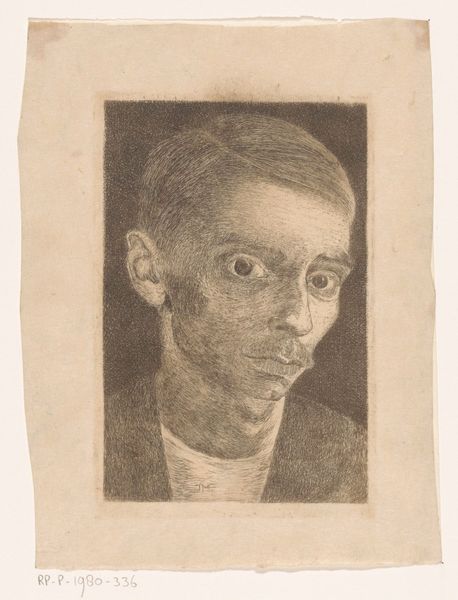
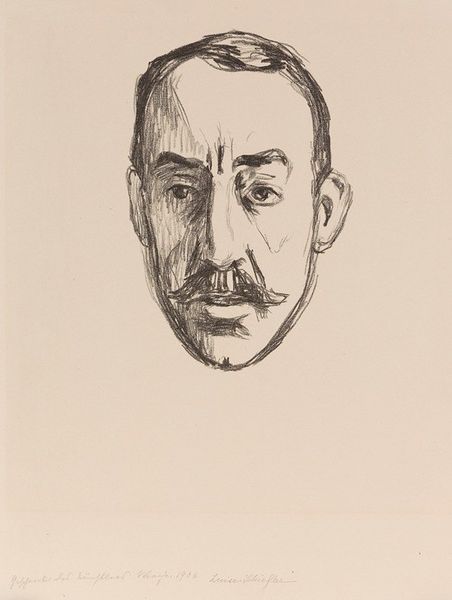
Curator: Today we're looking at Houston Chandler's "Self-Portrait," created in 1946. The medium is etching. Editor: Whoa. Striking, isn't it? It's got this sort of raw, immediate energy, almost like a suppressed scream trying to break free from the graphite. Curator: Etching, actually! And yes, the process gives it that incredible line work, that intense graphic quality. Think about the labor involved: the careful scratching into the metal plate, the acid bath… Each line, a deliberate decision etched—pun intended—into the material. Editor: The face looms out from this darkly etched surface. But that etching also feels so… exposed? Like the process of making it is laid bare, a little vulnerable, maybe. Did the war perhaps affect his self-perception? Curator: Potentially. The etching was done shortly after WWII. His choice of such a direct medium—especially for a self-portrait—invites us to consider Chandler's relationship to representation, the social pressures around image-making at the time, how masculinity was being portrayed and reshaped through artwork. Editor: The intense contrasts, the almost caricatured features… it reminds me of a charcoal rendering, of someone grappling with their identity through rapid strokes. I almost feel I could feel the resistance of the drawing board. Maybe he's showing how identities are a construct through labor, socialized in their very creation. Curator: It could suggest exactly that, or simply that the process, while seemingly rudimentary, demands rigorous skills and meticulous control, to create an expression of authenticity and intimacy within a largely reproductive medium. Editor: Okay, I see what you mean. The meticulous control versus the rawness is part of the tension. All that darkness feels like some intense introspective search. Curator: Precisely. An engagement of what it means to present oneself through a reproducible medium like print, especially as a Black artist living and working during a complicated time in America. Editor: Well, thinking about both those ideas together gives me a new angle to ponder, about the interplay between representation and identity formation in this striking work. Curator: Exactly. A wonderful insight to take away as we reflect on Chandler’s exploration into materiality, and the ways identity emerges through labor, within and upon, materials.