About this artwork
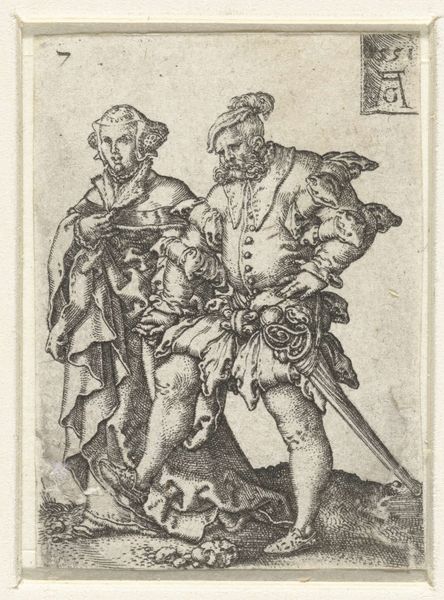
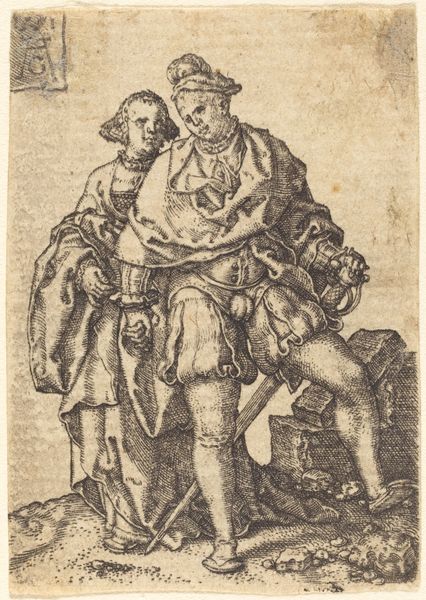
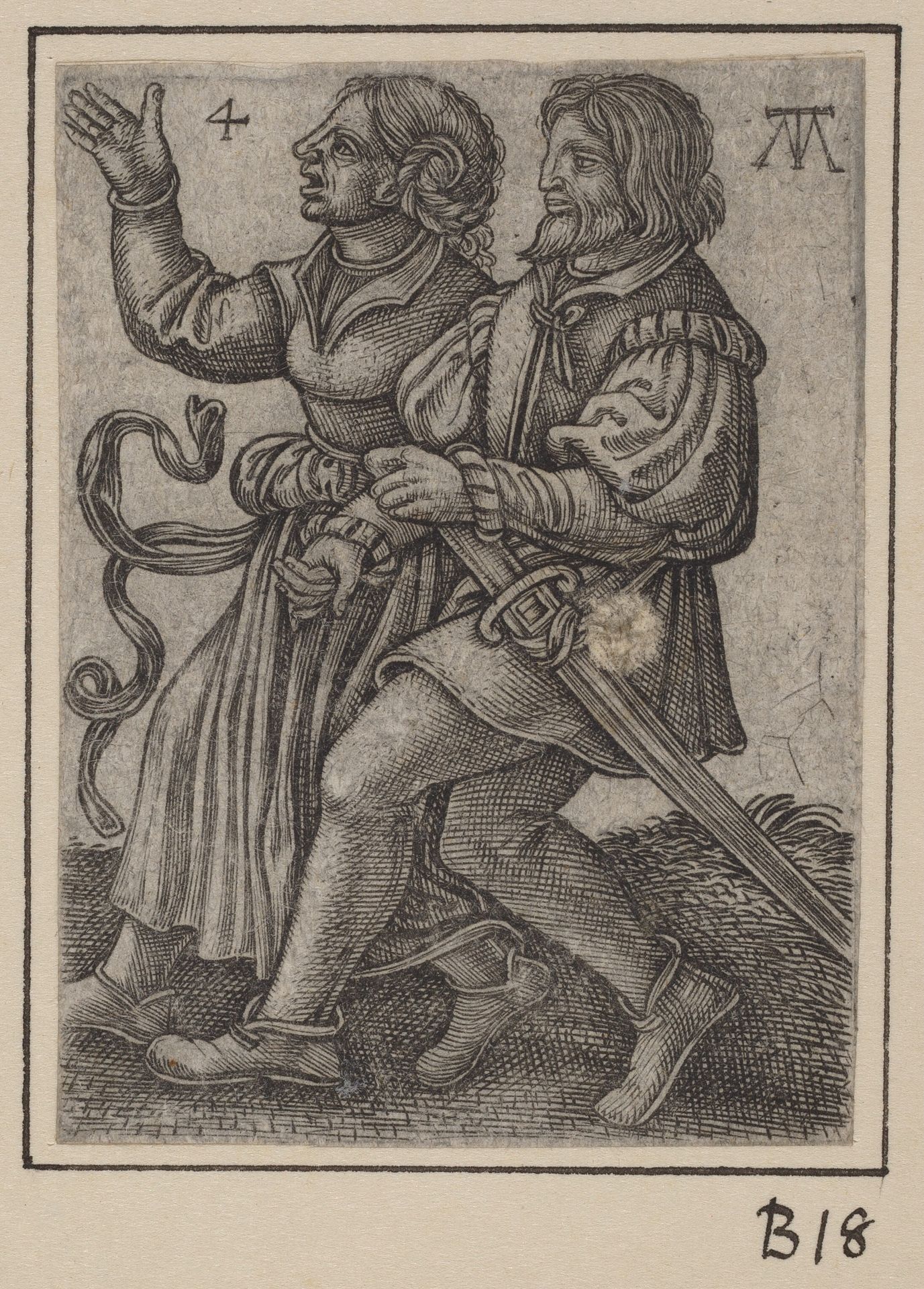
This small engraving of a Dancing Couple was made in the 16th century by Martin Treu. The image offers a fascinating window into the social customs and anxieties of its time, likely somewhere in the German-speaking lands of the Holy Roman Empire. Note the contrast between the figures: the man is armed with a sword and looks confident, while the woman seems agitated, gesturing wildly with one hand. The image may be a comment on gender roles, the anxieties of marriage, or perhaps even the disruption of traditional hierarchies through dance. To understand this image more fully, we might look to dance manuals, sumptuary laws, and popular literature of the period. These sources, along with institutional records of artistic patronage, can provide a richer understanding of the social and cultural forces that shaped not only the production of this print, but its original reception too. Remember, the meaning of art is always contingent on its context.
Dancing Couple, Facing Left
c. 1540


Artwork details
- Medium
- print, engraving
- Dimensions
- sheet: 6.1 x 4.4 cm (2 3/8 x 1 3/4 in.) mount: 8.4 x 18.5 cm (3 5/16 x 7 5/16 in.)
- Copyright
- National Gallery of Art: CC0 1.0
Tags
Comments
Share your thoughts
About this artwork
This small engraving of a Dancing Couple was made in the 16th century by Martin Treu. The image offers a fascinating window into the social customs and anxieties of its time, likely somewhere in the German-speaking lands of the Holy Roman Empire. Note the contrast between the figures: the man is armed with a sword and looks confident, while the woman seems agitated, gesturing wildly with one hand. The image may be a comment on gender roles, the anxieties of marriage, or perhaps even the disruption of traditional hierarchies through dance. To understand this image more fully, we might look to dance manuals, sumptuary laws, and popular literature of the period. These sources, along with institutional records of artistic patronage, can provide a richer understanding of the social and cultural forces that shaped not only the production of this print, but its original reception too. Remember, the meaning of art is always contingent on its context.
Comments
Share your thoughts