1570
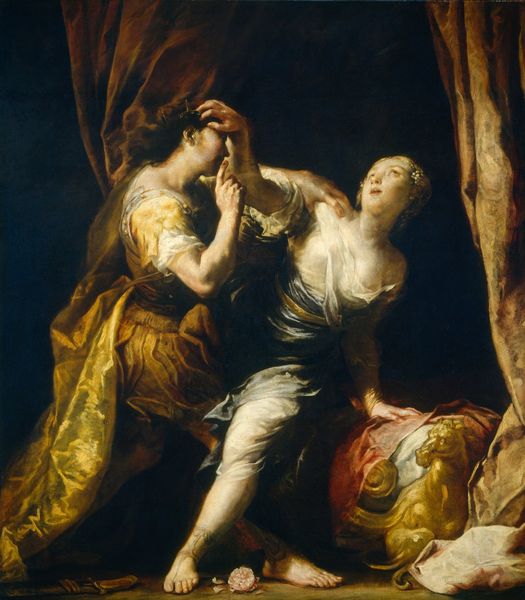
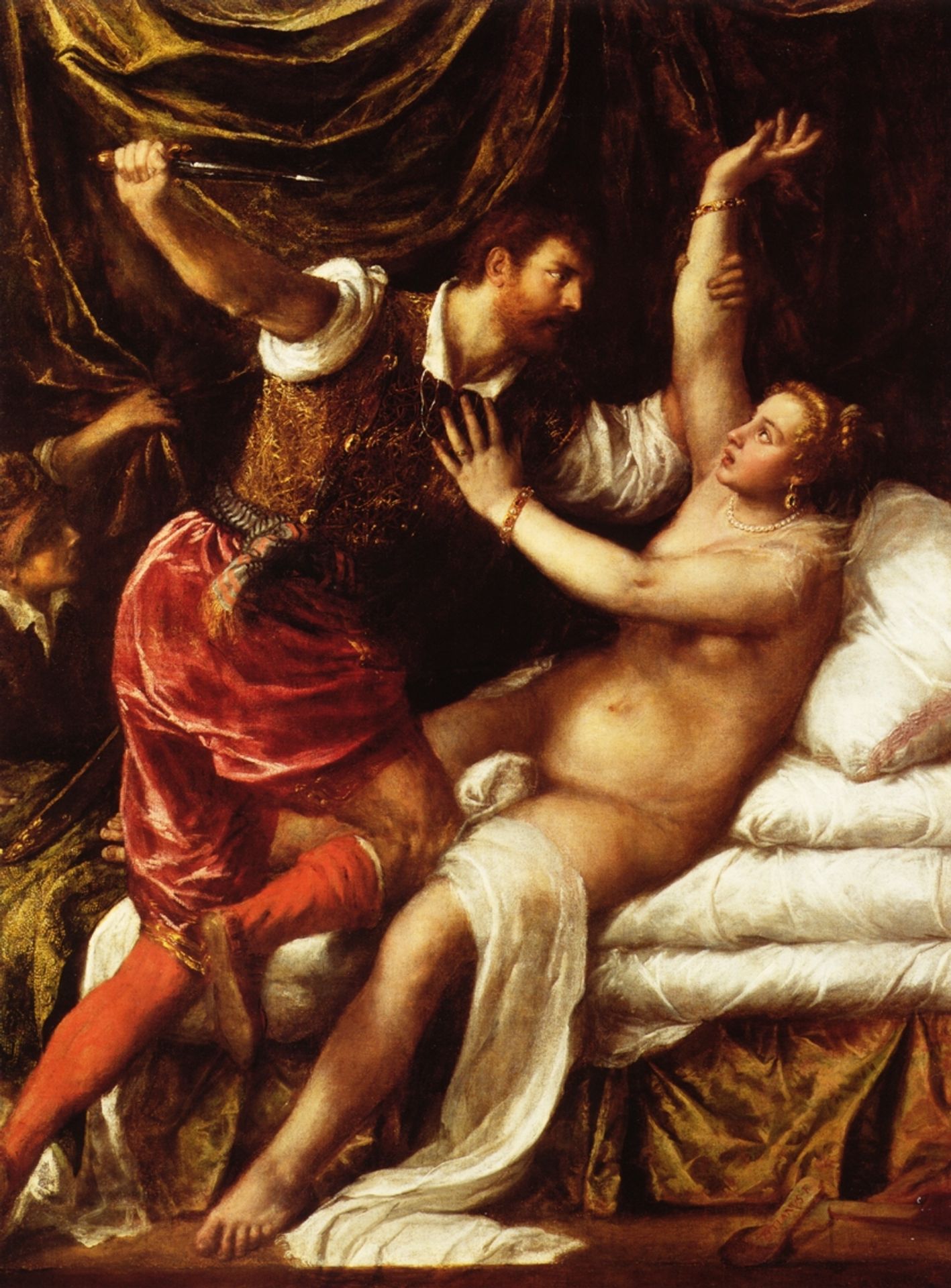
Tarquin and Lucretia

Titian
1488 - 1576Location
Fitzwilliam Museum (University of Cambridge), Cambridge, UKListen to curator's interpretation
Curatorial notes
Titian painted "Tarquin and Lucretia" using oil on canvas, an artwork rich in drama and visceral energy. The composition pivots on the dynamic contrast between the aggressor and the victim, a study in diagonals and forceful gestures. Consider the texture: Titian’s loose brushwork captures the raw immediacy of the moment, heightening the emotional intensity. Lucretia’s pale flesh sharply contrasts with the rich, dark fabrics and Tarquin's metallic vest, a visual metaphor for the violation unfolding. The semiotics here are charged; the dagger becomes a brutal signifier of male dominance, while Lucretia’s upward gaze and outstretched arm symbolize resistance and despair. Titian challenges fixed ideals of beauty, confronting viewers with uncomfortable truths about power, desire, and violence. The canvas serves as a stage for exploring the boundaries of representation itself, blurring the lines between aesthetic beauty and the harsh realities of human experience. "Tarquin and Lucretia" remains a provocative work, inviting endless re-interpretations of its complex formal and thematic elements.