1890
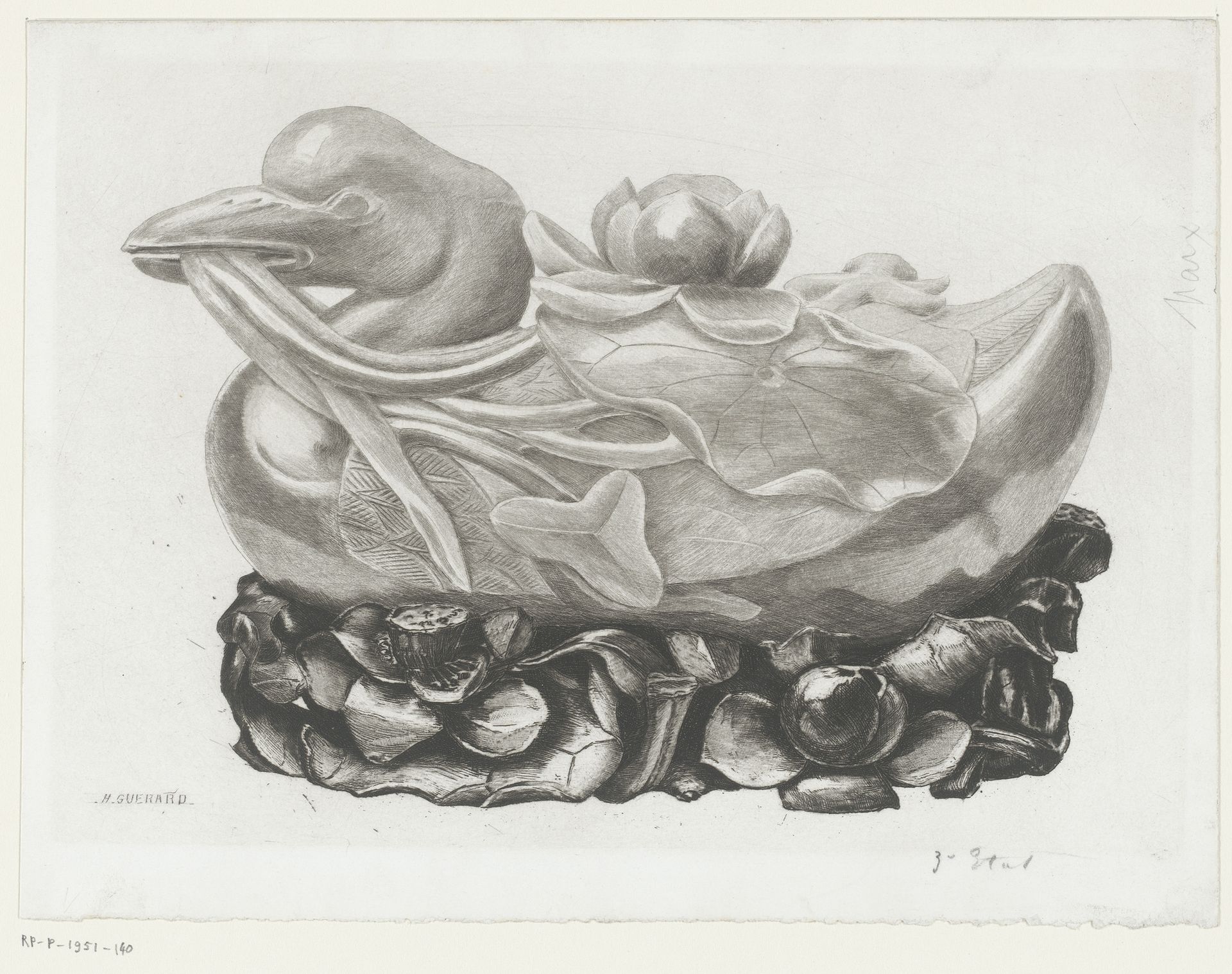
Sculptuur van een eend van jade

Henri-Charles Guérard
1846 - 1897Location
RijksmuseumListen to curator's interpretation
Curatorial notes
Henri-Charles Guérard etched this image of a jade duck, a symbol imbued with layered meanings. The duck, often seen gliding effortlessly on water, is a potent emblem of marital bliss and fidelity, as ducks are believed to mate for life. Notice how the lotus flower embellishes the duck’s back. In Eastern traditions, the lotus rises pure from muddy waters, signifying spiritual awakening, purity, and detachment. These symbols—the faithful duck and the transcendent lotus—combine in a delicate balance, embodying both earthly love and spiritual aspiration. Across cultures, we see animals as conveyors of complex human emotions. From the birds in ancient Greek friezes to the beasts of medieval tapestries, they carry meanings that evolve through time. Think of the phoenix, consumed by flames only to rise again—a potent symbol of renewal. Such symbols resonate deep within us, stirring the collective unconscious. Guérard's duck isn't merely a decorative piece, but a vessel of cultural memory. These symbols are not static; they shift and transform, echoing through the corridors of time.